
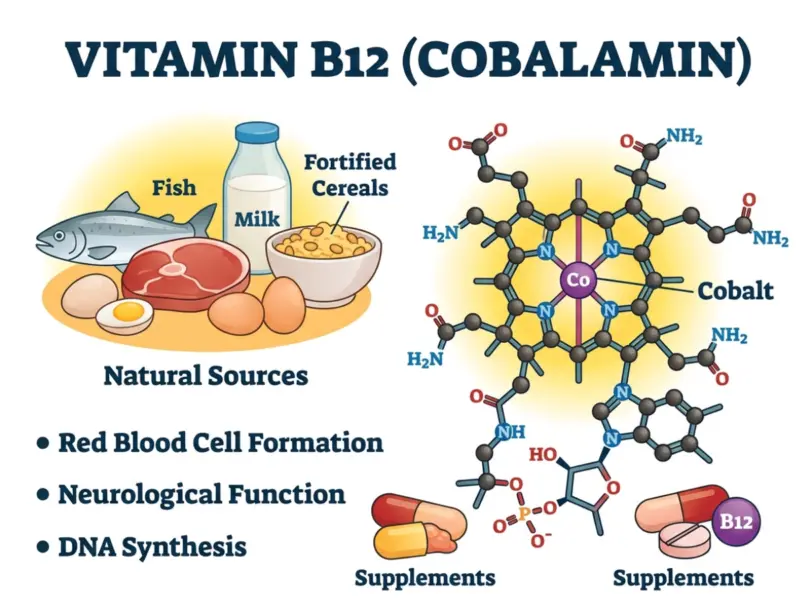

Vitamin B12 Rich Foods:Vitamin B12, also known as 'cobalamin', is a water-soluble vitamin that is essential for your nerve tissue health, brain function, and the formation of red blood cells.
Foods that are rich in Vitamin B12 are animal products, like meat, fish, dairy, or fortified foods. However, its deficiency can cause fatigue, neurological issues, and anemia.
Learn everything essential about Vitamin B12-rich foods, its benefits, interesting facts, and much more.
What is Vitamin B12?
Vitamin B12 is crucial for DNA synthesis, neurological function, and metabolizing homocysteine. It acts as a cofactor for DNA synthesis and metabolism, and is typically stored in the liver for years.
In simple terms, it is an essential nutrient for your nerve tissue health, brain function, and the formation of red blood cells.
What are the Foods rich in Vitamin B12?
Some of the foods that are rich in Vitamin B12 are animal products like:
Shellfish (clams)
Liver, fish (salmon, tuna, sardines)
Meat
Eggs
Dairy (milk, yogurt, cheese)
However, for vegetarians and vegans, fortified foods are excellent sources, such as:
Nutritional yeast
Breakfast cereals
Plant-based milks
What are the Key Benefits of Vitamin B12?
Vitamin B12 helps fight fatigue, support brain health and memory, improve mood, protect nerves, promote healthy skin and hair, and reduce the risk of macular degeneration. The key benefits are:
It boosts energy levels
It is important for your brain function
It protects your nerves
It elevates mood and reduces stress
It supports heart health
It maintains the health of your skin, hair, and nails
It supports your bone health
Is Vitamin B12 good for Skin?
Yes, Vitamin B12 is generally good for your skin health. It is a crucial nutrient that helps in repairing and regenerating dead cells. It also keeps your skin hydrated and improves skin tone, along with reducing inflammation and dryness.
What are the symptoms of Vitamin B12 deficiency?
If you are facing a Vitamin B12 deficiency, you may experience symptoms like:
Extreme fatigue
Weakness
Numbness or tingling in the hands and feet
Pale skin
Sore or red tongue
Memory loss
Confusion
Depression.
However, in severe cases, it can also cause vision problems, balance issues, and heart palpitations due to anemia.
What are the side effects of Vitamin B12?
Vitamin B12 is generally safe, as its excess is eliminated through urine, but high doses can cause mild side effects like diarrhea, nausea, headaches, dizziness, itching, or rash. However, very high doses might cause acne-like skin eruptions.
In rare cases, serious reactions can happen, such as heart palpitations, anxiety, confusion, or allergic reactions.
Some Interesting Facts about Vitamin B12
Vitamin B12 is one of the essentials vitamin for your body. Here are some of the interesting facts about Vitamin B12 that you should know.
Vitamin B12 is the twelfth recognized vitamin in the B-complex group to be officially identified and isolated. Thus, it was named 'B12.'
Vitamin B12 is the only vitamin that contains a metal ion and cobalt, which gives it the name 'cobalamin.'
Vitamin B12 is not made by plants or animals. It is synthesized by bacteria and archaea.
Unlike most water-soluble vitamins that need daily intake, Vitamin B12 is stored in the human liver for several years.
However, it is important to consider that people over 50, vegans, and those with gastrointestinal disorders are at higher risk of deficiency. Therefore, it is advised to take a sufficient amount of Vitamin B12 as needed.
Disclaimer: The above information in the content is for general knowledge only. The Sunday Guardian doesn't claim anything and advises consulting health experts before taking any supplements.