




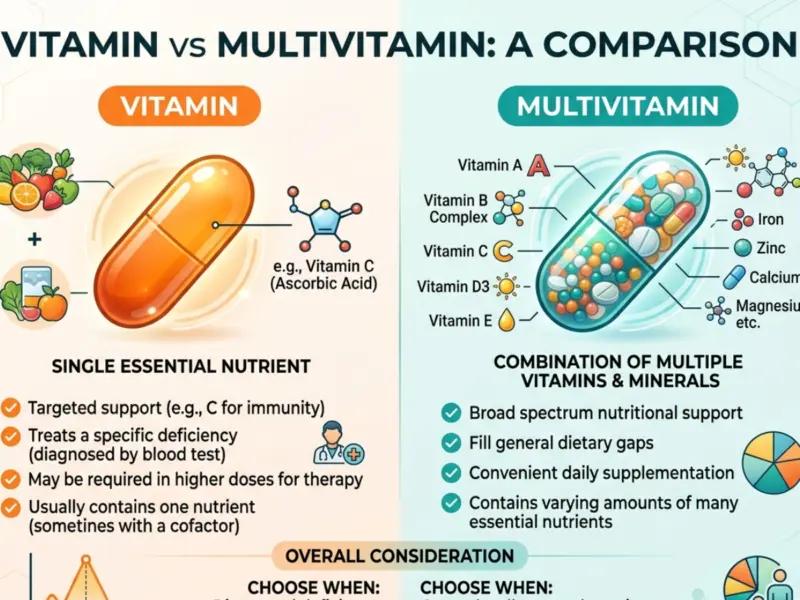

Vitamins vs Multivitamins:These are the essential organic compounds required for your health (Vitamin A, C, D, E, K, and B). Multivitamins, on the other hand, are important nutrients that are essential to fill the gap when the diet is not sufficient.
Let's learn how your body needs vitamins and multivitamins, what the key differences are, and how to take them!
Key Difference Between Vitamins and Multivitamins
Vitamins, which are single nutrients, help your body to overcome and tackle a confirmed deficiency. By taking a high dose of the required vitamin, you can meet the requirement (as directed by your physician).
On the other hand, multivitamins are a combination of a wide variety of nutrients that fulfill the needs of your body by providing balanced doses. It prevents deficiencies and ensures nutritional coverage with daily nutrition.
Vitamins vs Multivitamins: Which is better?
If you are low on just one nutrient, it is better to take Vitamins, as they are single nutrient and provide coverage for your specific deficiency.
However, multivitamins cover all the nutrients in your body, which is not usually essential if you eat a well-balanced diet.
Vitamins vs Multivitamins: When to Choose Which?
Multivitamins are suitable for people with busy lifestyles, restrictive diets, and seniors seeking wellness coverage.
Vitamins are generally recommended by doctors if you are diagnosed with a specific deficiency.
What are the benefits of Vitamins and Multivitamins?
Vitamins and Multivitamins are essential to fill the nutritional gap in your body, boost energy levels, improve healthy aging, support targeted health needs for pregnant women, older people, promote healthy aging, and support immunity.
It also improves memory, executive function, and mental alertness, along with antioxidant support like Vitamin C.
Key Natural Sources of Vitamins
The key natural sources of vitamins are:
Vitamin A: Carrots, sweet potato, spinach, kale, liver, dairy products, and eggs.
Vitamin B: Whole grains, meat, fish, eggs, dairy products, and leafy greens.
Vitamin C: Citrus fruits, red/green peppers, kiwifruit, broccoli, strawberries, and tomatoes.
Vitamin D: Fatty fish, egg yolks, liver, and sunlight.
Vitamin E: Vegetable oils, nuts, seeds, and green vegetables.
Vitamin K: Leafy green vegetables, vegetable oils, and fermented foods.
Key Natural Sources of Multivitamins
The key natural sources of multivitamins are Kale, Shellfish, Beef liver, Sardines, Brazil nuts, Yellow bell peppers, and Eggs.
Best Natural Sources of Essential Minerals
Some of the essential minerals that are healthy for your body are Calcium, Iron, Magnesium, Potassium, and Zinc.
What happens if you take Vitamins and Multivitamins together?
Taking vitamins and multivitamins together is not safe and can cause several side effects, such as toxicity from overdosing on specific nutrients, reduced absorption due to nutrient competition, and potential side effects like nausea or vomiting.
What are the side effects of overtaking Multivitamins?
Some of the common side effects are:
Gastrointestinal Issue
Headache and Fatigue
Skin rash and itching
Metallic taste
Change in urine colour
What are the signs of Vitamin and Multivitamin Deficiency?
Some of the common signs of vitamin and multivitamin deficiency are:
Chronic fatigue
Brittle hair and nails
Mouth ulcers
Pale skin
Tingling in the body, especially in the hands and feet
Other common signs include poor night vision, bleeding gums, and mood changes, especially due to the deficiency of Vitamins.
Disclaimer: The above information in the content is for general knowledge only. The Sunday Guardian doesn't claim anything and advises consulting health experts before taking any supplements.