
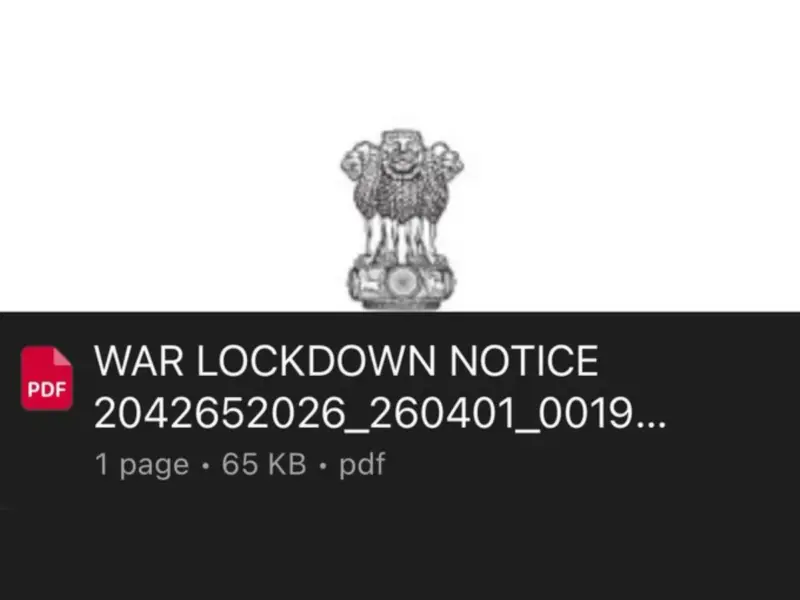

Amid rising global tensions and heightened online chatter, a viral message claiming an imminent lockdown in India has left many people worried and confused.
The message, styled like an official government notice, quickly spread across social media and messaging platforms, triggering panic among users who believed it to be real.
However, as with many viral claims, the truth is far less alarming. A closer look reveals that the message is misleading and not backed by any official confirmation, raising fresh concerns about how quickly misinformation can spread during sensitive times.
Fact Check: Will India Be Facing a Lockdown Soon Amid US-Israel-Iran War?
A viral war lockdown notice PDF claiming that India could soon go into lockdown due to rising tensions involving the US, Israel, and Iran has sparked widespread concern online. The message, designed like an official government notice, has been widely circulated on social media platforms and messaging apps.
At a time when global geopolitical developments are closely followed, such claims can quickly trigger panic. Many users assumed the notice was real and shared it without verifying its authenticity.
However, there is no official confirmation supporting this claim. Authorities have not issued any advisory suggesting a lockdown in India. A closer examination shows that the viral message is misleading and not based on any real government directive.
War Lockdown News: What did the Viral 'War Lockdown' Notice Claim?
The circulating document claimed that a nationwide lockdown had been imposed due to a possible escalation in conflict linked to the US-Israel-Iran situation. It urged citizens to stay indoors and follow emergency guidelines immediately.
The notice used formal language and appeared structured like an official advisory. It included elements that resembled government formatting, which made it look convincing at first glance.
Many users believed the message to be authentic because of its tone and presentation. The sense of urgency in the wording encouraged people to share it quickly with others. However, the claims made in the document are not supported by any verified government communication.
Why the 'Lockdown in India' Message Spread So Fast?
The message spread rapidly due to a mix of fear and timing. It appeared on April Fools' Day, a day when prank content often circulates widely.
At the same time, global tensions involving major countries made the claim seem more believable. Users were already sensitive to news related to conflict, which added to the panic.
Social media platforms amplified the reach, with users forwarding the message across groups without checking its authenticity. The combination of urgency, timing, and realistic design made it highly shareable.
This shows how quickly misinformation can spread when it taps into existing fears.
War Lockdown News: How Fake Government Notices Mislead People?
Fake notices often rely on visual tricks and formal language to appear genuine. They may include symbols, layouts, or wording that resemble official communication. In this case, the document used a structured format and serious tone, which gave it a sense of authority. Many users assumed it was real simply because it looked official.
Such messages are designed to create urgency, making people react quickly instead of thinking critically. This increases the chances of them being shared widely. Experts warn that appearance alone should never be taken as proof of authenticity.
War Lockdown News: What is the Twist?
The most revealing part of the document appeared at the end. Instead of confirming an emergency, it included a message indicating that it was an April Fools prank.
This twist caught many people off guard, especially those who had already shared the message without reading it fully. The prank relied on users reacting to the initial warning rather than checking the entire content.
By the time users realised the truth, the message had already gone viral. This highlights how partial reading and quick reactions can contribute to misinformation.
War Lockdown News: What Experts Say About Viral Misinformation?
Experts say that misinformation spreads fastest when it creates fear or urgency. Messages related to safety, war, or government action are particularly effective in triggering quick reactions.
They advise users to verify any such claims through official sources before sharing them. Checking government websites or trusted news platforms can help confirm whether the information is real.
Experts also stress the importance of digital awareness, especially on days like April Fools Day when misleading content is more common. Being cautious and informed can significantly reduce the spread of false information.
Fact Check Verdict: Is There Really a Lockdown in India Today?
No, there is no lockdown in India due to any war or emergency. The viral message is completely false and not backed by any official announcement. Authorities have not issued any advisory suggesting restrictions on movement or public activity. Normal life continues across the country.
The viral notice is simply an April Fools' prank presented in a misleading format. It serves as a reminder to always verify information before believing or sharing it. In situations like these, relying on credible sources is the best way to avoid confusion and panic.