
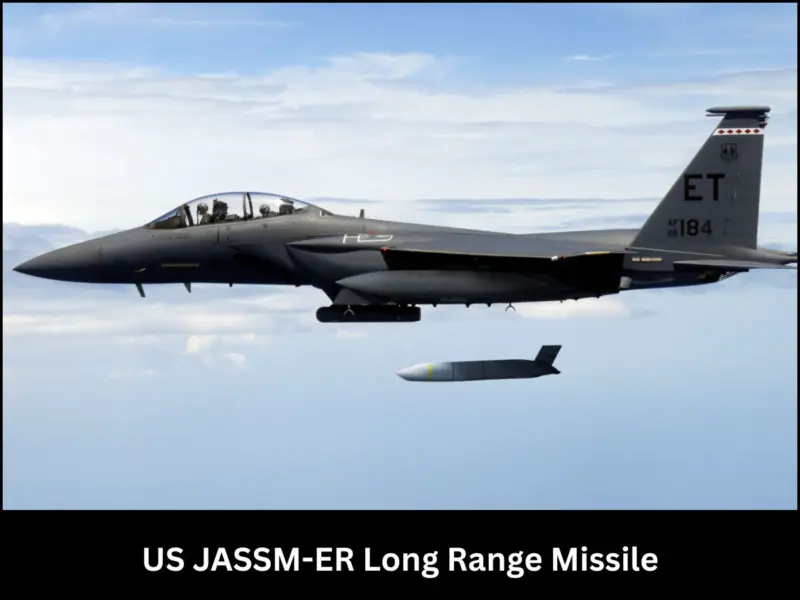

The US is preparing for a sharp escalation in its military campaign against Iran, signalling a shift toward heavy reliance on long-range precision strikes.
This comes after recent battlefield setbacks, including the reported downing of US aircraft, which has exposed operational risks.
Washington is now focusing on minimising direct exposure of its pilots while maintaining pressure on Iranian targets. The strategy reflects both urgency and caution, as the conflict grows more complex.
Reports indicate that the Pentagon is considering deploying a large portion of its most advanced cruise missiles. This marks a significant change in how the US plans to conduct the next phase of the war.
US-Israel-Iran War Latest Update: What is the JASSM-ER Missile?
The JASSM-ER, or Joint Air-to-Surface Standoff Missile-Extended Range, is a long-range, stealth cruise missile used by the US military. It is designed to strike targets from distances exceeding 600 miles (965 km), keeping launch aircraft far from danger zones.
The missile operates with high precision, using advanced guidance systems to hit fortified or high-value targets. Its design focuses on avoiding detection by enemy radar systems.
This makes it especially effective in contested environments where air defence systems remain active. The missile can be launched from bombers and fighter jets alike. Its role in modern warfare has grown significantly, particularly in conflicts where air superiority is not guaranteed.
US-Israel-Iran War Latest Update: JASSM-ER Missile Features
The JASSM-ER stands out due to its stealth capabilities, which reduce its radar signature and improve survivability. This allows it to penetrate heavily defended airspace with a higher success rate.
It carries a powerful warhead capable of destroying bunkers, infrastructure, and strategic military assets. The missile is also equipped with GPS and infrared targeting for improved accuracy.
Another key feature is its extended range, which enables strikes without exposing aircraft to enemy fire. This is particularly useful in high-risk zones like Iran.
The missile can also be programmed for complex flight paths, helping it evade detection and interception. These features make it one of the most reliable and advanced weapons in the US arsenal.
JASSM-ER Missile Range
The JASSM-ER missile is known for its extended strike range, which exceeds 600 miles (965 kilometres). This allows US forces to launch attacks from well outside the reach of most enemy air defence systems.
Its long-range capability is one of its biggest advantages in modern warfare. Aircraft can remain in safer zones while still hitting deep, high-value targets inside hostile territory.
This range also provides operational flexibility, enabling missions to be conducted from multiple directions and distances. It reduces the need for forward deployment of aircraft in high-risk areas.
Compared to the standard JASSM, which has a range of around 250 miles, the ER variant significantly expands strike capability.
US-Israel-Iran War Latest Update: Why JASSM-ER Missile Matters?
The importance of the JASSM-ER lies in its ability to shift the balance of risk. It allows the US to strike targets without putting pilots directly in harm's way. As Iran continues to demonstrate operational air defences, this capability becomes even more critical. The missile reduces dependence on close-range combat missions.
It also supports sustained operations by enabling repeated precision strikes from safer distances. This ensures continuity in military pressure.
However, reliance on such advanced weapons also comes with challenges, especially when stockpiles begin to run low. Its growing importance highlights how warfare is evolving toward remote precision engagement.
JASSM-ER Missile: Why is it the US’s Most Lethal Long-Range Missile
The JASSM-ER is widely regarded as one of the most lethal long-range missiles in the US military inventory. Its combination of stealth, precision, and reach makes it a key strategic asset.
It is capable of targeting critical infrastructure, including missile launchers, command centres, and defence facilities. This makes it highly effective in weakening an opponent's capabilities.
US bombers such as the B-52 and B-1B have already deployed these missiles in ongoing operations. Fighter aircraft also play a role in launching them.
The missile's ability to operate in contested environments gives it a unique edge over conventional weapons. Its increasing use reflects its importance in modern high-intensity conflicts.
US-Israel-Iran War Latest Update: US Repositions Missile Stockpiles Worldwide
Reports, including those from Bloomberg, suggest that the US has begun relocating JASSM-ER missiles from global stockpiles. This includes reserves stationed in the Pacific and other strategic regions.
The missiles are being moved to bases under US Central Command and key locations in Europe. This repositioning aims to support sustained operations against Iran.
Such a move indicates a focused military effort, prioritising one theatre over others. It also reflects the scale of the planned campaign. However, shifting resources from other regions could impact readiness elsewhere. This decision highlights the high stakes involved in the conflict.
US Missile Stockpiles Under Pressure
The heavy use of long-range missiles is placing a significant strain on US stockpiles. Reports indicate that over 1,000 JASSM-ER missiles have already been used in a short period.
Out of a pre-war inventory of around 2,300, only a limited number may now remain available globally. This sharp decline raises concerns about sustainability.
Additionally, some missiles have been deemed unserviceable due to technical faults. This further reduces operational availability. Replenishing these stocks will take time, given current production rates. The situation underscores the challenges of maintaining prolonged high-intensity operations.
Battlefield Losses Force Tactical Shift
Recent battlefield incidents have forced the US to rethink its strategy. Iranian forces reportedly shot down advanced aircraft, including an F-15E and an A-10. These losses highlight that Iran's air defence systems are still active and effective. This challenges earlier assumptions of complete air superiority.
As a result, the US is shifting away from direct aerial engagements. Instead, it is relying more on long-range missile strikes. This approach reduces immediate risks but increases dependence on limited resources. The shift reflects a balance between caution and continued aggression.
US-Israel-Iran War Latest Update: Trump's ‘Stone Age’ Warning Signals Escalation
The military developments follow strong rhetoric from Donald Trump. In a recent address, he said the US would bomb Iran "back to the Stone Age where they belong".
This statement has added to tensions and signalled a willingness to escalate further. It also reflects the political pressure surrounding the conflict.
Such remarks often shape expectations about future military actions. In this case, they align with the current buildup. The combination of words and actions suggests a more aggressive phase ahead. It also raises concerns about how far the conflict could escalate.
Is It a New Phase in the US-Iran Conflict?
The latest developments strongly indicate that the conflict is entering a new phase. The scale of missile deployment and resource mobilisation is significantly larger than before.
The US is adapting its strategy in response to unexpected resistance and operational challenges. This marks a shift from initial assumptions.
At the same time, Iran's continued ability to counter attacks adds complexity to the situation. The conflict is no longer limited in scope; it is becoming broader and more intense. This transition could define the trajectory of the war in the coming weeks.
US-Israel-Iran War Latest Update: What’s Next?
The next phase is likely to involve sustained missile-based operations, with the US focusing on precision strikes. This approach aims to maintain pressure while avoiding further aircraft losses.
However, shrinking stockpiles could limit long-term effectiveness. The US may need to balance usage with replenishment. Iran's response will also play a key role in shaping the conflict's direction. Continued resistance could prolong the war.
There is also the possibility of further escalation, depending on political and military decisions. For now, the situation remains volatile, with both sides preparing for what could be a prolonged confrontation.