




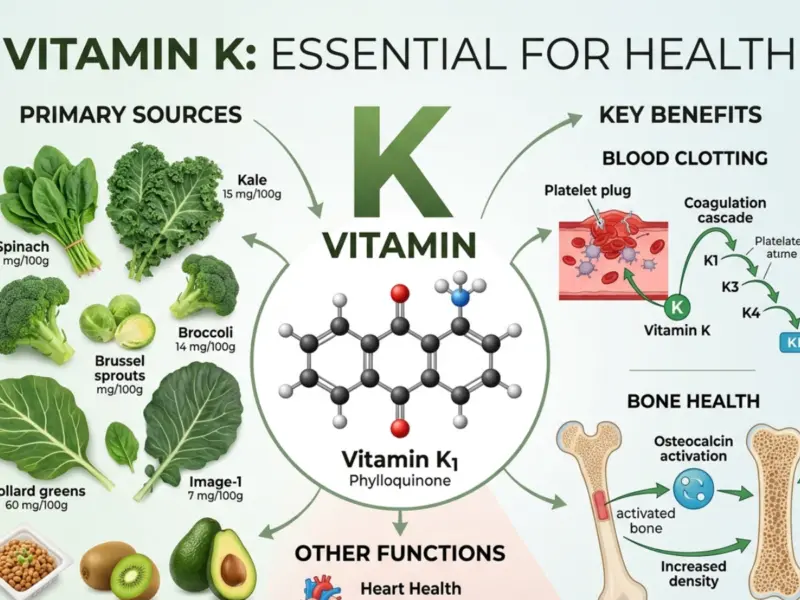

Foods rich in Vitamin K: Among the other Vitamins, Vitamin K is also essential for your body. It helps in maintaining your bone health, cardiovascular health, and supports blood clotting.
It acts as a coenzyme for combining proteins that help to prevent excessive bleeding. Top foods that are rich in Vitamin K are collard greens, spinach, broccoli, Brussels sprouts, and cabbage. Let's check everything you need to know about Vitamin K - benefits, symptoms, sources, and more.
What foods have the most Vitamin K?
Foods that are high in Vitamin K are:
Kale
Collard greens
Spinach
Broccoli
Natto
Brussels sprouts
Cabbage
Parsley
Soybean oil
Chicken breast
Dairy products
Hard cheeses
Egg yolks
Pine nuts & Cashews
Fruits
What are the benefits of Vitamin K?
The key benefits of Vitamin K are:
It prevents excessive bleeding
It reduces fracture risks
It supports cardiovascular health
It is critical for newborn health
It helps with stronger bones
What are the signs of low Vitamin K?
The primary sign of Vitamin K deficiency is easy or excessive bleeding. However, other signs are:
Easy bruising
Nosebleeding
Bleeding gums
Heavy menstrual bleeding
Dark and sticky stool
Who needs to avoid Vitamin K?
People who have specific allergies, kidney diseases, or liver diseases are likely to avoid taking Vitamin K. Here's the breakdown of people who need to avoid Vitamin K:
People who are on blood thinner medication need to avoid taking Vitamin K, as it helps blood clot.
People with kidney or liver issues must avoid overdosing on Vitamin K.
People with allergy issues should avoid taking Vitamin K.
Are eggs high in Vitamin K?
Eggs are considered a good source of Vitamin K, but compared to the leafy greens they are not high in Vitamin K.
Which fruit is the richest in Vitamin K?
Avocado and prunes are among the richest fruit sources of Vitamin K, including blackberries, blueberries, figs, and grapes.
What happens if you take Vitamin K every day?
Taking Vitamin K daily is generally considered safe. However, excess intake can cause digestive issues.
How to recover from Vitamin K deficiency naturally?
You can increase the dietary intake of green leafy vegetables to naturally recover from Vitamin K deficiency. However, there are other supplements you can take, but as directed by your physician.
What organ does Vitamin K affect?
Vitamin K primarily affects the liver. The body needs vitamin K to make certain proteins in the liver that cause blood to clot.
Disclaimer: The above information in the content is for general knowledge only. The Sunday Guardian doesn't claim anything and advises consulting health experts before taking any supplements.