
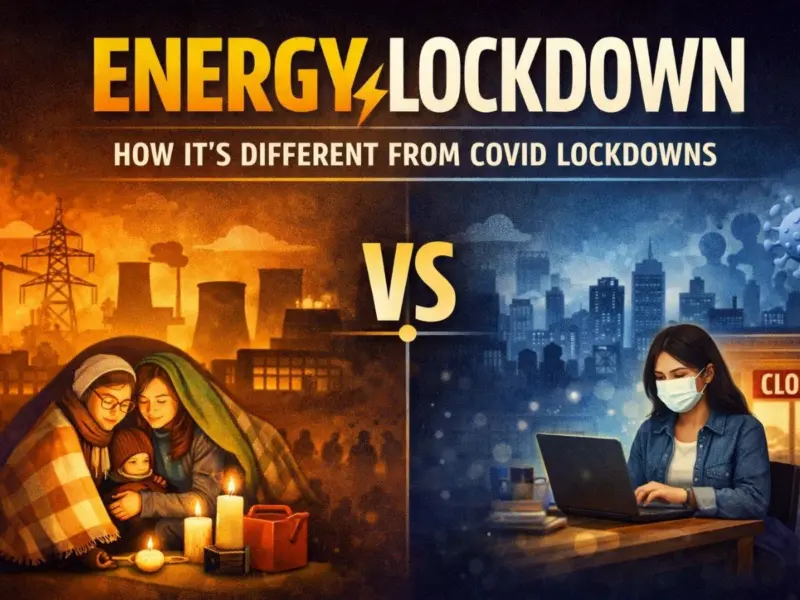

A new term has begun trending on social media as the global oil crisis deepens: “energy lockdown.” While the phrase evokes memories of COVID-19 restrictions, experts say it describes something very different-a set of government-enforced or encouraged measures to reduce fuel, gas and electricity consumption in response to severe supply shocks.
The term gained traction following the closure of the Strait of Hormuz due to the Iran-Israel-US conflict, which has cut off about 20% of global oil supplies. On March 24, the sixth anniversary of India’s first COVID-19 lockdown, the term peaked as public anxiety mixed with historical memory.
What Is an Energy Lockdown?
Unlike COVID-19 lockdowns, an energy lockdown would not involve sealing borders or shutting down cities. Rather, it emphasizes demand-side management via fuel rationing, conservation measures, and priority distribution of necessities.
Some of the primary strategies include fuel rationing with “car-free” days, speed limit reductions, work-from-home directives to reduce office and commuting energy consumption, and transferring energy supply from industries to essential services such as homes and hospitals. Some countries, notably the Philippines, have already proclaimed national energy emergencies and implemented legislation, such as four-day work weeks for government agencies.
Is India Under an Energy Lockdown?
No, according to official reports, the government has not substantiated these claims. Although “India Lockdown 2026” has been trending on social media, this is not in near sight. However, the country has significant ground-level issues. LPG delivery delays and surging black-market prices for cooking gas cylinders have been reported in many cities.
The government has invoked the Essential Commodities Act to reduce gas supply to non-essential industries in favor of households. Prime Minister Narendra Modi has urged citizens to remain “prepared and united” as they were during the pandemic.
What Is the IEA’s 10-Point Plan?
The International Energy Agency has released a framework of transport-focused measures designed to lower global oil demand during supply crises. The plan could cut oil use by 2.7 million barrels a day, alleviating price pressures and reducing the need for forced rationing.
The 10 measures focus primarily on road transport, which accounts for about 45% of global oil demand, but also cover aviation, cooking, and industry:
- Work from home where possible-Displaces oil use from commuting.
- Reduce highway speed limits by at least 10 km/h-lowers fuel use for cars and trucks.
- Encourage public transport-shifts demand from private cars to buses and trains.
- Alternate private car access in large cities-number-plate rotation reduces congestion.
- Increase car sharing and adopt efficient driving-higher occupancy cuts fuel use.
- Efficient driving for commercial vehicles-better practices and maintenance cut diesel use.
- Divert LPG use from transport-Preserves LPG for cooking and essential needs.
- Avoid air travel where alternatives exist-reduces pressure on jet fuel markets.
- Switch to other modern cooking solutions-electric cooking reduces LPG reliance.
- Leverage flexibility with petrochemical feedstocks-industry can free up LPG for essential uses.
Why Are These Measures Needed?
A set of actions that includes working from home, lowering speed restrictions, promoting public transportation, and diverting LPG from transportation to cooking. While demand-side efforts cannot equal the volume of disrupted supply, they can help to lower costs, reduce market stresses, and keep fuels available for important purposes until regular flows return.
The IEA said widespread adoption of these measures would amplify their global impact and help cushion the shock. Governments can set an example by implementing public-sector initiatives, regulatory action, and targeted incentives, while ensuring that consumer assistance is directed toward those in most need.
What Is the Current Situation in India Amid the Energy Crisis?
India imports about 60% of its LPG, and 90% of those imports came through the Strait of Hormuz before the war. With the Strait virtually blocked, the government is using the Essential Commodities Act to prioritize residential supply over commercial and industrial consumers.
Domestic LPG production has increased by 25%, but this only offsets a fraction of the lost imports. The minimum waiting period for booking a cylinder has been extended to 25 days to prevent hoarding. Oil marketing companies are scouting for alternative cargoes from non-Hormuz regions, but these supplies come from faraway geographies like North America and take longer to arrive.
FAQs: Energy Lockdown
Q: What is an energy lockdown?
A: A set of government measures to reduce fuel, gas, and electricity consumption during supply shocks. Unlike COVID lockdowns, it does not involve sealing borders or shutting down cities.
Q: Is India under an energy lockdown?
A: No. The government has not announced a formal lockdown, though LPG shortages and industrial cuts are affecting daily life.
Q: Why is the term trending now?
A: The trend peaked around March 24, the sixth anniversary of India’s first COVID lockdown, coinciding with real energy shortages caused by the Strait of Hormuz blockade.
Q: What is the IEA’s 10-Point Plan?
A: A set of actions that includes working from home, lowering speed restrictions, promoting public transportation, and diverting LPG from transportation to cooking.
Q: How much oil could the plan save?
A: The IEA says the measures could cut oil use by 2.7 million barrels a day, alleviating price pressures and reducing the need for forced rationing.
Q: What is India doing to manage LPG shortages?
A: The government has invoked the Essential Commodities Act to prioritize households, increased domestic production, extended the cylinder waiting period, and is scouting for alternative imports.
Disclaimer: This information is based on inputs from news agency reports and extended explanation of the IEA reports. TSG does not independently confirm the information provided by the relevant sources.