





A high-stakes convergence of atmospheric and oceanic drivers is expected to bring an exceptionally hot summer this year. The formidable weather phenomenon known as El Niño, characterised by the periodic warming of the sea surface over the Pacific and Indian Oceans, will set record-high temperatures in 2026 by mid-June in what is being seen as a major atmospheric overhaul.
According to multiple agencies, such as the European Centre for Medium-Range Weather Forecasts (ECMWF), the National Oceanic and Atmospheric Administration (NOAA), and the India Meteorological Department (IMD), the weather conditions are aligning for a sobering outlook as the transition to a new El Niño phase in June will drive maximum temperatures globally to record-breaking levels.
The atmospheric data have been signalling that the temperatures will soar to exceptionally high levels in June, marking an intense and powerful El Niño phase in decades.
Data from the European Centre for Medium-Range Weather Forecasts (ECMWF) suggest that El Niño will return this year with a much greater intensity and will persist through at least the end of 2026.
The temperatures in some parts of the world are expected to exceed the seasonal average. Scientists are predicting extreme weather that might leave a devastating impact, such as rainstorms or drought, in some parts of the world.
What is El Niño? The Mechanism Of A ‘Standard El Niño’
An El Niño, meaning a 'little boy' in Spanish,is fundamentally a breakdown of the ocean-atmosphere in the tropical Pacific as the warm water pools up, concentrating around the equator, affecting the temperatures significantly.
Under normal conditions, this weather phenomenon is characterised as a 'standard El Niño’ when the trade winds blow from east to west, pushing warm surface water toward Asia.
The event is triggered when these winds weaken, allowing that reservoir of warm water to “slosh” back toward the coast of South America. Technically, a standard El Niño is declared when sea surface temperatures in the central and eastern equatorial Pacific rise just 0.5°C (0.9°F) above the long-term average.
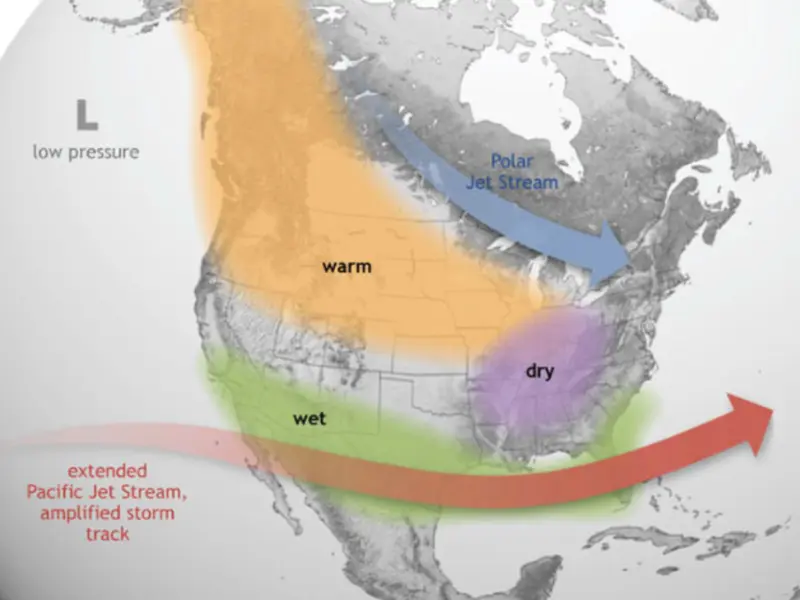
While this may seem like a minor fluctuation, this shift is enough to fluctuate the global rainfall patterns, typically leading to drier conditions in the western Pacific and wetter weather in the Americas.
In the US Gulf Coast and Southeast, the weather is normally wetter, and witnesses heavy rainfall and increased flooding. Several parts of India experience scorching heat, affecting the population with heat-related ailments, crop production and economy.
According to the National Oceanic and Atmospheric Administration (NOAA), there have only been 5 El Niños recorded since the 1950s, with at least one forming in 2015-2016.
Surge of El Niño Toward “Super” Status
The El Niño phenomenon could intensify into a rare “Super” criteria when the temperature surges past 2.5°C (4.5°F) above seasonal averages. During this phase, the temperature of the water in the eastern Pacific Ocean rises by 0.5 degrees Celsius (0.9 F), becoming warmer than the average sea surface temperature. These conditions can last for up to a year.
Meteorologists call ‘Super El Niño’ a much stronger phenomenon that disperses more heat compared to the average summer in the Western United States, parts of Africa, Europe and India.
Some weather forecasts predict that the El Niño event in 2026 will not only meet the “Super” criteria but could exceed 2.5°C (4.5°F) above seasonal averages by October.
According to the Climate Prediction Centre of the National Oceanic and Atmospheric Administration (NOAA), there is a 62% chance of El Niño intensifying in June. The event could last until the end of 2026, according to NOAA.
Research published in the journal Nature Communications suggests that the extreme heat from the El Niño event is expected to cause Climate Regime Shift (CRS), which represents a fundamental “tipping point.” These CRSs are "abrupt and persistent transitions between alternative stable states in the climate system" and "pose serious threats to ecosystems and human well-being", as per the scientists.