
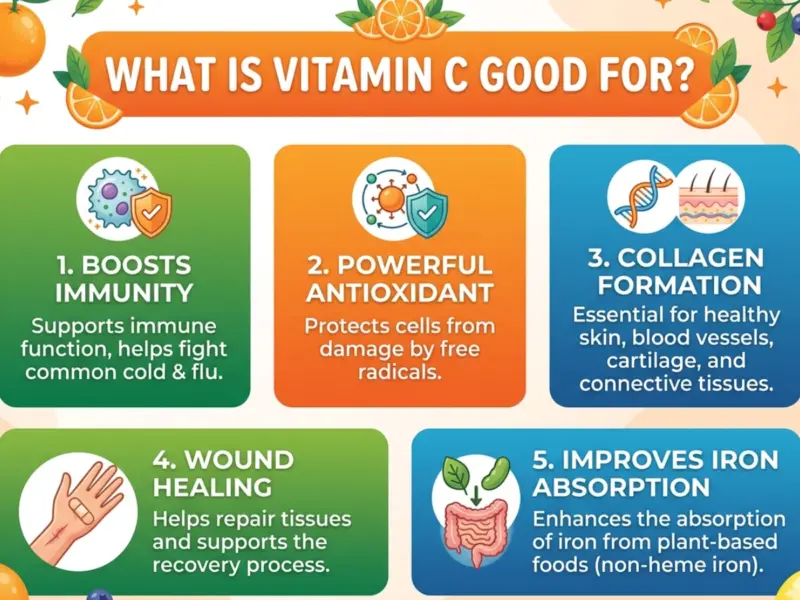

Vitamin C, also known as Ascorbic acid is an essential nutrient for building collagen, supporting immune function, repairing tissues, and acting as a powerful antioxidant to protect cells.
It helps in keeping your skin healthy, boosts iron absorption, lowers the risk of heart disease, and helps manage high blood pressure.
Citrus fruits like oranges, lemons, bell peppers, tomatoes, broccoli, and leafy greens are excellent sources of Vitamin C. Let's dive deep into the Vitamin C benefits, signs of deficiency, and more!
What are the Benefits of taking Vitamin C?
Vitamin C is a water-soluble vitamin found in many vegetables and fruits. It acts as an antioxidant in your body and supports your immune function, neurotransmitter production, collagen synthesis, cardiovascular health, and healing of wounds.
Moreover, it is also essential for connective tissue and for maintaining bone and dental health.
Which 3 Fruits are Highest in Vitamin C?
The top 3 fruits that are high in Vitamin C are the Kakadu plum, Acerola cherry, and Guava. Other highly potent Vitamin C fruits are Rose hips, Blackcurrants, Kiwis, and Papaya.
What are the Signs of Lack of Vitamin C?
Initially, the symptoms of low Vitamin C are persistent fatigue, easy bruising, bleeding gums, slow wound healing, and rough or bumpy skin.
Vitamin C deficiency can cause impaired collagen synthesis, which leads to scurvy, gum disease, easy bruising, poor wound healing, and joint pain.
On the other hand, the chronic deficiency of Vitamin C can result in skin changes, corkscrew hairs, anemia, and immune weakness.
Is it Okay to take Vitamin C every day?
Yes, you can take Vitamin C every day, as it is a water-based soluble nutrient with low toxicity. However, consuming more than 2,000 mg daily may cause gastrointestinal issues, such as diarrhea or nausea, and in rare cases, kidney stones.
So, it is advisable to take care of the dosage before consuming.
How much Vitamin C should you take?
Vitamin C cannot be stored in the body, so you need to take it in your diet every day. People between the ages of 19 and 64 need 40 mg of vitamin C a day.
What Food is Highest in Vitamin C?
While citrus fruits may be the well-known source of Vitamin C, a wide variety of other fruits and vegetables are rich in the vitamin.
The Kakadu plum is the richest known source of Vitamin C, and contains up to 2,907 mg of Vitamin C per 100 g.
Will Vitamin C fade Acne Scars?
Yes, Vitamin C is highly effective for acne scars, specifically by fading dark spots and improving skin texture. It boosts collagen production to repair skin tissue and inhibits pigment production to brighten skin.
What are Vitamin C Dietary Supplements?
The common forms of Vitamin C dietary supplements include capsules, chewable tablets, gummies, and powders, which are often sold as ascorbic acid or combined with minerals like calcium ascorbate.
What does a Vitamin C Serum do?
Vitamin C acts as an antioxidant skincare product that brightens skin tone, reduces dark spots or hyperpigmentation, and boosts collagen production for firmer skin. It also protects from environmental damage, like UV rays, and helps in the reduction of inflammation.
Disclaimer: The above information in the content is based on the available sources publicly. The Sunday Guardian doesn't claim anything and advises consulting health experts before taking any supplements.