
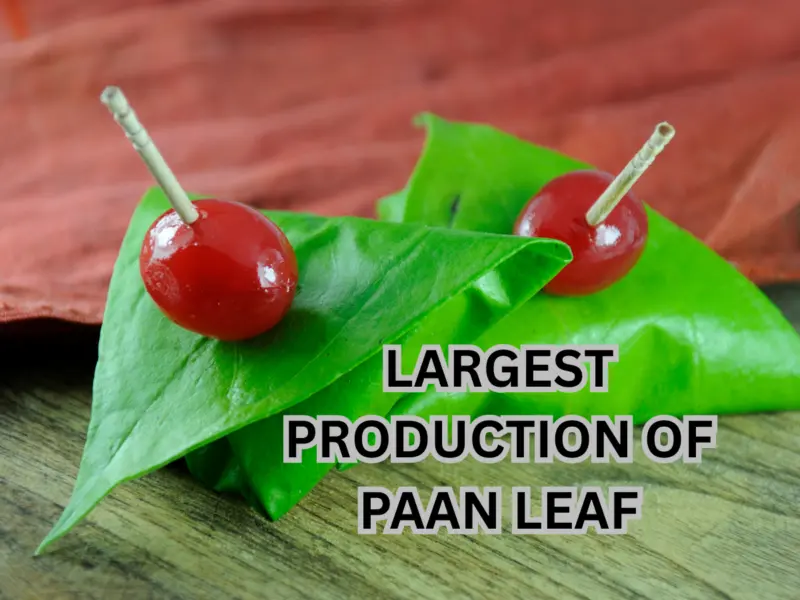

Paan, which derives from the betel leaf, serves as an ancient custom that has existed in various Asian societies for many centuries. People use the shiny green leaf for social events and religious ceremonies, as well as for food consumption between meals.
Tropical nations depend on betel leaf farming because people want to buy paan and its associated items. People want to know which nation produces the most important leaf for cultural purposes.
Which Country Has Largest Production of Paan Leaf (Betel Leaf) in the World?
India is the largest producer of betel leaf in the world. The country’s warm and humid climate provides perfect conditions for plant growth. Betel leaf farming supports thousands of small farmers while the leaves are sold in domestic markets and sent to countries with large South Asian communities.
Which State in India Produces the Most Betel Leaf?
In India, West Bengal stands as the top betel leaf-producing state. Purba Medinipur and South 24 Parganas districts are known for their extensive farming operations. The main states that produce betel leaf include Odisha, Tamil Nadu, Karnataka, and Andhra Pradesh.
Which Countries Eat Paan?
Paan enjoys popularity in multiple Asian countries. The practice of consuming it exists throughout Bangladesh, Pakistan, Sri Lanka, Myanmar, Thailand, and Indonesia. People in many cultures present paan to their guests as a sign of hospitality and honor.
What Are the Types of Betel Leaf Plant?
The different regions of the world grow numerous betel leaf varieties. The main types of betel leaf include Bangla Maghai, Kapoori Sanchi, and Desawari. All plant types have distinct differences that affect their flavor, scent, and leaf dimensions.
What Are the Health Uses of Betel Leaves?
The medical benefits of betel leaves exist according to traditional beliefs. Natural medicine practices use them to treat digestive issues, enhance oral hygiene, and alleviate cold symptoms.
What Makes Betel Leaf Farming Essential?
Betel leaf farming provides economic support to numerous farmers and traders who depend on this agricultural practice. The crop serves an essential function in sustaining cultural practices and ceremonial events that occur throughout South and Southeast Asia.
Betel leaf, which people also call paan leaf, has significant cultural and agricultural value throughout Asia. India maintains its position as the world’s leading producer of betel leaf because its climate supports cultivation and there is high domestic demand for this traditional leaf.