
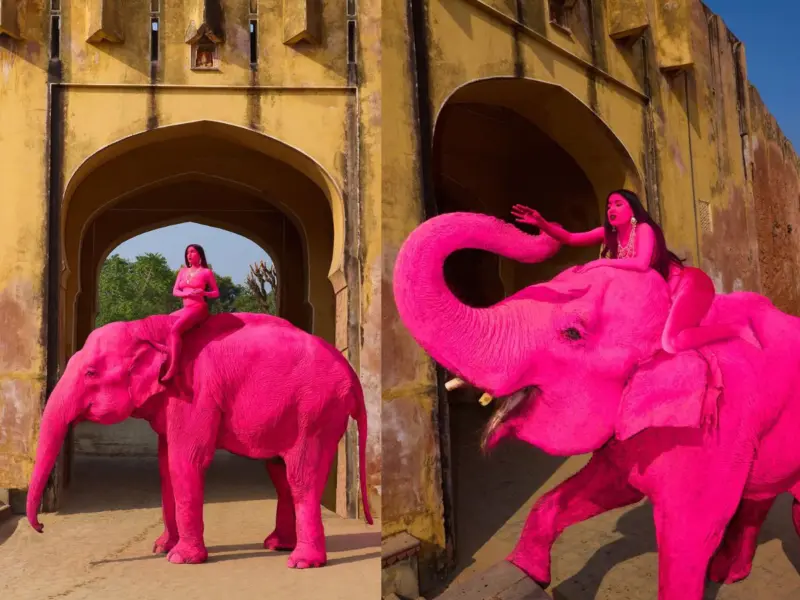

A colourful photoshoot in the historic city of Jaipur has turned into a heated online controversy after a Russian photographer painted an elephant bright pink for an artistic project.
The images quickly spread across social media, drawing criticism from animal lovers and sparking a wider debate about creative freedom and ethical responsibility.
The controversy placed photographer Julia Buruleva at the centre of intense public attention. Many social media users questioned the need to involve an animal in the artwork, while others defended artistic expression. Reports indicate that the photoshoot triggered widespread backlash, with several people accusing the project of promoting animal cruelty.
Who is Julia Buruleva? Russian Photographer Behind Jaipur Pink Elephant Photoshoot
Julia Buruleva is a Barcelona-based conceptual photographer known for blending art, theatre, fashion, and portrait photography into visually striking projects. Her work often focuses on combining human creativity with natural surroundings to create immersive visual stories.
According to information available on her professional platforms, she specialises in conceptual photography that merges artistic storytelling with carefully staged environments. Her projects frequently explore cultural themes and symbolic imagery, which has helped her gain recognition in the contemporary art community.
However, the Jaipur elephant photoshoot controversy has brought her work under intense scrutiny and opened a broader conversation about ethics in creative industries.
Pink Elephant: Photoshoot Inspired by Rajasthan's Colours
Julia Buruleva travelled to Jaipur as part of an art expedition aimed at capturing the vibrant culture and colours of Rajasthan. She later shared details about the project on social media, explaining how the idea developed after spending weeks observing the city's rich visual landscape.
She envisioned "a pink elephant against classic Rajasthani gates," describing elephants as an important symbol of the region that she wanted to include in her artistic concept.
The photographer also spoke about the extensive preparations required to organise the shoot. She visited several elephant facilities to find collaborators willing to participate and struggled to secure a suitable location due to heritage rules and permit requirements.
She said finding a model for the shoot proved challenging as well. According to her account, several individuals declined to take part due to social and family concerns before one finally agreed to participate.
Pink Elephant: Backlash Over Animal Welfare Concerns
Soon after the images appeared online, many users criticised the project, arguing that painting an elephant for aesthetic purposes raised serious ethical questions.
Several social media users accused the photographer of prioritising visual appeal over animal welfare. One user wrote, "Let's go to India and paint elephants, so my Instagram can get some likes. This is not art, this is pure animal abuse," one user wrote.
Another critic stated that creative expression must not ignore responsibility. "Creative freedom is not a 'free pass for irresponsible expression,'" a user said, adding that turning an elephant into a pink prop for aesthetics was deeply inappropriate, both ethically and culturally.
Some also questioned whether the animal needed to be involved at all. "Strange how the elephant has to suffer so the photos can look beautiful. Should've just used AI."
The incident has fuelled ongoing discussions about the balance between artistic freedom and animal protection, especially in projects involving live animals.
Pink Elephant: Photographer Responds to Criticism
Responding to the backlash, Julia Buruleva defended her actions and insisted that the animal was not harmed during the shoot.
Addressing animal welfare concerns, Buruleva said, "For anyone worried about the elephant - we used organic, locally-made paint, the same kind locals use for festivals, so it was absolutely safe for the animal."
She further explained that the paint was non-toxic and washable and that the session lasted only a short time.
"I fully understand and share the perspective that animals should always be kept in good conditions and never subjected to violence. At the same time, I believe it is important to find a healthy balance that allows humans to connect with nature and living beings respectfully and mindfully," Julia Buruleva told HT.com.
"My artistic practice is rooted in interacting with the environment and its living forms, creating work in harmony with nature rather than purely digital methods. While AI and digital tools can replicate images, they cannot replace the authenticity of a real-life connection, which is the heart of my work. My intention is always to engage respectfully, ethically, and with care for both the culture and the life forms that make each project unique," she added.
Pink Elephant: Debate Over Art, Culture and Responsibility Continues
The Jaipur photoshoot controversy has gone beyond a single project and sparked wider discussions about how artists should approach cultural symbols and live animals. While some people support creative experimentation, others believe that strict guidelines should govern the use of animals in artistic settings.
The incident also highlights the growing power of social media in shaping public opinion. A single artistic project can quickly become a global topic of debate, forcing artists and institutions to address ethical concerns more transparently.
As discussions continue, the controversy serves as a reminder that artistic freedom often comes with public accountability, especially when living creatures are involved.