





New international reports suggest that US and Israeli officials quietly explored a highly unusual scenario for Iran's political future during the early phase of West Asia conflict escalation.
According to multiple media investigations, discussions emerged around what would happen if Iran's top leadership structure weakened after sustained military pressure.
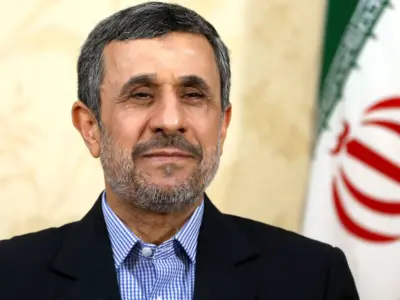
In these internal assessments, former Iranian President Mahmoud Ahmadinejad allegedly surfaced as a surprising name for a possible transitional leadership role. The idea reportedly emerged as planners tried to map out a post-war political structure that could prevent total collapse inside Iran while still reshaping its power balance.
However, the strategy never moved beyond the discussion stage in a stable form, as battlefield realities, Iranian institutional resilience, and political risks disrupted the assumptions behind the plan.
Who is Mahmoud Ahmadinejad?
Mahmoud Ahmadinejad is a former Iranian president who served two consecutive terms from 2005 to 2013. He rose from a relatively low political profile to become one of Iran's most recognisable and controversial leaders on the global stage.
His presidency was marked by strong nationalist policies, confrontation with Western governments, and aggressive rhetoric on Israel and the United States.
He became widely known for statements that escalated tensions with the West, especially regarding Israel and Iran's nuclear programme. During his tenure, Iran faced increasing sanctions and diplomatic isolation.
After leaving office, Mahmoud Ahmadinejad gradually lost influence within Iran's political establishment. He attempted multiple political comebacks but was disqualified from presidential elections in later years. Over time, he positioned himself as a critic of Iran's internal power structure, which further isolated him politically.
Why the US & Israel Want Mahmoud Ahmadinejad To Lead Iran After War?
Reports suggest that US and Israeli strategic discussions focused on identifying a figure who could manage Iran in a post-conflict environment if the current leadership system were significantly weakened. In this context, Ahmadinejad's name allegedly appeared as a surprising but theoretically possible option.
Analysts say the reasoning was not based on ideological alignment but on political practicality. Ahmadinejad, despite his anti-West past, is a known figure with governance experience and existing political networks inside Iran.
Some planners reportedly viewed him as someone who could step into a transitional vacuum and prevent total institutional breakdown. The idea also reflected uncertainty about Iran's internal opposition groups and their ability to govern a post-war state.
Why Mahmoud Ahmadinejad Entered the Picture?
Ahmadinejad reportedly entered these discussions due to his increasing isolation from Iran's ruling elite. In recent years, he openly criticised senior Iranian officials and accused them of corruption and mismanagement. This internal conflict made him a politically sidelined but still influential figure.
For external analysts, this created a unique profile: someone with insider knowledge of the system but no longer fully aligned with it. Reports suggest that such figures are sometimes considered in scenario planning because they may act independently during transitional crises.
His continued public visibility and past presidency added weight to his name in theoretical post-war leadership discussions.
How The Regime Change Plan Collapsed?
The broader regime change framework reportedly depended on a sequence of assumptions: sustained military pressure, internal fragmentation inside Iran, and the emergence of an alternative leadership structure. However, these assumptions did not unfold as expected.
Iran's government institutions, security forces, and administrative systems continued functioning despite strikes and external pressure. Instead of political collapse, the state showed continuity and adaptation.
This reduced the likelihood of any rapid leadership transition. At the same time, coordination challenges among external actors and uncertainty over Iran's internal opposition further weakened the strategy.
As the conflict progressed, it became clear that regime change could not be achieved through the assumed sequence of events, forcing a reassessment of the entire approach.
Why Mahmoud Ahmadinejad is Trump's 1st Choice?
Some reports and interpretations suggest that Ahmadinejad's name appeared in discussions during or around Donald Trump's administration as a potentially "workable" transitional figure. However, there is no official confirmation that he was ever a preferred or formal choice.
His earlier remarks, including calling Trump "a man of action", have been cited in media reports as evidence of a slightly softened tone in later years compared to his presidency. This has led to speculation that some policymakers viewed him as more flexible than his historical image suggests.
Still, experts emphasise that such claims remain part of backchannel discussions and political scenario-building rather than an actual endorsed policy decision.
Reported Strategy Behind the Regime Change Calculations
The reported strategy combined military pressure, intelligence planning, and expectations of internal political disruption. According to leaked assessments cited in media reports, Israeli planners believed sustained strikes could weaken Iran's command structure and create openings for political restructuring.
The plan also reportedly included assumptions about regional actors and internal dissent groups playing a role in shaping post-war governance. However, these calculations depended heavily on rapid state destabilisation, which did not occur at the expected scale. Iran's ability to maintain continuity significantly reduced the effectiveness of these strategic assumptions.
Mahmoud Ahmadinejad Recruitment
Some reports have described informal or exploratory conversations in which Ahmadinejad was considered as part of transition scenarios. However, there is no verified evidence of formal recruitment, official contact agreements, or any structured political arrangement involving him.
The idea appears to have remained within the scope of strategic simulations and intelligence-level discussions rather than diplomatic engagement. In practical terms, no documented process suggests he was actively recruited or prepared for leadership under any external plan.
Why Mahmoud Ahmadinejad Was Considered?
Ahmadinejad was reportedly considered because of a combination of familiarity, political experience, and reduced influence within Iran's current power structure. He is widely known both domestically and internationally, which reduces uncertainty in transitional planning scenarios.
At the same time, his conflicts with Iran's establishment made him appear less tied to the existing system. Some analysts suggest that such figures are sometimes evaluated in theoretical models because they may act independently during unstable transitions.
However, his controversial global reputation and ideological background also made him a highly risky and unpredictable option.
Will Mahmoud Ahmadinejad Lead Iran After War or Not?
There is currently no evidence or official indication that Mahmoud Ahmadinejad will lead Iran after the war or during any transitional arrangement. The reports describing his possible involvement are based on alleged discussions and scenario planning, not confirmed political agreements.
Iran's leadership structure remains intact, and any future political transition will depend primarily on internal dynamics rather than external planning. As of now, Ahmadinejad's name remains part of speculative reporting rather than an actionable political outcome.