
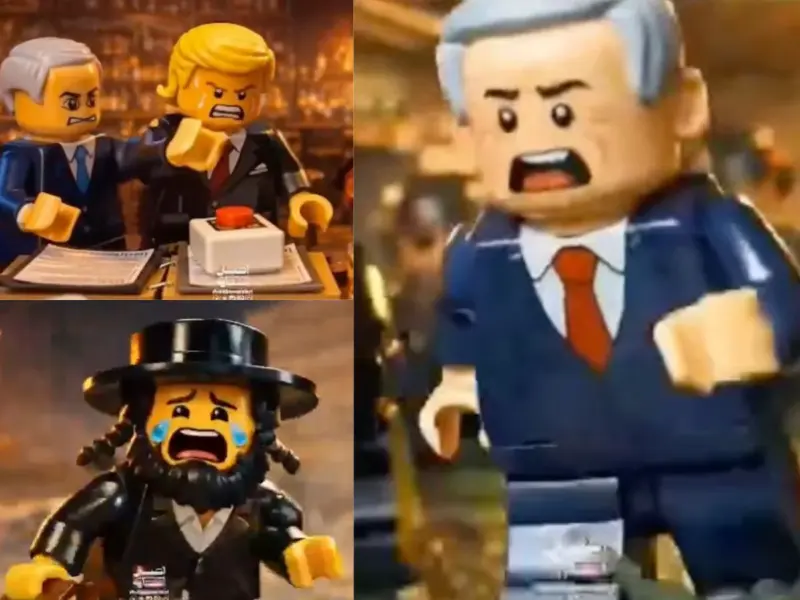

Short animated clips designed like Lego movies began appearing online earlier this year, quickly catching the attention of millions of viewers.
At first, many people saw these colourful war-themed videos as creative storytelling or satire. However, experts later discovered that these clips carried deeper political messages linked to global conflicts.
The videos showed dramatic scenes from imagined battles involving Iran, the United States, and Israel. They mixed real events with fictional stories, making them both entertaining and controversial. Social media platforms removed several accounts that posted the videos after they went viral, but new versions continued to appear, keeping the trend alive and expanding its reach.
Investigations later revealed that the creator behind many of these videos was not simply a hobbyist. Instead, reports suggested links between the content creators and official messaging efforts connected to Iran.
Who is 'Mr Explosive'? The Man Behind the Viral Iranian Lego Videos
According to a report by the BBC, the individual behind many of these animations identified himself as Mr Explosive. He described himself as a "warrior" who creates content as part of a group known as Explosive Media.
Despite restrictions on internet access, Mr Explosive communicated with journalists and defended his role in producing the videos. He openly supported his work and stated that his efforts served a national purpose.
Mr Explosive defended working with the Iranian government, saying it is "honourable to work for the homeland". He also denied allegations that the videos promoted hate speech, stating: "Our videos are not antisemitic; our videos are anti-Zionist."
These statements brought further attention to his identity and strengthened suspicions that the videos formed part of a coordinated messaging campaign rather than independent creative content.
How Lego-Style Videos Spread Powerful Narratives?
The animated clips copied the look and feel of popular Lego-style storytelling, making them visually appealing to global audiences, especially younger viewers. However, the content often carried strong political messages and framed Iran as resisting powerful global forces.
Some videos included dramatic war scenes, fictional rescue missions, and imagined captures of military personnel. In several cases, these stories lacked verified evidence, but their polished style made them convincing to viewers.
Mr Explosive acknowledged that not every storyline was factual. He admitted uncertainty about some claims, saying: "Possibly there was no lost pilot, there was no rescue operation," while also adding, "Only 13% of what Mr Trump says is based on facts."
Even with questionable details, many viewers described the videos as surprisingly believable, highlighting the growing influence of AI-generated storytelling.
Government Links Raise Questions About Digital Campaigns
Initially, Mr Explosive claimed that his media outlet operated independently. However, reports later indicated that the Iranian government acted as a "customer" for the video production.
This connection raised concerns among analysts who study information campaigns and digital propaganda. They noted that these videos did more than entertain; they shaped opinions and promoted specific viewpoints during times of conflict.
Experts warned that the use of animation and AI tools allowed creators to bypass traditional media systems. This strategy helped them reach global audiences quickly and without strict editorial oversight.
New Era of Information Warfare Takes Shape
Specialists described the Lego-style animations as part of a new communication method known as "defensive memetic warfare." This approach uses humour, visuals, and storytelling to influence public opinion without traditional broadcasting.
Many analysts believe these videos represent a new form of "internet diplomacy," where nations communicate their narratives directly to the public instead of relying on official channels.
At the same time, experts warned about the risks of misunderstanding and misinformation. When fictional and real elements blend, audiences may struggle to separate fact from imagination. This confusion can increase tensions and create uncertainty in global discussions.
As AI tools continue to evolve, experts believe similar digital campaigns will become more common. The rise of figures like Mr Explosive shows how modern conflicts now extend far beyond battlefields, reaching deep into social media feeds and everyday online conversations.