
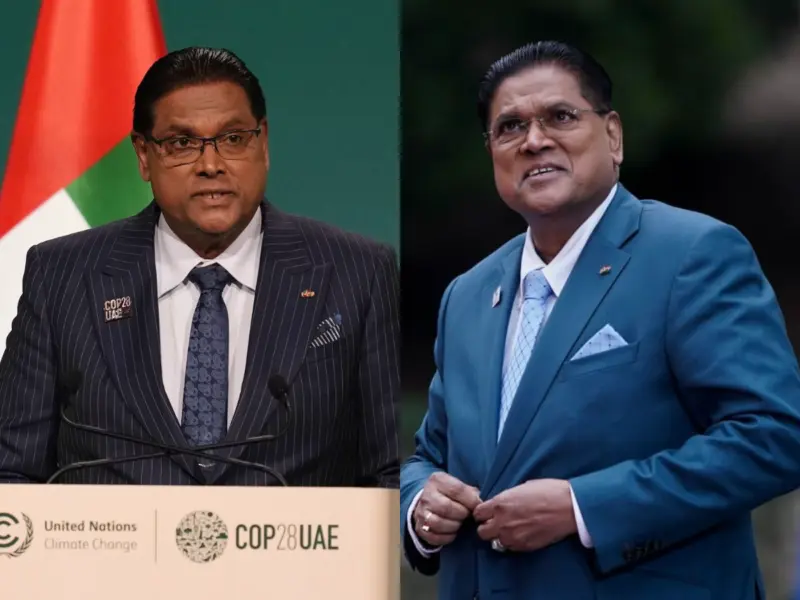

Chandrikapersad Santokhi, a leader who moved from policing to the highest political office in Suriname, has died at 67, closing a chapter that blended law enforcement, reform, and political resilience.
His career stood out for its unusual trajectory, one that began with criminal investigations and culminated in leading a nation through economic distress. Santokhi's name became synonymous with both accountability and austerity, as he navigated sensitive historical cases while attempting to stabilise a fragile economy.
His death has prompted reflection not only on his political achievements but also on the difficult choices that defined his leadership.
Chandrikapersad Santokhi Death News
The confirmation of Chandrikapersad Santokhi's death by President Jennifer Geerlings-Simons has triggered a wave of reactions across political and diplomatic circles.
Santokhi, popularly known as "Chan," remained a central figure in Suriname's public life even after his presidency ended in 2025. His passing marks the departure of a leader who shaped national discourse for decades.
The announcement, though brief, underscored his long-standing service, reminding many of his influence across multiple institutions, from policing to governance.
Chandrikapersad Santokhi Cause of Death
Authorities have not disclosed the exact cause of Chandrikapersad Santokhi's death, leaving an element of uncertainty around his sudden passing.
In the absence of official details, public attention has shifted toward his legacy rather than the circumstances of his death. Such silence often reflects either family privacy or pending medical clarification.
For now, the lack of clarity has not overshadowed the broader national and international response to his contributions.
Who Was Chandrikapersad Santokhi?
Chandrikapersad Santokhi's journey from a police officer to the presidency reflects a career built on discipline and public service. He gained prominence as Minister of Justice and Police, where he adopted a firm stance against crime, earning the nickname "The Sheriff."
His administrative style was defined by a focus on order and accountability. Over time, he transitioned into political leadership, becoming a key figure in Suriname's governance and eventually leading the nation during a period of instability.
Chandrikapersad Santokhi: Role in Investigating the 1982 December Killings
Chandrikapersad Santokhi's role in investigating the 1982 December killings remains one of the most defining aspects of his career. The killings, which involved the execution of political opponents, represented a deeply traumatic chapter in Suriname's history.
By leading investigations into the case, Santokhi positioned himself at the intersection of justice and political sensitivity. His efforts were seen as part of a broader attempt to confront the past, even when it meant challenging powerful figures and reopening old wounds.
Chandrikapersad Santokhi: Political Rivalry with Desi Bouterse
Chandrikapersad Santokhi's political life was marked by a long and intense rivalry with Desi Bouterse. Bouterse, associated with the 1982 killings, remained a dominant political figure for years, making their conflict both personal and ideological.
Their rivalry symbolised a larger struggle within Suriname between accountability and political power, with Santokhi often representing the push for legal scrutiny.
Chandrikapersad Santokhi Presidency: Leading Suriname Through Economic Crisis
When Santokhi assumed office in 2020, he inherited an economy under severe strain. His administration turned to the International Monetary Fund (IMF) for support, initiating reforms aimed at stabilising the country's finances.
While these steps helped restore a degree of economic order, they also required difficult policy decisions that tested public patience and political support.
Chandrikapersad Santokhi Economic Reforms: Public Protests & Political Challenges
The reforms introduced under Santokhi's leadership came with high social costs. The removal of subsidies on essential services led to rising living expenses, sparking widespread dissatisfaction among citizens.
Protests in 2023, including the storming of Parliament, highlighted the depth of public anger and the political risks of austerity-driven governance. These challenges ultimately contributed to his electoral defeat in 2025, reflecting the complex balance between reform and public acceptance.
Chandrikapersad Santokhi Death: International Reactions & Tributes
Chandrikapersad Santokhi's death has drawn tributes from global leaders, reflecting his diplomatic engagement during his presidency.
Rob Jetten said he was "grieved and shocked by the sudden passing" and added, "As President, and in his other roles, he meant a great deal to Suriname. He also tirelessly worked to strengthen the ties between the Netherlands and Suriname."
Such responses underline his role not just as a national leader, but as a figure who worked to strengthen international relationships.
Chandrikapersad Santokhi Death: PM Modi Expresses Grief
PM Narendra Modi also expressed condolences, recognising Chandrikapersad Santokhi's efforts in strengthening ties between India and Suriname. His outreach to the Indian-origin community and emphasis on cultural and diplomatic engagement were key aspects of his foreign policy.
PM Modi's message reflects the broader recognition of Santokhi's role in fostering international cooperation beyond regional boundaries.
Chandrikapersad Santokhi Legacy: Law, Leadership & Controversy
Chandrikapersad Santokhi's legacy presents a complex mix of achievement and challenge. He will be remembered for his commitment to justice, particularly in revisiting the 1982 killings, as well as for his efforts to stabilise Suriname's economy.
At the same time, his tenure faced criticism due to the hardships caused by economic reforms, highlighting the difficult trade-offs of governance. In the end, Chandrikapersad Santokhi's career reflects the realities of leadership, where decisions often carry both progress and consequence.