
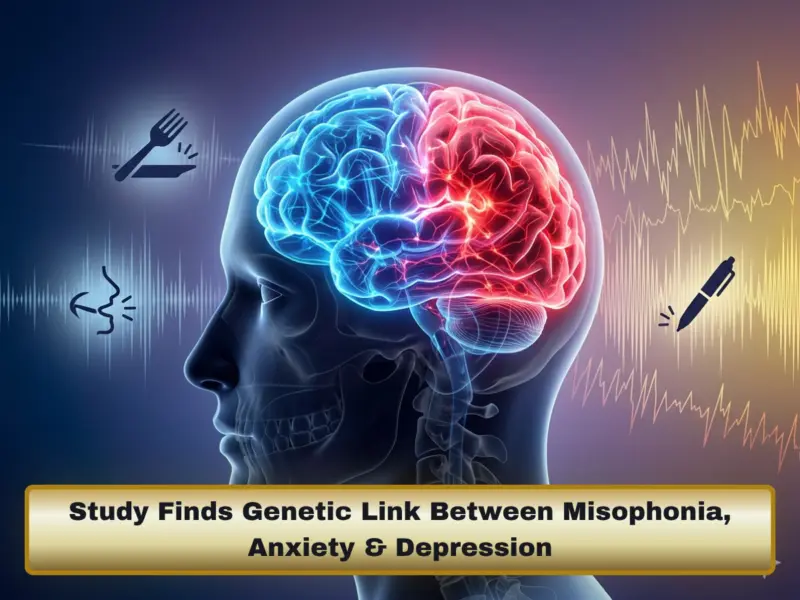

A new scientific analysis suggests that misophonia-a condition in which everyday sounds like chewing, breathing, or tapping trigger intense emotional reactions-may not be just a behavioral or sensory issue, but could also have shared genetic roots with anxiety, depression, and PTSD.
The findings, highlighted in a recent European research review and reported by ScienceAlert, indicate that individuals with misophonia may carry genetic variants that overlap with those linked to common mood and stress-related disorders.
Large-Scale Genetic Data Reveals Surprising Connections
Researchers analysed genetic information from major international databases, including psychiatric and consumer genomics datasets, to understand whether misophonia has a biological basis.
The study found that people who report misophonia symptoms are more likely to share genetic markers associated with:
-Anxiety disorders
– Major depressive disorder
– Post-traumatic stress disorder (PTSD)
– Other emotional regulation traits
This suggests that misophonia may not exist in isolation but could be part of a broader network of genetically influenced psychiatric traits.
Possible Shared Brain and Emotional Pathways
Researchers also observed that the genetic overlap points toward common neurobiological systems involved in emotional processing and stress response.
In particular, traits like:
– heightened emotional sensitivity
– internalized distress (guilt, anxiety, worry)
– difficulty regulating negative emotional reactions
appear to be genetically linked across misophonia and mood disorders.
Scientists say this could help explain why many people with misophonia also experience co-occurring anxiety or depressive symptoms.
Overlap with PTSD Genetics Raises New Questions
One of the most striking findings is the genetic correlation between misophonia and PTSD-related traits.
Researchers suggest this overlap could indicate a shared mechanism involving how the brain processes threat, sound triggers, and emotional memory.
Some scientists believe this may eventually open the door to cross-condition treatment approaches, where therapies used for PTSD or anxiety might also help manage severe misophonia symptoms.
What This Means For Diagnosis And Treatment
While misophonia is still not officially classified as a standalone psychiatric disorder in major diagnostic manuals, these genetic findings strengthen the argument that it may have a biological and psychiatric basis rather than being purely behavioral.
Experts say more research is needed, but the study could eventually:
– Improve recognition of misophonia in clinical settings
– Support earlier diagnosis in people with co-occurring anxiety or depression
– Guide development of targeted therapies focused on emotional regulation
Key Takeaway
The new evidence suggests misophonia may be part of a shared genetic and neurological spectrum with anxiety and depression, rather than an isolated sound sensitivity condition.
Researchers emphasize that this is still an emerging area of study-but one that could reshape how clinicians understand both sound-trigger disorders and emotional health.
Disclaimer: This article is based on publicly available scientific reports and is intended for informational purposes only. It should not be interpreted as a definitive scientific consensus. Readers are encouraged to consult original research sources for the most accurate and up-to-date information.