
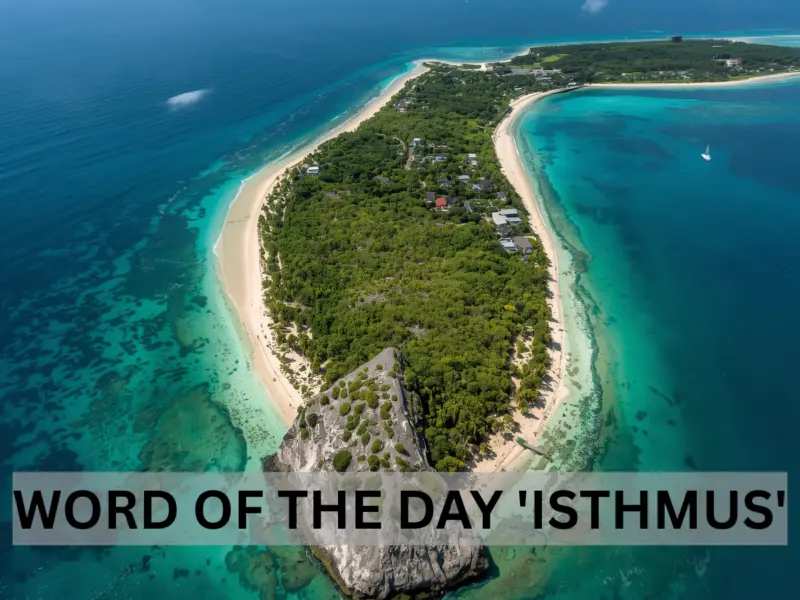

Word of the Day 'Isthmus': "Isthmus" is an important geographical term frequently used in academics, competitive exams, and general awareness.
It refers to a specific type of landform that plays a significant role in connecting regions and shaping trade routes. Learning such words not only strengthens vocabulary but also improves understanding of geography and global connectivity.
Isthmus Meaning
An isthmus is a narrow strip of land that connects two larger landmasses and is surrounded by water on both sides. It acts as a natural bridge, linking regions that would otherwise be separated by seas or oceans.
Isthmus Origin
The word "isthmus" is derived from the Greek term "isthmos," which means "neck" or "narrow passage." This origin perfectly reflects its meaning, as an isthmus resembles a thin "neck" of land connecting two larger bodies.
Isthmus Example
A well-known example is the Isthmus of Panama, which connects North and South America. Its strategic importance led to the creation of the Panama Canal, a key route for global maritime trade.
Isthmus Phonetic & IPA
Phonetic Spelling: is-muhs
IPA Pronunciation: /ˈɪs.məs/
Isthmus Relevance in Today's World
Isthmuses hold immense geographical and economic importance even today. They often serve as critical points for transportation, trade, and military strategy. For instance, the Isthmus of Panama significantly reduced travel time for ships after the construction of the Panama Canal. Such landforms continue to influence global logistics, commerce, and geopolitical planning.
"Isthmus" is more than just a vocabulary word; it represents a vital geographical feature that connects lands and facilitates movement. Understanding its meaning, origin, and usage can enhance both academic knowledge and real-world awareness, making it a valuable addition to your vocabulary.