
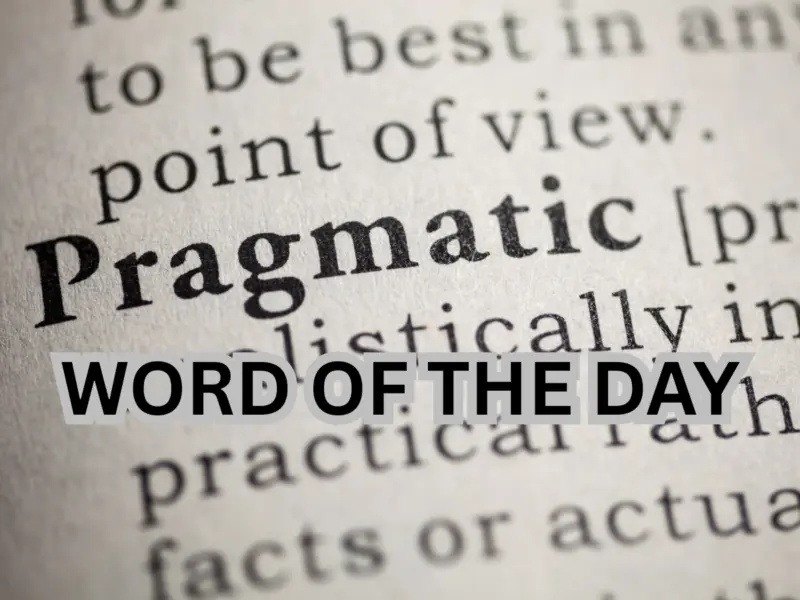
Word of the Day 'Pragmatic': The English language contains many words that people use to describe their mental processes and their daily actions.
The word "pragmatic" serves as an essential term that people use in their daily conversations. The term describes people who dedicate their efforts to finding practical solutions that are based on actual situations. The word pragmatic appears throughout contemporary leadership studies because the term describes a practical method that people use to deal with their problems.
Pragmatic Meaning
The word pragmatic refers to dealing with situations practically and sensibly rather than relying on idealistic or theoretical ideas. A pragmatic person focuses on what works best in real life.
Pragmatic Origin
The term pragmatic derives from the Greek word "pragmatikos," which describes someone who possesses business and practical skills. The word entered Latin as "pragmaticus" before it became part of English through its adoption in the 16th century.
Pragmatic Phonetic & IPA
- Phonetic spelling: prag-MAT-ik
- IPA pronunciation: /præɡˈmætɪk/
Pragmatic Relevance in Today's World
People today consider pragmatism as an important quality that they need to develop because of their current fast-evolving environment. Leaders, managers, and professionals require praise when they choose practical solutions that lead to successful problem resolution. People who think pragmatically create practical solutions that involve actual methods to achieve results that they can attain.
Pragmatic Example
The manager took a pragmatic approach to the crisis and focused on practical steps to solve the problem quickly.
The word pragmatic highlights the importance of practicality and realism. People use pragmatic thinking to achieve balanced decision-making and create practical solutions that address their challenging problems.