




World Press Freedom Day 2026 arrives at a time when global journalism is under mounting pressure-from legal intimidation and imprisonment of reporters to economic stress and rising political hostility toward independent media.
Recent global assessments highlight a continuing decline in press freedom conditions across many countries, reinforcing the need to understand how journalism functions in today's digital and political landscape.
Against this backdrop, books on journalism and free expression offer crucial insight into how media systems are changing-and why press freedom remains central to democracy.
7 Must-Read Books on Journalism
Here are 7 essential books that explore journalism, free speech, and media freedom in depth.
1. The Future of Free Speech - Jacob Mchangama & Jeff Kosseff
This book examines the global decline of free expression and the challenges democracies face in protecting open debate.
It explores how political polarization, digital platforms, and legal restrictions are reshaping what people can say-and what they cannot.
2. Free Speech: A History from Socrates to Social Media - Jacob Mchangama
A sweeping historical analysis of how free speech evolved from ancient philosophy to the modern internet age.
The book highlights how speech rights have repeatedly expanded and contracted depending on political and social pressures.
3. Networked Press Freedom - Mike Ananny
This work reframes press freedom in the digital era, arguing that journalism is no longer just about individual reporters but also about platforms, algorithms, and infrastructure.
It focuses on how technology shapes what the public can access and understand.
4. Free Speech and Unfree News - Sam Lebovic
This book questions whether the United States truly has a free press, exploring the tension between legal freedom and practical constraints on journalism.
It reveals how economic and institutional pressures can quietly restrict news reporting.
5. Journalist Safety and Self-Censorship (Edited Volume)
This academic collection studies how threats, surveillance, and legal risks lead journalists in many countries to self-censor.
It includes case studies from multiple regions, showing how fear can shape editorial decisions even without direct government bans.
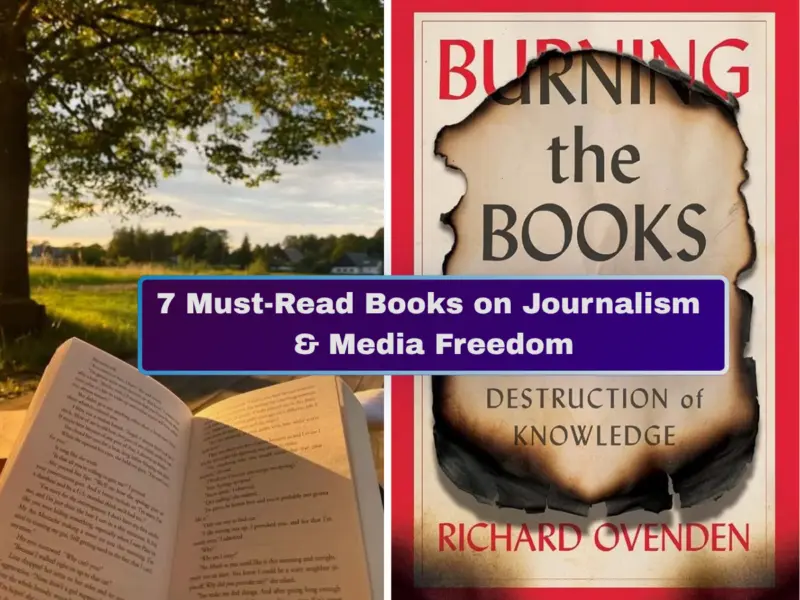
6. Burning the Books - Richard Ovenden
A historical account of the destruction of knowledge across civilizations, from ancient archives to modern conflicts.
It highlights how attacks on libraries and records are closely linked to broader attacks on free expression.
7. Project Censored's State of the Free Press 2026
This annual volume highlights underreported journalism and examines how media systems filter or suppress important stories.
It emphasizes media literacy as a key tool for defending democratic access to information.
World Press Freedom Day 2026: Why Books on Journalism Matter More Than Ever
The 2026 observance of World Press Freedom Day focuses on strengthening awareness about free speech, media independence, and the growing risks faced by journalists worldwide. With increasing concerns about censorship, misinformation, and journalist safety, reading authoritative works helps readers understand how news ecosystems operate under pressure.
World Press Freedom Day 2026: What These Books Reveal About Today's Media Reality
Together, these books show that press freedom is not just a legal principle-it is shaped by technology, politics, economics, and public awareness. From rising censorship concerns to digital platform control, modern journalism faces complex pressures that go far beyond traditional government restrictions.
As global press freedom continues to face structural challenges, understanding these dynamics is essential for readers, students, and anyone who relies on credible information in the digital age.
World Press Freedom Day 2026 is not only a reminder of journalism's importance but also a call to understand how fragile information ecosystems can be. These books provide a deeper lens into how truth is reported, restricted, and defended in the modern world.
Disclaimer: This article is based on curated recommendations and reading trends. Readers are encouraged to explore books based on personal preferences.