
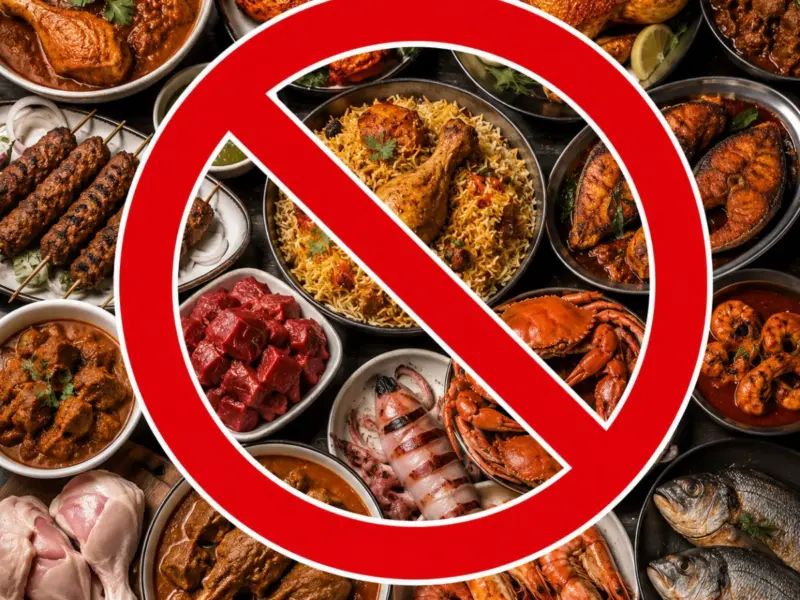

India is renowned worldwide for its exceptional diversity in language, customs, festivals, and food. Each part of India has its distinct culinary culture ranging from seafood, meat curries to vegetarian cuisine.
But within this vast array of foods comes an exceptional city which is different from any other city in the world. This exceptional city has banned all sorts of non-vegetarian food items. One can find nothing related to chicken, beef, mutton, or even eggs. The sounds of the slaughterhouse are totally unheard here.
Palitana, situated in Bhavnagar district of Gujarat, is this exceptional city, also famous for being the first pure vegetarian city of the world. Palitana is not only renowned for its religious significance but also its food policy.
The City Where Vegetarianism Is A Way Of Life
The connection between Palitana and Jainism is very strong because Jainism is one of the oldest religions in India, and it advocates for ahimsa, which means not causing any harm to any living thing. Hundreds of Jain saints, followers, and pilgrims travel to this city yearly. The town hosts Shatrunjaya Hill, where there are hundreds of intricately sculpted Jain temples, making it one of the most religious pilgrimage destinations for the Jains.
Vegetarianism is not just about food in the eyes of the locals but a way of life, as they think that eating meat can cause suffering to other living things. This religion has had a significant impact on shaping the city and its culture for years, leading to an important event in history.
How The Ban Came Into Effect
There was also a major protest movement carried out in Palitana in 2014 when around 200 Jain monks went on a hunger strike against the city administration, requesting a total prohibition of slaughtering of animals and selling their flesh in the city.
This movement exerted great pressure on local authorities and the state of Gujarat, and they soon agreed to place strict bans on the selling of meat and eggs within the city limits. There are about 250 butcher shops that have been said to be closed following this decision.
This ban made Palitana a totally vegetarian city and thus banned slaughtering of animals and selling of non-vegetarian products there. This makes Palitana the first ever city in the entire world that has become a completely vegetarian city.
A Huge Victory For The Jain Community
For the Jain community, it turned out to be a great win for religion and humanity. The advocates of banning cow slaughter saw it as a manifestation of their core tenets of Jainism and a push towards a more civilized way of life.
It was also appreciated as a strong instance of how religion and culture can influence public policy. According to some Jain leaders, the ban did not intend to discriminate against any group but aimed at protecting animals and establishing a peaceful environment.
Vegetarianism in the city became a hot topic not only in India but around the globe. Palitana attracted many tourists and enthusiasts from all walks of life who wanted to see such a vast vegetarian community up close.
A Paradise For Vegetarian Food Lovers
However, there is no doubt that Palitana boasts an array of vegetarian food options. There are plenty of restaurants offering vegetarian food, as well as local food joints and stalls selling Jain cuisine. These foods are often prepared without onions and garlic.
One can savor authentic thalis from Gujarat, dhokla, khandvi, thepla, fafda, khichdi, and various sweets using traditional recipes. The simple and pure Jain cuisine has emerged as one of the main attractions of the city.
Food traditions in Palitana show that vegetarians need not sacrifice their taste buds while dining in the city. It is interesting to note how people in Palitana have proved that vegetarian food can be nutritious and tasty at the same time.
Over the years, Palitana has developed into a spiritual city with great food traditions. The serene environment, beautiful temples, and rich vegetarian cuisine define the culture of the city.
Why Palitana Is Spiritually Significant
Palitana is not renowned merely due to its vegetarian culture. Palitana holds significant religious importance within Jainism. The revered Shatrunjaya Hills contain over 800 temples, many of which have existed for centuries. Devotees scale hundreds of steps to reach the temple on top of the hill, hoping to attain spiritual purity through this process.
The Jain religion states that several highly regarded saints have reached the stage of salvation in this sacred place. The temples consist of beautiful marble carvings and unique architecture surrounded by serene ambiance.
For many devotees, the protection of the sanctity of the site by ensuring that it is not a place where non-vegetarians reside plays a vital part in their beliefs.
Criticism And Debate Around The Ban
While some have applauded this initiative, the ban has also received criticisms. One point raised is that it infringes on personal freedom and the ability to choose one’s preferred type of food. Others question the need for a whole city to restrict people’s eating choices due to religious beliefs.
In addition, another issue raised in relation to the ban is its potential impact on tourism. According to reports, many tourists who visit Gujarat enjoy the availability of both vegetarian and non-vegetarian dishes. The owners of restaurants and some businesses worry that the ban might deter tourism in the city.
On the other hand, there are those who support the decision since the essence of Palitana has always been associated with Jainism. In their defense, they suggest that when people visit such cities, they ought to comply with the practices followed within the city, just as in any other place of worship globally.
The controversy surrounding Palitana has continued up to date.
A City Unlike Any Other
Regardless of whether people love or hate Palitana, there is no denying that this place represents one of the most unusual cities in the world. With its policy on banning all forms of meat consumption, Palitana gained worldwide recognition as a representation of vegetarianism and peaceful coexistence with living beings.
In a nation renowned for its wide range of culinary products, Palitana managed to stand out from the crowd by going in an entirely different direction based on faith, empathy, and tradition. At present, Palitana still invites millions of visitors to explore its uniqueness and history firsthand.