




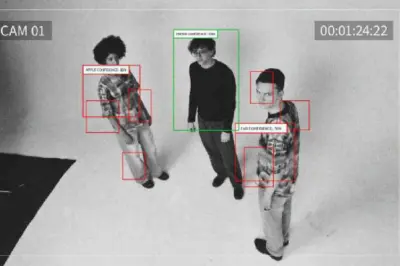

Facial recognition cameras are becoming a fixture of Britain's high streets, shopping centres and transport hubs, and a growing number of designers believe the antidote might be sewn into the clothes people wear.
So-called "adversarial fashion" - garments printed with patterns designed to confuse computer vision systems - is moving from countercultural fringe to genuine talking point, even as scientists warn that no outfit can promise true invisibility.
The premise behind these clothes is to exploit the shortcuts detection algorithms rely on. Some brands scatter distorted, face-like motifs across fabric to overwhelm a system with false positives; others use asymmetrical cuts, oversized prints or AI-generated knitted patterns to disrupt how software separates a person from the background. A few embed infrared LEDs into hoods or collars in an attempt to dazzle night-vision cameras.
Nick Tidball, co-founder of the clothing brand Vollebak, believes the idea is close to a breakout moment, arguing that anti-surveillance feelings are widespread enough that a single celebrity wearing such a garment at a high-profile event could push the trend into the mainstream. He has also suggested that if the clothing proved genuinely effective, it could attract political attention and even restrictions.
Public unease over facial recognition has been building for some time. Automated systems can now track individuals across multiple cameras and search archived footage at scale, a big change from traditional CCTV. Watchdogs in Britain have flagged the disproportionate rate at which black and Asian people are misidentified by such systems, and recent polling suggests a majority of the public sees facial recognition as a further slide towards a surveillance society.
Movement itself is part of the problem: creases and folds in fabric distort a printed pattern in ways a rigid surface never has to contend with. Heikki Huttunen, an associate professor at the University of Tampere, argues that even a well-designed T-shirt would only inconvenience a detection system rather than defeat it, and that surveillance operators could retrain their models within days of encountering a new pattern, forcing an endless cycle of redesign.
Whether adversarial fashion becomes a lasting design category or a passing protest statement may hinge less on the sophistication of the patterns than on how quickly the surveillance industry adapts to outpace them.