



The rear balcony of the flat opposite ours never fails to catch my eye. It is tastefully done up, with subdued lights and artefacts. But what holds my attention is the banana plant that stands in one corner.
I can imagine the residents waiting expectantly for the first bunch of fruit, or snipping away parts of the leaves for a special occasion. For a sadhya feast, perhaps.
The banana plant - as has often been said - is a generous soul. Almost every part of the plant is used in the kitchen. The fruit - ripe or raw - is much loved; the fibrous, nutrient-rich stem is cooked and eaten, as is its delicate flower with its purple-maroon florets. And the leaves, of course, are the best organic crockery you can think of, and a great natural wrap for food. The leaves for the wraps are washed and dried, and then lightly toasted in a hot pan to make them more malleable.
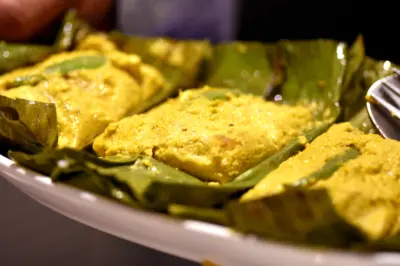
The plant on the balcony is not just a sight for sore eyes, but also evokes happy food memories. Over the years, I have eaten excellent fish paturis - fillets marinated and folded in a banana leaf, then steamed or roasted. The wrap doesn't have to be a banana leaf; jackfruit or turmeric plant leaves work very well, too, as do bamboo leaves. These leaves help the fish or the other main ingredients retain moisture, making each forkful melt in the mouth. The Parsi patra ni machchi - flavoured with grated coconut and coriander leaves, folded and steamed in a banana leaf - is a case in point, and one of the best-known examples of leaf-covered dishes from India.
Such delicacies come from all over the world. In parts of central Africa, liboké de poisson - or a parcel of fish - is fish (usually catfish) seasoned with salt and coated with garlic, ginger and onion, and cooked in banana leaves. Bamboo leaves are used as wraps in regions where the plant grows in abundance: in China, people cook rice wrapped in bamboo leaves. Closer to home, Assam's patot dia kukura is chicken cooked in a banana leaf. Another popular dish from the Northeast consists of rice and pork, cooked with onion, ginger, garlic, fermented bamboo shoot, chillies, mustard, salt and pepper, and roasted in a leaf. Odisha's enduri pitha is sublime - a rice and urad dal batter filled with coconut and jaggery, folded in turmeric leaves and steamed.
These wraps are held in high esteem not only because they are natural and biodegradable, but also because they lend their own mild aromas to a dish and soften the texture. I remember in particular the spongy kotte mude - idlis steamed in jackfruit leaves - and the spicy taste of fried masala fish, for which mackerel fillets were coated with a mix of red chilli powder, vinegar, onion-ginger-garlic paste, turmeric powder, and salt, and then pan-grilled. Before serving, each fillet was folded into a banana leaf and grilled for a few minutes. The fish was served in the leaf - and half the fun lay in untying the thread that held it together, opening the parcel, and letting the aroma of the dish work its magic.
The best part of leaf-wrapped food is that some of the leaves can be eaten, too. When small shrimps are steamed in a bottle gourd leaf, the tender leaf is a delicacy in itself. Pumpkin vine leaves are divine and go especially well with cottage cheese or hilsa fish. Grape leaf-wrapped dolmades, dolmas and their kin are eaten across the Mediterranean. Hawaii's lau lau is a dish of pork or butterfish, snugly cocooned in taro leaves.
I am looking at the banana plant again, and thinking how an early version came from the Malaysian region to India thousands of years ago. We should toast its leaves often - literally and figuratively.
Bekti paturi
Ingredients
Bekti fillets (boneless) 800 gm
For the mustard paste
Mustard seeds 100 gm
Green chillies 2-3
Turmeric ½ tsp
Salt To taste
Water
For the marinade
Mustard oil2 tbsp
Green chillies3-5
For steaming
Banana leaves
Method
Clean the fillets and pat dry with a kitchen towel. Prepare the marinade by grinding the paste ingredients together. Mix this with the marinade ingredients. Coat the fillets with the marinade. Toast the banana leaves gently on a heated pan until they soften. Cut the leaves large enough to wrap around the fish. In the centre, place a small dollop of the marinade. Place the fish on top, then again spoon some marinade over it. Drizzle a few drops of mustard oil over it. Carefully close the banana leaf and secure it with a piece of thread. Steam in a steamer for 10-15 minutes. Serve hot.
- The writer is a food critic