


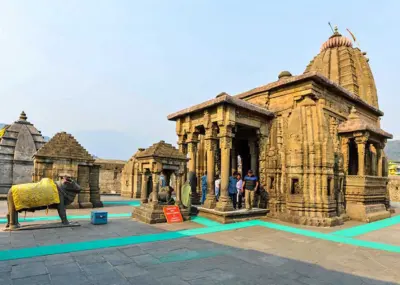

While Dasehra celebrations across India culminate in the burning of effigies of Ravana, Kumbhkaran and Meghnad, the temple town of Baijnath in Himachal Pradesh's Kangra district takes a different path.
Here, Ravana is remembered not simply as the antagonist of the Ramayana, but as an ardent devotee of Lord Shiva. The town's refusal to embrace the ritual of effigy burning has, over generations, become an enduring expression of its faith and heritage.
According to folklore, past attempts to burn the effigies ended in casualties and misfortune. These accounts, passed down through generations, reinforced the belief that such acts could displease Lord Shiva, whom Ravana worshipped with extraordinary devotion. Consequently, Baijnath continues to observe Dasehra without the dramatic spectacle that defines the festival elsewhere.
At the heart of this distinctive tradition stands the revered Baijnath temple, celebrated for its exquisite stone architecture and historical significance. Dating back to 1204 AD, the shrine is among the Kangra valley's most prominent religious landmarks.
Religious legend recounts that Ravana performed intense penance to win Lord Shiva's favour, even offering his ten heads as a testament to his devotion. Moved by his unwavering dedication, Shiva granted him a boon. Ravana then sought to carry the sacred Shiva lingam to Lanka, but was instructed never to place it on the ground.
During the journey, Ravana stopped near Baijnath and entrusted the lingam to a local shepherd. Unable to bear its weight, the shepherd set it down, and the sacred object became firmly established there. The legend is believed to explain the shrine's divine origins.
Baijnath's traditions extend beyond Dussehra. Local folklore also associates the town's traditional absence of goldsmiths and jewellery shops with Ravana's golden Lanka and his attempt to take Shiva away. In Baijnath, Ravana's story is thus remembered through reverence rather than ritual destruction.