
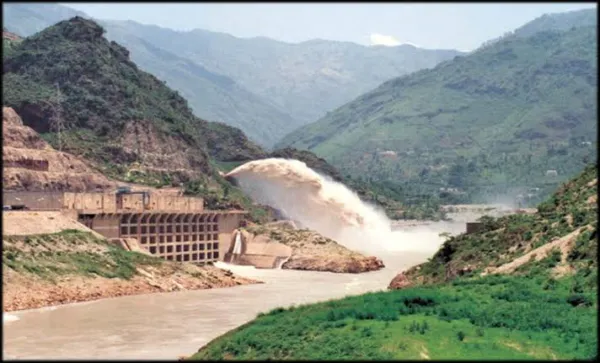

The Dehar Power Plant of the Bhakra Beas Management Board (BBMB), a key 990 MW hydroelectric project, has plunged into a major operational crisis with all its six generating units currently non-functional, resulting in complete stoppage of power generation since early March 2026.
Thishas intensified concerns in Punjab, which has flagged massive generation losses and alleged gross mismanagement of the Beas-Sutlej Link (BSL) Project.
Commissioned between 1977 and 1983, the Dehar Power Plant comprises six units of 165 MW each, making it one of northern India's most significant peaking power stations. Designed to meet peak electricity demand, the plant plays a crucial role in supplying power to partner states, especially during high-demand periods.
However, officials say the project is now operating far below its potential, with generation witnessing a continuous decline over the past three years. Punjab authorities have highlighted that since 2022, power output has been steadily falling due to technical faults, silt accumulation and repeated shutdowns, leading to substantial loss of valuable peaking power.
The crisis reached its peak this month when all units went offline.
According to Punjab's Water Resources Department, Unit No. 3 broke down in early February 2026 due to excessive vibrations, followed by Unit No. 4 in early March because of leakage and vibration issues. Earlier, Units 1 and 2 were already under maintenance. With the remaining units also non-operational, power generation dropped to zero, with official data showing no water diversion through the BSL system since March 4.
Punjab has termed the situation as a "serious operational failure" with significant implications for power availability and financial losses. Officials pointed out that even partial operation of the 990 MW capacity could have supported peak demand, but the complete shutdown has resulted in avoidable energy deficits and loss of revenue for partner states.
A major factor behind the declining generation is the persistent silt problem in the BSL system. Excessive silt ingress, particularly after 2022, has led to erosion of turbine components, reduced efficiency and frequent breakdowns. The issue has also sparked controversy, with Punjab alleging inadequate silt management and delayed maintenance by BBMB.
Environmental restrictions have further complicated the situation, as dredging of silt-laden water into nearby streams is permitted only for three months annually. Punjab has argued that this limitation has worsened silt accumulation and contributed to falling generation levels. The state has called for alternative, year-round silt disposal mechanisms.
In a strongly worded communication, Punjab has accused BBMB of failing to present the full extent of these issues before the Central Electricity Authority (CEA). It has demanded a detailed and comprehensive reference highlighting generation losses, repeated unit failures and siltation concerns, along with a third-party technical audit to fix accountability.
Responding to the crisis, BBMB has held that it has initiated steps for revival of the project. A detailed project report for Renovation, Modernisation, Uprating and Life Extension of the plant has been submitted to the CEA. The Board has also sought deployment of expert teams from the CEA to assess the causes of reduced generation and recommend corrective measures.
The BBMB authorities have also held that orders have been placed with BHEL for replacement of critical turbine components, and efforts are underway to procure a log boom barrier at Pandoh to check debris inflow. BBMB is also exploring round-the-year dredging solutions by utilising extracted silt for construction and allied purposes.
Despite these measures, Punjab has expressed dissatisfaction and sought a clear timeline for restoration of generation. It has emphasised that prolonged shutdown of such a major 990 MW peaking station could severely impact regional power supply, especially during peak seasons.