




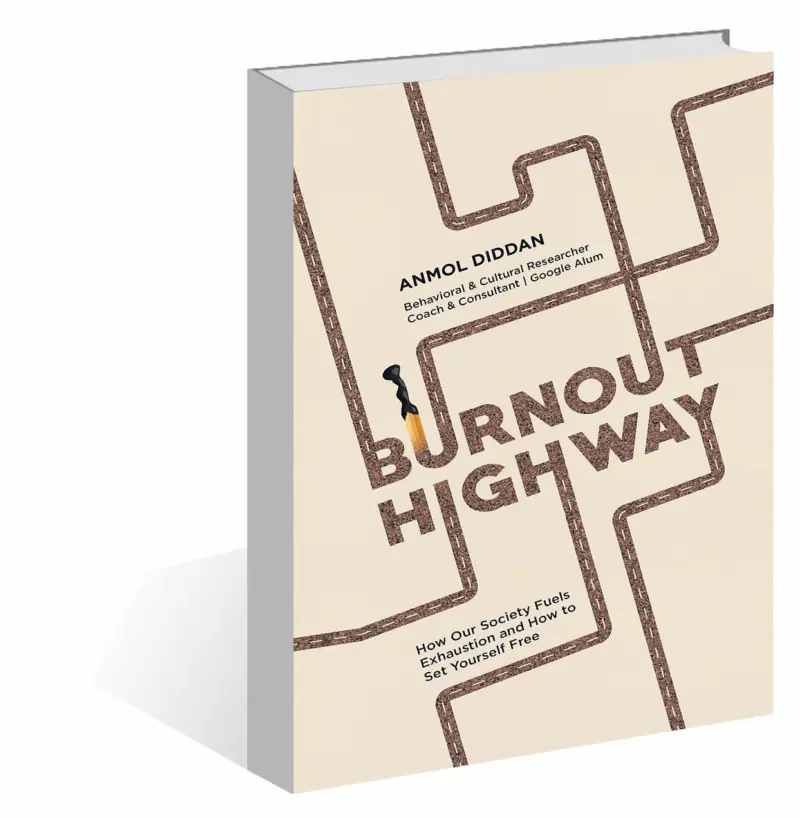

Burnout is not a new buzzword, but it has become a reality. Today, we see 17- to 18-year-olds reaching a breaking point - studying relentlessly for careers they barely relate to, driven solely by social pressure.
It is an exhaustion from which it can take years to recover. Anmol Diddan's 'Burnout Highway' is born out of a similar ordeal.
Climbing up the ladder at Google, he found himself at a crossroads when he was laid off, along with several others, in 2023. This forced pause gave him time to reflect on the path he had opted for. Was that the road he wished to travel on, one that could lead to material riches but could also result in burnout and mental exhaustion?
The book offers a sobering analysis of how capitalism crushes the individual under the weight of corporate culture. It argues that long working hours and meaningless jobs, in the aspiration for ostensibly better lifestyles, can lead to existential angst.
Part I of the book deals with the rise of capitalism and the current education system, and how to define your values within such a system. Expensive education, slowing income growth, and constant evaluation at work provide an impetus for burnout. Defining one's career ikigai (finding purpose in life) through an understanding of what drives and fulfils you could help you find balance.
He promotes deconstructing the narrative of incentivised greed and asks people to look at their lives from an outsider's perspective. He wants people to view their career choices not merely as vertical growth, but as sustainable growth based on their values.
Part II deals with reality versus expectations. Millennials were sold a utopia of peace and prosperity, but what they have inherited is a world where corporates are now larger than countries and influence politics worldwide. Yet, the existential questions of climate change and poverty remain ignored. Gen Z is inhering this existential anxiety. Happiness-wise, countries like Finland rank high; they have fewer working hours and less burnout. One reason is their strong belief that money is a means and not an end.
The solutions Diddan offers include imparting early financial education to youth so they build assets in time and make career choices based on passion and purpose. The second societal shift he advocates is taking a leaf out of Europe's system of high taxation, which provides better amenities like free education and healthcare for all. This reduces the need for individualistic greed.
At Wide World View, a coaching and consultancy platform, the author chooses to assist others in making better career choices based on the three pillars of financial, professional and personal sustainability. He advocates 'Intentional Rest Stops', where one can have a more conscious relationship with technology, build community, focus on incremental self-care, and be less self-critical and more self-aware. Is our passion for work driving our choices, or are our choices leading us to chronic workplace stress? The youth of successive generations are spending more and saving less. This leads to constant insecurity.
Traditionally, the idea of rest was ingrained in Eastern cultures, yet it has now been demonised, and Indians and Chinese - seen as hardworking communities - are not in a very good place. Add to this the time people spend on their phones or laptops. It spells disaster for relationships.
Young people need to let go of socially constructed definitions of success. So, pause, breathe, reflect, and then climb the ladder - not to an unsustainable life, but to sustainable self-growth.
- The reviewer is a psychiatrist