
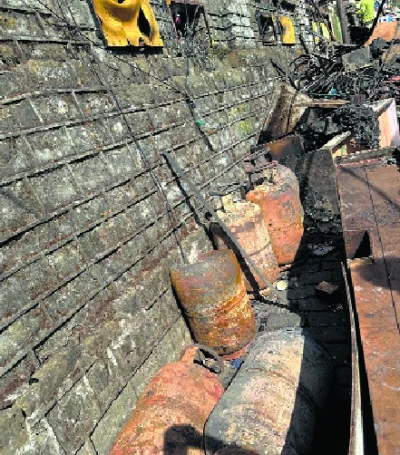

Unsafe storage of inflammable liquefied petroleum gas (LPG) cylinders has once again come under sharp scrutiny after a devastating fire ripped through the heritage market of Kasauli on Monday morning.
The blaze, punctuated by more than a dozen explosions, gutted eight shops and triggered panic in the densely packed commercial area.
Fire officials confirmed that at least 10-12 charred LPG cylinders were recovered from the site, several of them severely deformed or ripped apart due to the intensity of the fire. The explosions not only accelerated the spread of the blaze but also significantly hampered firefighting efforts.
The danger posed by these cylinders became starkly evident when one of them, after exploding, was hurled out of a shop and rolled down the narrow cobbled pathway, threatening adjacent establishments. Fire personnel on the scene noted that LPG-fuelled fires cannot be effectively controlled with water, making such incidents particularly difficult to contain.
The incident echoes a previous tragedy in Arki, where the presence of multiple 14.2 kg LPG cylinders inside a residential building led to a series of blasts, intensifying a fire that claimed 10 lives. The recurrence of such incidents has raised concerns over compliance with storage norms and regulatory oversight.
Shravan Kumar, District Food and Civil Supplies Controller, said eateries are permitted to store up to 100 kg of commercial LPG cylinders. However, he emphasised that proper protocol requires the creation of authorised "gas banks" with prior approval from oil companies or supplying agencies, ensuring adherence to safety standards.
"A detailed report will be sought from the field inspector to determine whether there was any violation in the Kasauli case, including excess storage or negligence in handling," Kumar said.
Fire officials, however, expressed frustration over the lack of cooperation from shopkeepers, many of whom were reluctant to disclose the exact number of cylinders stored either within the shops or in adjoining godowns.
Local residents voiced anger over the apparent negligence, pointing out that the scale of the fire could have been contained much earlier had the repeated cylinder blasts not obstructed firefighting operations. According to initial estimates by the SDM, the fire has caused losses amounting to nearly Rs 3 crore. The administration has provided interim relief of Rs 25,000 to each affected shop owner.
Officials on site observed that each explosion forced firefighters to retreat, delaying their response and escalating the damage. The incident has once again highlighted how improper storage of LPG cylinders can turn routine fire hazards into large-scale disasters.
Despite ongoing efforts by the government to curb hoarding, many eatery owners appear to be bypassing norms during the tourist season, when demand surges and the incentive to stockpile fuel increases-often at the cost of public safety.