
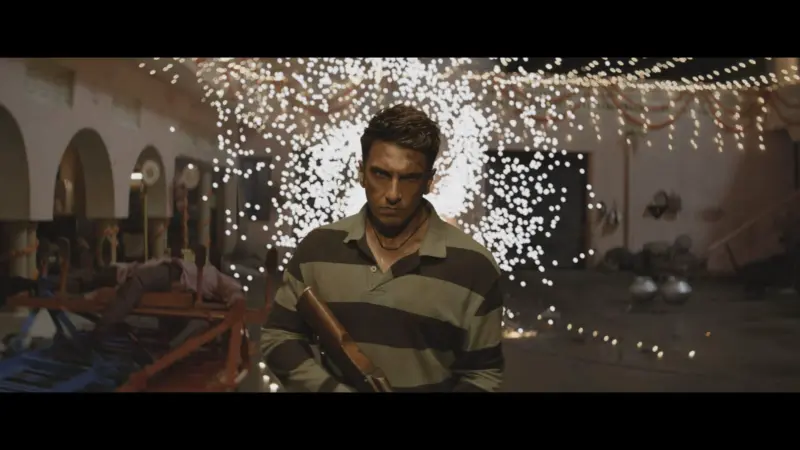

AS 'Dhurandhar: The Revenge' continues its historic run just months after the stupendous success of 'Dhurandhar', it is clear that while the visuals provide the impact, the soundtrack is the literal heartbeat of the franchise.
Director Aditya Dhar may have built the world, but music director Shashwat Sachdev and an eclectic mix of voices have given it a soul India can't stop humming.
The film's cinematic merits remain a point of contention between critics and fans, but the soundtrack is an unmistakable triumph. Touted in album launch promos as a "Shashwat Sachdev musical", he has crafted a landscape where traditional roots collide with modern sensibilities, turning the album into a masterclass of atmospheric storytelling.
Singers like Reble and Khan Saab are no longer just niche favourites; they are becoming household names, their voices synonymous with the film's high-stakes energy. Danish-Indian singer Navtej Singh Rehal of Bombay Rockers has rediscovered massive fame. The reimagining of 'Aari Aari' has ignited a cross-generational spark that is dominating airwaves.
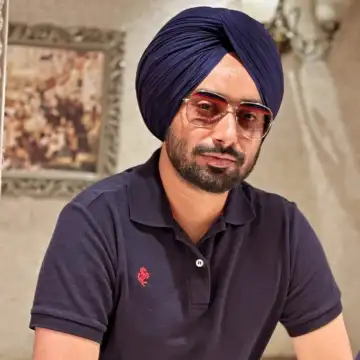
The legendary Satinder Sartaaj has achieved nationwide viral status by lending his voice to just two soulful lines: "Sanu sariyan visar gaiyan raahvan ve…"
Perhaps the most fascinating phenomenon is the "Sartaaj Effect". The legendary Satinder Sartaaj has achieved nationwide viral status by lending his voice to just two soulful lines: "Sanu sariyan visar gaiyan raahvan ve…" It is a testament to the Punjabi singer's stature that this brief, haunting couplet remains one of the most shared and searched moments of the entire album.
Matching this intensity is Jasmine Sandlas - born in Punjab and raised in California. Her contribution to both the films is undeniable, but it is her electric, viral screen presence in 'Sharaarat' and the tracks 'Main Aur Tu' as well as 'Jaiye Sajna' that have created a secondary storm. Sandlas' voice embodies the defiant, restless spirit of the film itself.
The Indian film industry has always stood out for its one distinctive feature - the song-and-dance routine. Be it earlier directors like Raj Kapoor and Guru Dutt or modern-day filmmakers like Sanjay Leela Bhansali and Vishal Bhardwaj, all have used music as an important story-telling tool. Mohit Suri's attention to music has been so phenomenal that even when his movies did not work, the lilting melodies never failed to touch a chord.
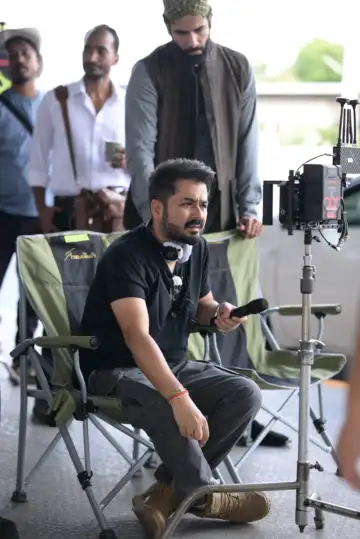
The film’s director, Aditya Dhar’s musicality comes from his roots. Mother Sunita Dhar was head of the faculty of Music and Fine Arts, DU.
With 'Dhurandhar', Dhar elevates music to not just a story enabler, but the narrator itself. His musicality apparently stems from his roots. Son of Sunita Dhar, who served as the Dean and head of the Faculty of Music and Fine Arts, Delhi University, he grew up amidst classical sounds. Besides, Dhar's faith in Shashwat goes back to 2016 while making 'Raat Baaki'. It was initially shelved but released as 'Dhoom Dhaam' last year, though Shashwat did not give the music.
Born in Jaipur, Shashwat's Hindustani classical training began at three. Western classical beckoned while pursuing law at Pune. In Los Angeles, he got an opportunity to work with two-time Oscar winner Hans Zimmer for a crime-thriller series, becoming the first Indian to do so. And if you think Shashwat and Diljit Dosanjh got 'Ez-Ez' in the 'Dhurandhar' verse, their comfort zone dates back to Dosanjh-starrer 'Phillauri', the first film for which Shashwat composed.

Shashwat Sachdev's music is a power-packed story, a mix of genres from Arabic pop to qawwalis to old Hindi songs.
Lately, his chartbuster 'Gafoor' became a high-octane anthem for Aryan Khan's 'Ba****ds of Bollywood'.
For Shashwat, who won the National Award for Dhar's 'Uri: The Surgical Strike', music is all about interpreting the text. Any wonder, walking in step with 'Dhurandhar's lead character, Ranveer Singh's Hamza/Jaskirat, rooted in Punjab di miiti, he leans on Punjabi pop influences and yet creates his own musical architecture.
Beyond the unusual medley of sounds, music in both parts of the blockbuster is a recurring leitmotif, an underlying subtext as also an overarching character. If one moment it reflects the poignant journey of Hamza, at another it turns audacious and rises to capture the breathtaking action in its thunderous beats. Tension, conflict, pain, trauma are all writ in its uplifting poetry and exhilarating rhythms.
In a country where songs have often been the loo-break moment, Shashwat's music is a power-packed story in itself - experimental yet organic, a confluence of varied cultural influences from Arabic pop track produced by DJ Outlaw and performed by Bahraini rapper Flipperachi, to Pakistani qawwalis to India's yesteryear chartbusters. And then, who would have thought of amalgamating voices from Punjab with those from the Northeast.
Yet, it's a musical score which is always in sync with the film but has a life of its own - engrossing, electrifying and entertaining all at once. As a Gen-Z music buff says, "Movies are often larger than life, but here music, too, has an unmatched Titanic scale echoing its characters' robust personas."
Time and again, Imtiaz Ali and his favourite lyricist Irshad Kamil's musical alchemy has given memorable numbers, for instance in 'Amar Singh Chamkila', with its impactful 'Mainu Vida Karo'. Kamil's lyrical verses have often been woven in the larger fabric of the film. What the gifted lyricist from Malerkotla has written for both parts of 'Dhurandhar' is imbedded not just with meaning and purpose, but a deep reflection of the narrative arc. So much so that listeners can find newer allusions in what seemed like just another love song. When the first part was released in December last year, 'Gehra Hua' found its way as a favourite ringtone.
Today, discerning cinephiles can sense a deeper meaning in its poetic metre, not just the spy reference in the line: "Tujh se bach ke chalna bhi hai". In the use of the words "khwaab khwaab", they can sense what 'The Revenge' has shown: the love story of Hamza and Elina is not exactly a happily ever after.
Noted casting director Mukesh Chhabra, whose on-point casting for Aditya Dhar's vast array of adorable and despicable characters has won him fulsome praise, says he himself listens to the songs on a loop. He recalls, "During the casting process itself, Dhar would tell me repeatedly as to how he is going to use the music in his films; in short, like never before in Hindi cinema."
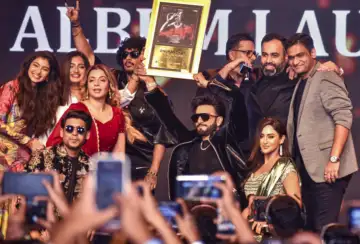
Presence of singers like Jasmine Sandlas, Reble, Khan Saab, Danish-Indian singer Navtej Singh Rehal have taken Dhurandhar’s music to unimaginable heights. Present in this photo are Shilpa Rao, Hanumankind and Madhubanti Bagchi. PTI
Music composers often collaborate with the captain of the ship to grasp the finer details and create the necessary mood. Shashwat's musical genius is evident not only in how he has experimented with a whole range of voices with varying tones and textures, but in the use of remixes - from the reprised version of 'Na Toh Kaarvan Ki Talaash Hai', to 'Aari Aari' and 'Tamma Tamma'. What's equally remarkable is how the song is used in a pivotal scene concerning Sanjay Dutt's SP Aslam. The irony, that the original was picturised on the 'Khalnayak' star and Madhuri Dixit in 'Thaanedaar', is not lost on those who follow cinema avidly. An Easter egg by way of a song.
Clearly, remixes have been the order of the film industry for quite some time. As Mukesh puts it, "Remixes can often be specific to a situation. Only Shashwat has used them because these were popular numbers of their times and fit aptly in the narrative. What's more, look at how he has blended them with English lyrics."
If in the voice of Reble, a singer from Meghalaya in her early 20s, songs like 'Naal Nachna', 'Monica, Oh My Darling' and 'Main Aur Tu' acquire the requisite Gen-Z feel and timbre, the use of 'Rasputin' simply takes your breath away. To reimagine Boney M's song in a climactic moment, drawing a parallel between the entrapment of a Pakistani General with a historical Russian figure requires some imagination. And gumption, too, which anyway is a hallmark of Dhar's films.
According to Mukesh, the beauty of Dhar's directorial skills and Shashwat's musical prowess is their combined ability to spring a surprise. He avers, "Just look at the placement of songs. These are largely as an antithesis to what one would expect in that particular sequence." If he loves how 'Tamma Tamma' and 'Hum Pyar Karne Wale' have been juxtaposed during crucial turning points, he swears by Dhar's vision, "Crystal clear from the word go."
He adds, "From the look of each character to the design of a scene to the musical motif, he had it all ready in his mind. And, of course, Shashwat is an exceptionally creative musician who matched his director's exemplary vision note by note."
The net result - every character, major or minor, gets a fillip with every song that has them in the frame.
Call it the power of conviction or the synergy of two genre-bending geniuses, today the music of 'Dhurandhar' not only rules popularity charts, but is the go-to score for random reels. Music certainly has a soul of its own, but for film music to become the movie's signature, manifesting itself in more than one theme, is a rare feat.
As a rule, remixes take you back to the original verse, but with 'Dhurandhar', pick any remix and you will only be reminded of the world Dhar has created.
Originals like 'Phir Se Naina Bhare', in the unmatched voice of Arijit Singh, with lyrics by Kamil, convey the emotional weight of Hamza's heartbreaking dilemma of a man unable to return home, as no dialogue ever could have. In a way, it's also a befitting answer to the brigade which is questioning with scepticism: can Hamza's revenge put an end to terror? The answer lies in the lyrics: 'Samjhe they hum, gham hai khatam'… pain might be cyclical but music as a balm, as an immersive experience, requires unerring felicity and nerve.
Instead of ticking the checklist, Dhar and Shashwat decided to create their own, and now it's the playlist of millions.
If 'Dhurandhar' became the first Hindi film album to have its entire soundtrack chart simultaneously on Spotify's Global Top 200, 11 out of 14 tracks of 'The Revenge' found the same exalted place. As the sequel crosses the Rs 1,500-crore mark globally, it's a classic case of one feeding the other. Music and the film have never been in a more symbiotic relationship. The director and his musical team have not just completed a story, but created history.