

Some stories don't feel new. They resonate like a melody you have heard before but arranged just differently enough to catch your ear.
'Feel My Voice' walks into that delicate space, carrying the DNA of films like 'La Famille Bélier', 'CODA' and the 1996 Indian classic 'Khamoshi: The Musical', but trying to hum its own melody. Directed by Luca Ribuoli, this Italian drama leans into emotion, music and silence with equal sincerity. And yes, you've seen this story before, but here, it's dressed in a different cultural rhythm, with a voice that occasionally trembles but often soars.
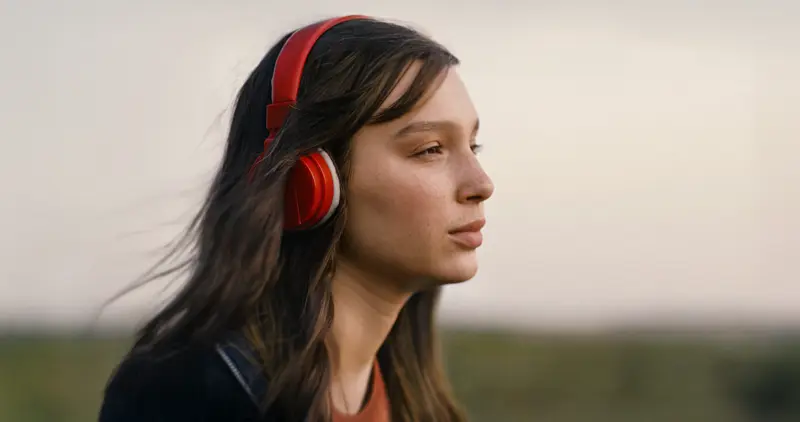
The film centres on Eletta Musso, a 16-year-old girl who is the only hearing member of her deaf family. Living in a tight-knit household where communication flows through sign language and shared understanding, Eletta plays a crucial role as the bridge between her family and the outside world. Her life takes a turn when her natural singing talent is discovered, revealing a voice that feels almost like a secret she didn't know she was keeping. Encouraged by her music teacher, she begins to consider applying to a prestigious music school, a decision that quietly fractures her world. On one side is her family, deeply dependent on her presence and voice; on the other is her growing desire for independence and artistic expression.
As she prepares for auditions and navigates self-doubt, Eletta finds herself pulled between guilt and ambition. The tension builds not through dramatic confrontations but through small, emotionally charged moments, missed conversations, hesitant glances and the weight of unspoken sacrifice. Ultimately, her journey becomes less about choosing between family and dreams, and more about discovering whether she can hold both without losing herself.
What elevates 'Feel My Voice' is its performances. Sarah Toscano as Eletta carries the film with a sincerity that feels disarmingly real. There is a natural awkwardness to her portrayal. She doesn't glide through emotions, she stumbles through them, which makes every moment land harder. When she sings, it's not just technically impressive, it feels like release, like she is finally speaking in a language that belongs only to her.
Serena Rossi, as the supportive yet firm music teacher, brings warmth without tipping into cliche. Their dynamic avoids the predictable mentor-student theatrics and instead settles into something more grounded and believable.
Direction-wise, the film knows what it wants you to feel, but Ribuoli leans heavily on contrast: sound versus silence, closeness versus distance and duty versus desire. The sound design deserves mention. Moments of quiet are not empty but loaded, placing you right inside Eletta's dual world.
At times, the film does feel a bit too polished, almost cautious, as if it is aware of the emotional beats it needs to hit because of its predecessors. But when it lets go of that awareness, it finds its own identity, particularly in scenes involving family interactions, which feel lived-in and authentic rather than staged.
The film still feels overly familiar, leaning heavily on well-worn tropes from similar films. While sincere, it rarely surprises, and its polished emotional beats often feel calculated, making the narrative predictable despite strong performances and competent direction.
By the end, 'Feel My Voice' doesn't try to overwhelm you, but it gently lingers. It's the kind of film that leaves behind a soft resonance rather than a dramatic aftershock. And in a story so deeply rooted in sound, that quiet might just be its most powerful note.