
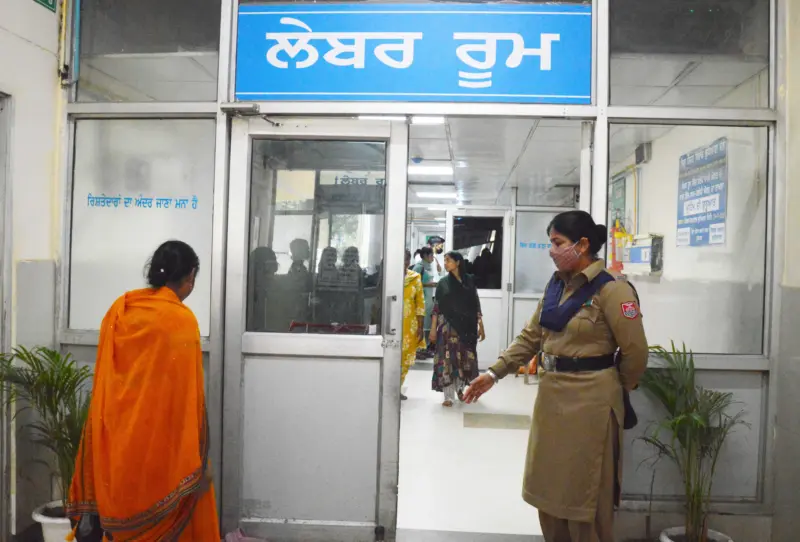

In a progressive step toward patient safety and comfort, the Mother and Child Hospital (MCH) at the Civil Hospital, Ludhiana, has inducted female security guards for the first time.
Under the new system, three women guards have been appointed to work alongside male personnel, ensuring round-the-clock protection for mothers and children. One woman guard, along with her five male guards, will be on duty round the clock in each shift. A total of 16 male security guards are there with the hospital now. This is the first time that women security guards have been appointed in the hospital.
Families visiting the hospital have expressed relief at the initiative. "When my wife comes here for check-ups, I feel more re-assured seeing women guards around. It creates a safer and more respectful environment," said Rajesh Kumar, husband of an expecting mother.
Another woman, Sunita Devi, who was accompanying her daughter-in-law, added that, "It was a pleasant surprise on seeing a woman security guard asking us if everything was okay and if we need any help. This is really a promising step," she said.
Nursing staff and paramedical staff have also appreciated the deployment of female guards.
Senior Medical Officer (SMO) Rohit Rampal emphasized the importance of the change. He said, "This is not just about security, it is about sensitivity. Mothers and children need an environment where they feel protected and comfortable. The presence of female guards ensures that patients can communicate freely and feel more at ease."
He further noted that the initiative reflected the hospital's commitment to patient-centered care. "We are proud to be the first government hospital in the district to implement this system. It sets a precedent for others to follow."
With female guards now present in every shift, the hospital authorities believe the atmosphere will become more welcoming and secure, particularly for pregnant women and new mothers. The initiative is being seen as a model for other government hospitals in Punjab, highlighting the importance of gender-sensitive measures in healthcare facilities, added another senior doctor from the hospital.
At the MCH, every day around 200-250 pregnant women come to the OPD for check-ups, and 30 to 40 arrive for delivery. Additionally, 200 to 250 children come for treatment in the OPD. In such a situation, the presence of women security personnel will make the environment more secure and comfortable.
According to the hospital authorities, the decision has been taken keeping in mind the convenience and safety of pregnant women and female staff. Currently, women guards have been deployed only at the MCH, but later they will also be posted at the Civil Hospital.
The role of the female guard is not limited to one place, she will inspect various wards every half hour, including the labour ward, post-natal ward one, post-natal ward two and others. She will also interact with mothers, pregnant women and their family members to check if they are facing any problem.