

This marks the second major rollback by the Housing Department after the withdrawal of the land pooling policy, both initiatives having been designed to generate quick revenue for the cash-strapped state government and support its ambitious spending plans.
Officials confirmed that with the scrapping of the 2025 rules, construction activity across Punjab would now be governed by the Punjab Municipal Building Bylaws, 2018, and the Punjab Urban Planning and Development Building Rules, 2021. "Following the High Court's stay on several provisions, public-related work pertaining to the approval of building plans, compounding of violations and allied matters had virtually come to a standstill, leading to delays and inconvenience to applicants," said a senior government functionary.
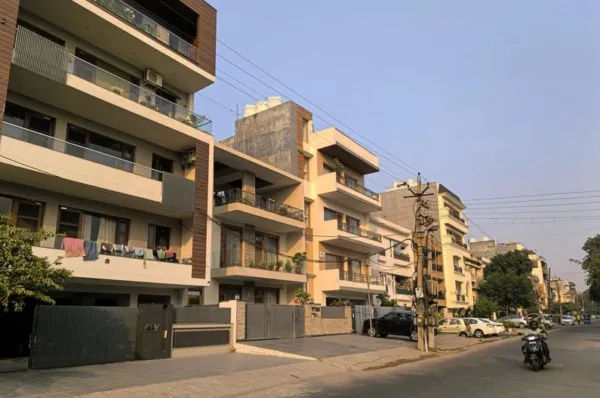
At the core of the 2025 policy was an attempt to streamline approvals and boost real estate growth. Among its most contentious provisions were relaxations allowing higher vertical expansion, including stilt-plus-four-floor constructions, higher ground coverage and increased floor area ratio, aimed at enhancing revenue through charges linked to collector rates.
However, urban planners and environmentalists flagged serious concern, warning that such measures risked overwhelming the already strained civic infrastructure. Concerns ranged from fire safety preparedness to traffic congestion and groundwater stress in rapidly expanding cities. They also raised serious objections to key provisions of the 2025 rules, flagging risks of unplanned urban densification and potential violations of safety norms.
The petitioners, including Harbinder Singh Sekhon (93) and Jasinder Sekhon (61), argued before the court that the rules would lead to "haphazard raising of buildings" and unchecked densification of residential areas. They also contended that residents were not adequately consulted during the formulation of the policy. They alleged that the Real Estate Advisory Committee involved in drafting the rules was dominated by private developers and promoters with vested interests, sidelining public concerns.
It was pointed out that the rules allowed stilt-plus-four constructions even on residential plots along 40-foot-wide roads, besides permitting up to 100 per cent ground coverage for certain commercial buildings in core areas.