
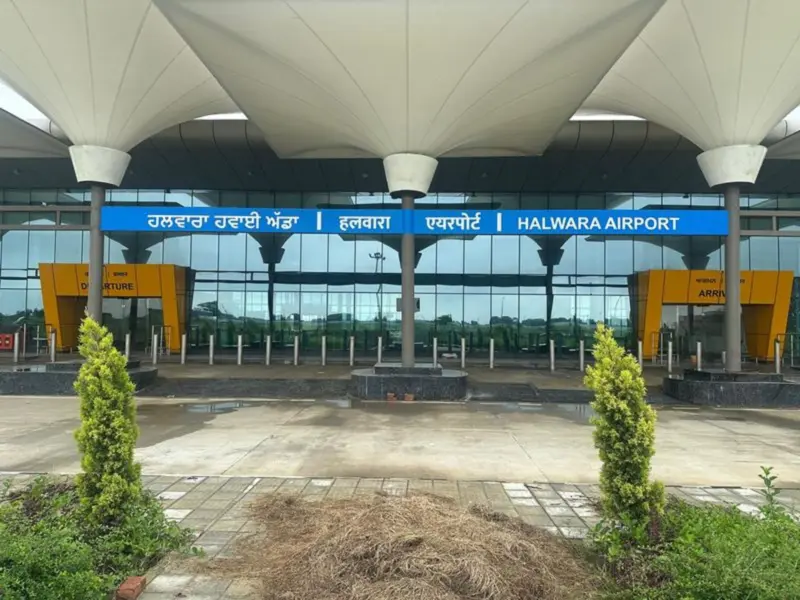

THE launch of four daily Air India flights from the upcoming Halwara Airport to Delhi marks an ambitious new chapter in Punjab's aviation story.
Timed for seamless global connections, particularly to the West, the project taps into Ludhiana's industrial heft. On paper, it looks like a long-overdue correction. In practice, it risks becoming another addition to a growing list of underperforming airports. Punjab's recent aviation history offers cautionary lessons. The Adampur airport has struggled with closures and poor connectivity. The Bathinda airport runs skeletal services. Even the Chandigarh international airport, the state's busiest, falters in fog and lacks robust all-weather systems.
The expanded UDAN Scheme was meant to democratise air travel. Instead, it has often produced airports without ecosystems. Routes without passengers and infrastructure without reliability are some common problems seen. A six-fold increase in funding cannot mask such structural gaps as weak demand forecasting, poor last-mile connectivity and overdependence on Delhi as a hub. Halwara's viability hinges on whether it can break this pattern. Ludhiana's industry and diaspora do offer a stronger demand base than most tier-2 cities. The promise of same-day international connectivity is a genuine advantage. Yet, if passengers still find it easier to drive to Delhi, or if schedules falter, the initial enthusiasm may quickly dissipate.
The larger question is whether Punjab is building airports or merely multiplying them. Without integrated planning, reliable operations and sustained airline commitment, Halwara risks joining the ranks of well-intentioned but underutilised infrastructure. For Punjab, credibility in aviation depends not on announcements, but on consistent execution and passenger trust. For now, the runway is ready. Whether Halwara can truly take off depends on whether policy finally catches up with promise.