
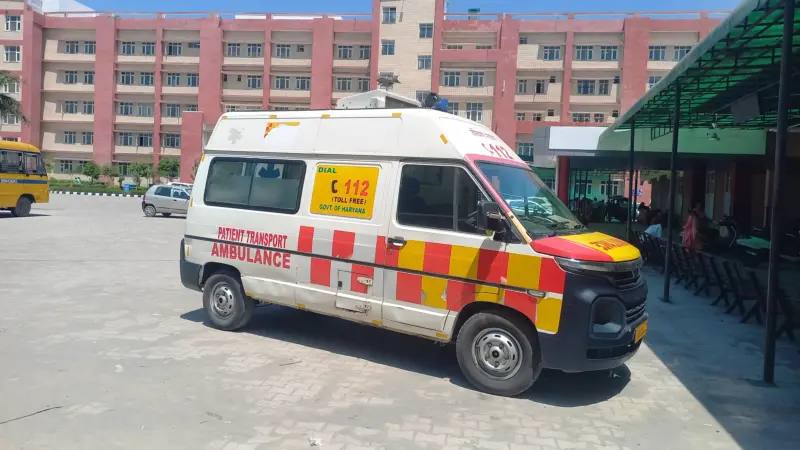

The Health Department in Yamunanagar district is facing a growing challenge due to the shortage of ambulances, forcing many patients to rely on private vehicles to reach hospitals.
The existing fleet of ambulances has exceeded its prescribed operational life, and frequent breakdowns are now affecting emergency response services in the district. The situation has worsened as several ambulances have become outdated and require frequent repairs.
Department records reveal that the district earlier had 22 ambulances. However, the department currently has only 20 ambulances in operation. According to officials, out of these, 13 ambulances - from the 2018 batch - need to be condemned as they have already completed their operational life. Despite the urgent need, the department has not yet received replacement vehicles for the condemned ambulances.
For several years, the health system has been managing emergency services with just 20 ambulances. Officials have written to the headquarters, requesting 13 new ambulances to replace the condemned vehicles, but no replacements have been received so far. As a result, emergency medical services continue to operate under significant pressure.
The district's ambulance system includes six advanced life support (ALS) ambulances, five basic life support (BLS) ambulances and nine patient transport vehicles.
The shortage is impacting response times. While the standard response time for an ambulance is expected to be around 10 minutes, delays are becoming increasingly common. Data from the control room shows that, in December 2025, the average referral response time was around 10 minutes. However, by January 2026, it had increased to about 12 minutes, highlighting the growing strain on the limited fleet.
A shortage of Emergency Medical Technicians (EMTs) and the lack of trained personnel have further complicated the situation.
The department currently has only 25 EMTs, which is insufficient for the number of ambulances operating in the district. Due to this, many ambulances are forced to run without trained EMTs, depriving critically ill patients of essential primary care during emergencies.
The workload on the ambulance service is significant. On average, the control room receives 1,500 calls every month requesting ambulance service.
Another concern raised by officials is the misuse of the situation by some private ambulance operators. Due to the shortage of government ambulances, private drivers often remain stationed around hospitals and approach patients and their families, persuading them to use private ambulance services for transfers to other hospitals. Health officials say action has been taken in the past against some private ambulance drivers, including removing their vehicles from hospital premises. However, such practices reportedly reoccur after some time.
Maintenance costs of the ageing ambulances have also increased considerably. Since many vehicles have already completed their service life, they require frequent repairs. Officials say repair expenses are rising, but the department has not yet received sufficient budget from the headquarters for maintenance. As a result, some ambulances remain out of service for extended periods.
Experts warn that the situation could become serious if immediate steps were not taken to strengthen the emergency transport system. Ageing ambulances breaking down in transit could pose a direct risk to patients, particularly those in critical condition.
Referral Transport Deputy Civil Surgeon Dr Sushila Saini acknowledged the shortage, and said the department had formally written to higher authorities demanding new ambulances. She said existing vehicles were being used to manage services until replacements were provided.
"The district is facing a shortage of ambulances. A proposal has been sent to the headquarters requesting new vehicles. Until the new ambulances arrive, we are continuing to operate with the available fleet," she said.
With the district's population, and demand for emergency medical services growing every year, health experts believe that expanding the ambulance fleet and strengthening staffing levels is essential to ensure timely medical assistance for patients across Yamunanagar.