

“The strong do what they can and the weak suffer what they must."– Thucydides
We inhabit a moment that Hannah Arendt would have recognised with chilling clarity, a dark conjuncture in which violence stands routinised, language is debased and war normalised as policy.
Yet what is perhaps more troubling than the wars themselves is the strange quiet that surrounds them. There is protest, yes, but it is scattered, intermitten, and lacking the moral urgency that once shook governments, particularly the anti-Vietnam War demonstrations in the sixties. Political leadership, meanwhile, appears suspended in a state of realpolitik or calculated silence, while the world sleepwalks toward unimaginable catastrophe.
This silence is complicit, reflecting what Arendt famously described as the “banality of evil" or that which is not the monstrous act of a single tyrant, but the everyday normalisation of violence by bureaucrats, soldiers and citizens who continue to perform their roles without moral interrogation. War persists not merely because it is willed by leaders, but because it is absorbed, rationalised, and even rendered invisible by societies that believe they can endure its consequences without reckoning with its causes. For instance, Adolf Eichmann, a senior official under Hitler who helped organise the deportation of Jews to Auschwitz, claimed that he had committed no crime, insisting till the end that he was merely fulfilling his duty.
In this moment, the figure of Donald Trump assumes symbolic importance beyond his own political career. Under such leadership, the US appears to have drifted towards an unsettling posture of a ‘rogue state", one that unsettles global norms more brazenly than even those states it once sought to discipline. The idea of America itself has fractured. Though it once signified a stable democratic promise, it now oscillates between competing identities of a patron of liberty, an agent of intervention, and, increasingly, a source of disruption. To rethink war today is, therefore, also to rethink what America signifies in the contemporary world order.
War, as ever, arrives clothed in the language of necessity, of defence, liberation, stability and order. Yet history offers little evidence that it delivers on these promises. From the imperial conquests chronicled in Eduard Galeiano’s Open Veins of Latin America to contemporary interventions in West Asia, the pattern remains unchanged, as apparent in the fact that war transforms and destroys, but rarely resolves. It produces a surplus of violence with new conflicts, new grievances, new instabilities.
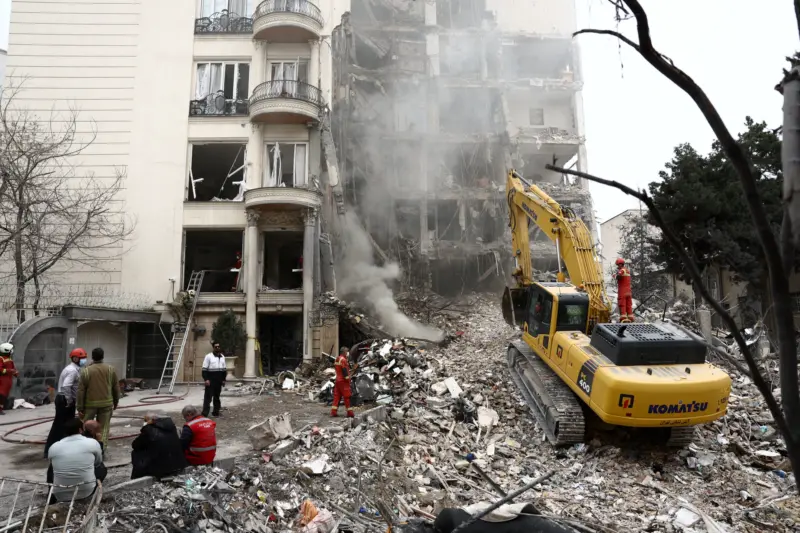
Nowhere is this more evident than in the contemporary West Asia. From Gaza to Lebanon to Iran, the rhetoric of security and restoration masks a deeper political bankruptcy. Promises are made of democracy, of protection, of liberation, but they remain unfulfilled. The legacy of the 1953 Iranian coup d’état and the Iran Hostage Crisis of 1978 continues to reverberate, shaping a region marked by mistrust and perpetual tension. Wars here do not end; they metastasise.
If history reveals the political failure of war, literature reveals its moral failure. In Homer’s The Iliad, the climactic encounter, when Priam goes to Achilles to beg for the body of Hector, interrupts the logic of enmity. Achilles, the embodiment of martial rage, weeps with the father of the man he has killed, a recognition of shared humanity. War’s narrative of animosity is briefly undone by recognition.
This ethical possibility is there in Shakespeare’s Troilus and Cressida, but here heroism collapses into cynicism. Figures like Achilles and Agamemnon are no longer noble warriors but hollow rhetoricians, their grand language masking instability and moral emptiness. Wars and heroes are stripped of honour and become more of spectacles of deception and decay. By the time we reach Erich Remarque’s All Quiet on the Western Front, the transformation is complete. The soldier discovers that his true enemy is not the man in the opposing trench, but the machinery of nationalism, authority, and propaganda that has placed them both there. Trapped beside the man he has shot, Paul, a German, is overwhelmed with guilt. He speaks to him, apologises, imagines his life.
Even in popular culture, this moral intuition persists. Songs like Bob Dylan’s ‘Blowin’ in the Wind ‘and John Lennon’s ‘Imagine’ articulate a longing for a world beyond violence, not as naïve idealism, but as ethical critique. Poetry and art, in this sense sustain the imagination in a world where political language has been emptied of meaning. When language is degraded, politics follows. To write well, as literature teaches us, is also to think ethically and uphold the potential for imagination as survival in the face of nightmares.
History, meanwhile, continues to expose the illusion that war can be controlled. The assassination of Julius Caesar, intended to preserve the Republic, instead precipitates the rise of empire under Augustus. The killing of Archduke Franz Ferdinand triggers a global conflict that none of its participants anticipated. Violence deployed as a corrective, becomes the instrument of irreversible transformation.
The silence of our time is therefore deeply alarming. Where are the mass mobilisations that once challenged war? The student uprisings of May 1968 protests in France brought down Charles de Gaulle. Today, demonstrations exist, but they lack the scale and transformative force of that moment. This is not merely a failure of protest; it is a failure of imagination.
Thinkers across history have warned us of this moral erosion. Desiderius Erasmus, the eminent Renaissance scholar, rejected war outright, seeing it as irrational and inhumane. Thomas More, though more pragmatic in his classic Utopia, insisted on the primacy of conscience over power, but agreed that war is a necessary evil. In our own time, Václav Havel spoke of a crisis of responsibility, a civilisation that has lost its moral bearings.
Arendt’s insight returns here with renewed urgency. It must be kept in mind that “the banality of evil" is not an abstract concept but visible in the routine functioning of modern warfare. It is the pilot who releases a bomb as part of professional duty, the bureaucrat who signs the order, the citizen who looks away. It is chillingly captured in Bernhard Schlink’s novel, The Reader, where obedience replaces morality, and responsibility dissolves into procedure.
To confront war, then, is to challenge the structures – political, economic and linguistic – that sustain it. Democracies cannot evade this responsibility. They produce the leaders they elect, and they tolerate the policies enacted in their name. To condemn war without interrogating the conditions that make it possible is to remain trapped within its logic.
What is therefore, required is not only political change but a renewal of moral and intellectual life. Universities must remain spaces of critical inquiry and media must resist becoming instruments of propaganda. Most importantly, language itself must be reclaimed. In an age of euphemism clichés like “collateral damage," “surgical strikes", “escalation" abound, thus diluting the urgency that is so necessary. Without truth, justice cannot survive.
As John Rawls reminds us in A Theory of Justice, justice is the first virtue of social institutions, just as truth is of systems of thought. At present, we seem to possess neither. What remains, perhaps, is skepticism, a refusal to accept the master narratives of power that justify war in the name of order. The task before us is therefore urgent compels us to break the silence, to resist the normalisation of violence and to recover the moral imagination that war seeks to extinguish. For if art lives, the human spirit endures. And if the human spirit endures, the possibility of peace, however fragile, remains.