





Over the past five years, erratic weather has steadily eroded the foundations of traditional apple cultivation in Himachal Pradesh. Weather cycles that once aligned with orchard needs have become unreliable.
Sparse snowfall, warmer winters, prolonged monsoons and frequent hailstorms are disrupting the precise climatic balance required for quality apple production.
This shift is forcing a hard question: should growers abandon traditional orchards dominated by Delicious varieties grown on seedling rootstock and transition to low-chill varieties and high-density systems? Increasingly, the answer from both scientists and growers is unequivocal - yes, especially below 7,000 feet.
At lower elevations, the problem is structural. Traditional Delicious varieties require adequate chilling hours to flower and fruit properly. With warming winters, that requirement is no longer being met. The result is poor flowering, low fruit set and declining quality. Experts argue that growers in these belts must pivot toward spur types and low-chill varieties such as Gala. At higher altitudes, above 7,000 feet, Delicious can still perform, but even there, a gradual diversification toward Gala, Fuji, and Granny Smith is being advised.
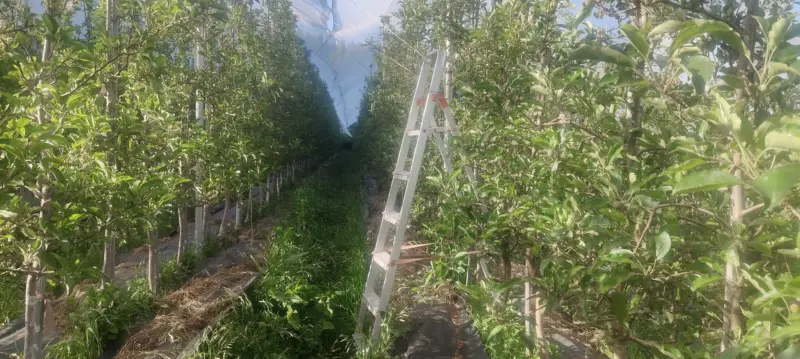
High-density apple cultivation is emerging as a more climate-resilient alternative. Unlike traditional orchards with widely spaced, large trees, high-density systems rely on dwarf rootstocks planted closely. These systems require fewer chilling hours, making them better suited to warming conditions. The difference in output is already visible. In many lower-elevation areas this year, traditional orchards have yielded almost no crop, while high-density plantations and low-chill varieties have performed significantly better.
Efficiency is another major advantage. High-density orchards allow precise nutrient and water management through drip irrigation and fertigation, delivering inputs directly to the root zone. This ensures uniform growth and better fruit quality. In contrast, traditional systems struggle with uneven nutrient distribution, often resulting in only 40-50 per cent of produce meeting premium standards.
Canopy management is also simpler in high-density systems. Better sunlight penetration and improved air circulation reduce disease incidence, a critical advantage as monsoons become longer and more humid. In recent years, premature leaf fall and fungal infections have become widespread in traditional orchards, impacting both current yields and next season's productivity.
Yet, the transition is far from straightforward. High-density systems demand substantial upfront investment: quality planting material, trellis support structures, irrigation infrastructure and anti-hail nets. For a state where nearly 90 per cent of apple growers are small and marginal farmers, such costs are a serious barrier. Experts caution against abrupt shifts, recommending phased transitions rather than wholesale orchard replacement.
Alongside this shift, diversification is gaining ground as a parallel strategy. Growers are increasingly turning to stone fruits like cherry, plum, apricot, and almonds, which are better adapted to current climatic conditions and require lower inputs. Persimmon is also emerging as a viable alternative in traditional apple belts. Diversification not only reduces dependence on a single crop but also stabilises income in an increasingly uncertain climate.
Government initiatives such as the nut mission are expected to accelerate this trend. However, growers warn that production gains must be matched with robust post-harvest infrastructure. Without integrated cold chains and market linkages, increased output could lead to distress sales and wastage.
Orchards under pressure
The rules of apple farming in Himachal have fundamentally changed. Traditional Delicious orchards, once the backbone of the hill economy, are increasingly unviable at lower altitudes due to insufficient chilling hours
High-density plantations with low-chill varieties are proving more resilient, efficient and productive under warming conditions. However, the shift demands heavy upfront investment, making it difficult for small growers
A phased transition, combined with diversification into stone fruits like plum, cherry and almond, is emerging as the most practical path. Without parallel investments in cold chains and market systems, even successful adaptation could trigger new economic risks