





I remember being in court in 2017 - fairly new to the legal profession, still at the stage where the daily cause list looked unending and every senior counsel sounded like they were arguing matters of national importance.
I was assisting my senior, who was due to appear in a short time, when a preceding matter was called out. I recall the counsel rising, noticeably slower than the general gusto counsels show when their cases are called out, and what followed was a carefully worded request for recusal.
No over-the-top expressions, no flamboyancy, no frills.
Just a careful, polite suggestion of circumstances that would allow the possibility of bias to fester in the minds of one of the parties.
The judge listened and paused, theatrically.
The recusal request was allowed with a pensive nod.
I sat there, as a junior counsel, slightly bemused and unsettled, thinking, 'That's it? Just an apprehension, and no proof? That's enough to recuse?” Other matters on the cause list went on as normal, but that incident left a core memory of judicial instinct in a young litigator, an understanding that sometimes the legitimacy of the whole process is perhaps best preserved by stepping away from it.
Courtrooms are, of course, in many ways theatres of restraint where there is drama, but it always arrives unannounced. It is a theatre of pauses, of careful words and of firm authority. This memory returns in the context of the recent recusal proceedings before the Delhi High Court in the Kejriwal-Swarna Kanta Sharma saga. It has no doubt stirred the Bar and raised the deceptively simple question, 'when should a judge recuse?'
Without sounding too technical, the law on recusal is fairly simple. Judges are expected not to sit on and decide cases where there might be an apprehension of bias. However, the issue lies in the fact that 'apprehension of bias' has no clear definition, more like it being a subjective impression and not an objective test. This puts into context the recent Kejriwal-Justice Sharma recusal episode.
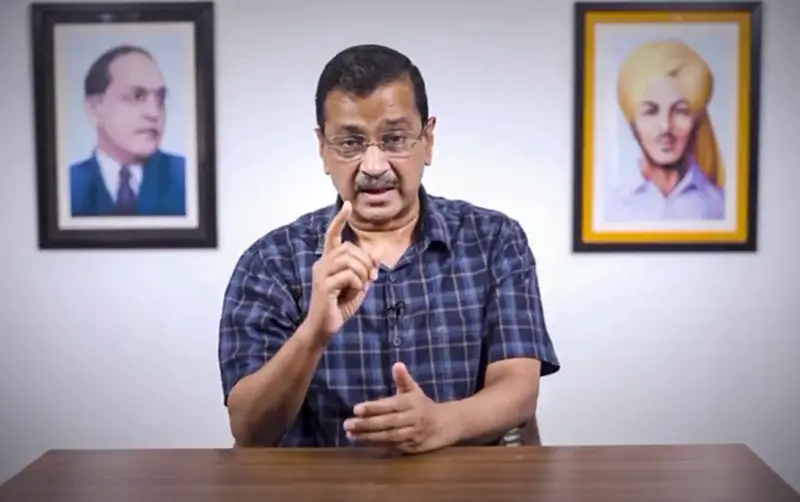
Arvind Kejriwal, the former chief minister of Delhi, in his recusal application, argued his case personally before Justice Sharma. This adds to an ever-increasing list of politicians using the courts of law as a theatrical cauldron for conducting their personal brand of performative politics. Kejriwal, in his arguments, stopped short of alleging actual bias, something which need not be proven with forensic correctness at such a stage.
Instead, recusal is a far more perceptual matter, where the standard is whether a reasonable observer might incur an impression, however fleeting, that the proceedings were perhaps not conducted fairly. Judges are trained to adjudicate and decide on cases and not shy away from hearing them. Recusal requests in that sense run against judicial duty per se, but are sometimes far more subjective than the law itself.
Judges also often say what Justice Sharma effectively made out in her oral observations, “If I recuse for this reason, I'll have to recuse half my roster,” and that is not flippantly said, but rather reflects an institutional concern. Because let's be honest, if recusal applications are allowed routinely, it would open the door to litigants trying to switch Benches based on vague allegations and suggestive connections. Pushbacks against recusal requests, therefore, are not entirely misplaced, as courts have to function, or at least be seen to function, with a degree of judicial firmness and authority.
However, on the flip side lies judicial impropriety and conflict of interest.
Reportedly, Kejriwal filed an affidavit before the court, placing on record the fact that the judge's immediate family members, being practising advocates, are the beneficiaries of the largesse of an institution that is effectively a party in his case.
Keeping aside the fact that the children of Justice Sharma had purportedly been assigned over 5,000 cases in little over three years, collectively, while other immensely competent and young junior counsels barely get a couple of cases assigned to them a year, does it raise possible questions of fairness and conflict of interest?
Possibly. But in all honesty, that reflects far worse on the system than Justice Sharma.
Would a reasonable observer conclude that assignment of such cases to immediate family members would likely create an affinity bias in the mind of the judge?
Possibly. We have no way to know. Both sides, inconveniently, make sense. However, it is a clever lose-lose situation.
A reasonable observer is also a curious figure, who is neither naïve nor cynical, who is seemingly balanced and impartial, one who is perceived to be fair. As often said, justice must not only be done but must be seen to be done. Apprehension of bias specifically sets the bar lower than proof of bias, something Justice Sharma seemed to conflate in her order dismissing the recusal application.
In most cases, this distinction feels superfluous, even redundant, but ever so often, you get cases like Kejriwal's recusal application, where nothing is demonstrably off, but something feels weirdly uncanny.
Perhaps that is why most recusals happen in silence, without reasons provided. None of it is to suggest that recusal was the answer in this case. The point is not 'must I recuse' but 'would it have been wiser to recuse'. The difference is subtle, but that is where the idea of apprehension of bias exists, not in compulsion but in judicial wisdom.
Courtrooms are often sites of uncertainty and justice in a country where justice itself is uncertain. Judicial propriety exists to manage doubt carefully and consciously, without pretending that it doesn't exist.
Sometimes, as that old courtroom quip reminds us, the most persuasive assertion of impartiality is the quiet decision not to test it.
That it indeed is enough to recuse.
Tanumoy Majumder is a Delhi-based practising lawyer.