





The Tata group is making headlines once again, albeit for the wrong reasons.
Noel Tata, chairman of Tata Trusts and the Tata family patriarch, has asked Tata Sons Chairman N. Chandrasekaran to curtail losses in businesses such as Air India, Tata Digital and Tata Teleservices, which continue to consume cash generated by the group's profitable companies.
At the same time, the Shapoorji Pallonji Group, which owns 18.4% of Tata Sons, is seeking a listing of the holding company to address its own liquidity challenges.
In a separate battle, two Tata Trusts trustees - Venu Srinivasan and Vijay Singh - have made a complete U-turn and are now backing a Tata Sons listing after having earlier voted unanimously at Tata Trusts and Tata Sons board meetings to keep the company private.
It is a sense of déjà vu for the Tata group as it once again finds itself in the midst of a corporate conflict.
In 2016, the late Ratan Tata, half-brother of Noel Tata and then patriarch of the group, removed Cyrus Mistry citing persistent losses at Tata companies. The unceremonious ouster of Mistry and the subsequent removal of Nusli Wadia, a close confidant of J.R.D. Tata and predecessor to Ratan Tata, as director from three listed Tata companies further muddied the waters.
Wadia had helped Ratan Tata sideline several satraps within the group, giving him a freer hand in reshaping the conglomerate. Yet Wadia himself was later removed from the boards of Tata Steel, Tata Motors and Tata Chemicals after he opposed Mistry's removal by the Tata Sons board. The loss of support from the Bombay Dyeing chairman, often regarded as a corporate samurai, was a significant setback for the group.
The trusts are supreme
The relationship between Tata Trusts and Tata Sons is rooted in an ownership structure that has evolved over more than a century.
Tata Sons, incorporated in 1917, sits at the apex of the conglomerate as the principal holding and promoter company of the Tata group. In its March 2021 judgment in the Cyrus Mistry case, the Supreme Court described Tata Sons as the principal investment holding company of the group, while Tata Trusts are its dominant shareholders and custodians of the Tata legacy.
The two principal trusts - Sir Dorabji Tata Trust and Sir Ratan Tata Trust - together own about 65.9% of Tata Sons, giving them effective control of the holding company and veto rights over key decisions. The court noted that this ownership structure emerged from the gradual transfer of wealth created by Tata enterprises into charitable trusts established by the Tata family, making the trusts the principal beneficiaries of dividends generated by Tata companies.
The trusts are not ordinary financial investors but philanthropic institutions. Some of India's largest cancer hospitals, cultural centres and educational institutions have been established by Tata Trusts over the past century. Dividends received from Tata Sons are deployed toward charitable activities in education, healthcare, scientific research and rural development.
As a result, the trusts have historically viewed themselves as custodians of the Tata legacy, values and ethos associated with the group.
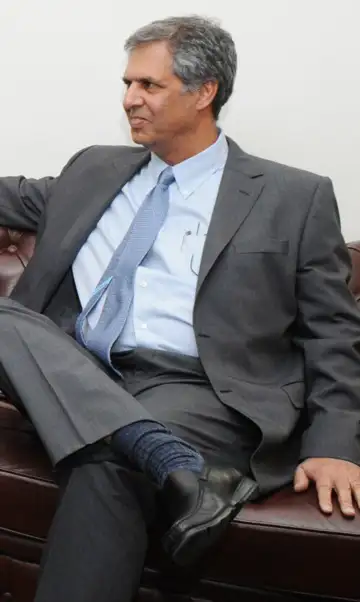
Noel Tata, in New Delhi on May 10, 2013. Credit: GODL-India, via Wikimedia Commons
The influence of Tata Trusts over Tata Sons is exercised through shareholding rights and governance mechanisms embedded in the Articles of Association. These include the right to nominate one-third of the directors to the Tata Sons board and affirmative voting rights on specified strategic matters. The Supreme Court held that such provisions were consistent with the trusts' position as majority shareholders and did not amount to oppression of minority investors.
Importantly, the court recognised that preserving the Tata group's values, culture and long-term vision was a legitimate objective of both Tata Sons and Tata Trusts. It accepted Tata Sons' contention that governance provisions giving the trusts a significant voice in strategic decisions were intended to safeguard the Tata ethos and ensure continuity of stewardship.
The court ultimately viewed the relationship between Tata Trusts and Tata Sons as one of ownership, stewardship and governance, with Tata Sons functioning as the holding company overseeing the group's businesses and the trusts acting as majority shareholders seeking to preserve the group's long-term philosophy and philanthropic mission.
That relationship has come under renewed scrutiny following the death of Ratan Tata in October 2024 and the elevation of Noel Tata to a leadership role across the principal Tata Trusts. Since then, differences have surfaced among trustees over appointments, governance and the future direction of the institutions that collectively control about two-thirds of Tata Sons.
One of the most visible disagreements emerged over the reappointment of former Defence Secretary Vijay Singh as a Tata Sons nominee director. Mehli Mistry, a Tata Trusts trustee, asked Singh to step down from the Tata Sons board citing his age. Singh complied and resigned from the Tata Sons board while remaining a trustee.
The episode exposed divisions among trustees and underscored the significance of Tata Sons board nominations, which carry special rights under the company's Articles of Association.
The issue was followed by a dispute over the continuation of Mehli Mistry himself as a trustee, with Noel Tata, Venu Srinivasan and Vijay Singh opposing an extension of his tenure. Following the intervention of Union Home Minister Amit Shah, Mistry resigned from the two principal Tata Trusts. He has challenged the decision before the Maharashtra Charity Commissioner.
The differences have since widened into a broader governance battle. Mehli Mistry has questioned several decisions of the current leadership and sought regulatory intervention, while the trusts' leadership has defended its actions. At the same time, Venu Srinivasan and Vijay Singh have publicly supported the demand of its second largest shareholder, the Shapoorji Pallonji Group, for a Tata Sons listing, surprising the Tata family.
Businesses that need managing
The developments have highlighted the continuing importance of Tata Trusts in shaping the governance and strategic direction of Tata Sons - a relationship that the Supreme Court in 2021 described as central to the stewardship model that has defined the Tata group for decades.
With the latest feud making headlines once again, it may be time for Noel Tata to undertake the kind of clean-up that Ratan Tata carried out in the early 1990s.
Losses at new businesses such as Tata Digital and acquisitions such as Air India are likely to continue for several years. Some companies, including Tata Teleservices, have not generated profits for decades. The lack of visibility on profitability remains a source of concern.
That concern is reflected in Noel Tata's decision this year to seek five-year business plans from Chandrasekaran for Tata group companies. Running a conglomerate as large and diverse as the Tata group is never easy, but long-term direction is essential.
At 69, Noel Tata appears determined to ensure that the group has a vision for the next century, built on a legacy that spans more than 100 years. With divisions emerging within Tata Trusts, the road ahead will not be easy. Yet as custodian of the Tata legacy, Noel Tata will ultimately have to restore cohesion, strengthen governance and provide clarity on the group's future direction. The Tata brand is considered the most trusted brand in India due to its high ethical standards.
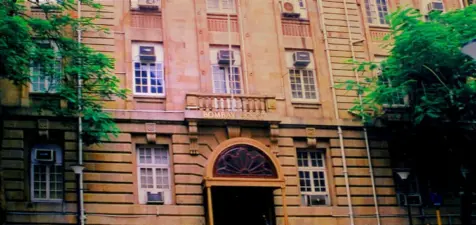
It is time for Bombay House, the Tata group's Mumbai headquarters, to rediscover the Tata ethos. The buck ultimately stops with Noel Tata.
Dev Chatterjee is a senior journalist and co-author of The Meltdown and India Inc's Greatest Turnarounds.