





Srinagar: A prominent wildlife conservation charity has been blacklisted by the government for preparing conservation plan for Tatakuti wildlife sanctuary and two other conservation reserves in Jammu and Kashmir that was "unsatisfactory" and contained "incorrect or poor data".
In an order dated April 29, J&K's principal chief conservator (PCCF) Chaturbhuja Behera said that the Noida-based Wildlife Trust of India (WTI) "adopted a casual approach towards field surveys and data collection" while preparing the conservation report which was "bereft of actual data".
"The lack of systematic methodology and absence of reliable field data undermine the credibility of the report," the order says.
It states that the WTI, which is among the leading NGOs in India's wildlife conservation sector, "failed to complete the deliverables" as per a Rs 10.7 lakh one-year contract signed with J&K forest department in 2022.
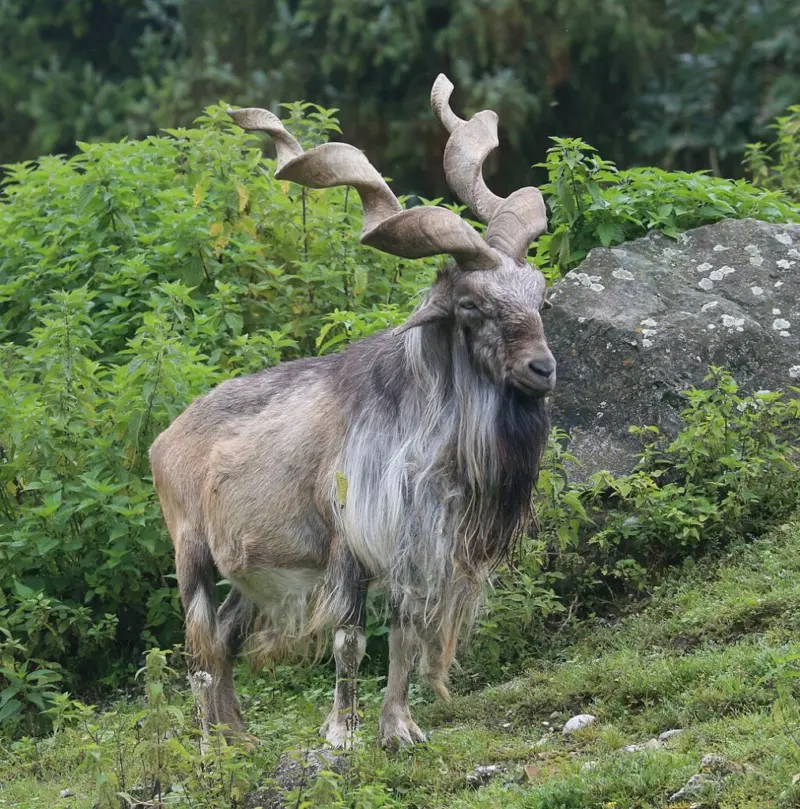
The order shows that despite six reminders and multiple extensions of contract deadline, the NGO "failed" to submit plans to conserve the habitat of the protected Astore markhor (Capra falconeri), a species of wild goat found in the Pir Panjal mountains of Jammu and Kashmir.
"The WTI should be blacklisted to avoid any such repetition in future" and the amount paid to them should be "recovered as per terms and conditions" of the contract, the order states.
The WTI, which has also worked with J&K government on Hangul conservation, bagged the contract for biodiversity assessment of Tatakuti Wildlife Sanctuary and Kherra and Kullian conservation reserves in Pir Panjal mountains and for preparing a plan for conserving their flora and fauna.
The WTI is a charity organisation working in the area of wildlife conservation since 1998. The issue of the conservation of the markhor has become especially sensitive in recent months after a video surfaced of two men severing the head of spectacularly horned-and endangered-wild goat inside the Kazinag National Park in north Kashmir, sparking an outcry.
It was not immediately known whether the punitive action taken by J&K government against the NGO would affect its other existing projects in the Union territory. The order states that the WTI has been "debarred from participation in any work of the department".
The Wire had reached out to the WTI for comment but their response was not received before publication. Appended below this story are edited excerpts from WTI's mail to The Wire.
Tatakuti wildlife sanctuary is a 66.27 sq km protected reserve spread over the mountains of Poonch and Budgam districts.
The PCCF's order states that the WTI failed to submit its conservation plan within the specified one-year deadline by 2023, prompting the wildlife warden of Rajouri-Poonch division to write a letter to the agency following which it submitted a draft proposal on March 11 2024.
The proposal was returned to the WTI with "certain observations" on March 14 by the forest department but despite two subsequent reminders by the warden on April 11 and June 28, the agency allegedly didn't follow up, the order shows.
In a letter on July 24, 2024, the warden threatened to terminate the contract after which the WTI submitted a revised conservation plan on September 2 through email, but it was "not up to the mark", "lacked scientific orientation" and violated the terms of the contract.
The warden urged the WTI to make a powerpoint presentation on the conservation plan at his Jammu office on October 3 but Ishwar M. Narayanan, a WTI official, sought time till November 10 for the presentation, the order shows.
The government also asked for details of the researchers involved in the project.
The WTI submitted the revised draft conservation plan on November 11, 2024.
Less than a month later, on December 4, the warden wrote to Tanushree Srivastava, WTI project head, about the "deficiencies", "shortcomings" and "mistakes" in the report.
In his letter, the warden alleged that the WTI "didn't carry out the study on its own" and "just collected information" about the project from the scientific papers already available in public domain.
"Critical parameters essential for scientific biodiversity assessment has been completely overlooked or inadequately addressed," a letter by the warden said.
A meeting of the regional wildlife warden was held in Jammu on March 5 last year as the conservation plan got delayed by nearly three years while the WTI was directed to submit an undertaking that it would finish the project by July 15.
However, despite two more reminders from the forest department, the WTI didn't complete the project.
Later, Srivastava, the WTI official, in a communication to the warden promised to submit the revised plan in the first week of October last year.
The group submitted its plan on November 3 last year which was again found to be lacking in "field work and authenticity of the data" following which it was not recommended for approval.
The project was terminated by the forest department following a meeting chaired by the PCCF on April 24 while the WTI was blacklisted from future contracts.
-
Reshmi C R, Director - Communications, Wildlife Trust of India, writes
The WTI has been working in this sector for 28 years and is widely credited for the accuracy and authenticity of its research and data.
While we acknowledge there may be shortcomings or deficiencies in the submitted report, we want to clarify that no false data was ever used in the preparation of the conservation plan.
Based on interaction with the field team and the project head, we understand that there was a delay in finalising the report as multiple comments were received from reviewers and forest department officials. We will be reviewing the submitted conservation plan and incorporating all corrective measures as per the suggestions. The matter is taken up with utmost seriousness at the top management of the organisation, as it impacts more than just the writing of one conservation plan; it is putting WTI in a bad light and affecting our overall reputation as a pioneering conservation organization working for the last 28 years.
We would like to officially state that the Jammu and Kashmir Wildlife Department has had a long-standing relationship with WTI for over 25 years, and we have worked with them on several key conservation initiatives (Markhor, Hangul, Tibetan Antelope, Human-Wildlife Conflict, etc). WTI commits to its intention to continue to help conserve the wildlife of the state and will work with the CWLW to find a resolution to this issue.
Appending a few links to our conservation initiatives in J&K for your reference.
Goats on the Border- https://wti.org.in/wp-content/uploads/2017/03/pub_goats_border.pdf
Beyond the Ban https://wti.org.in/wp-content/uploads/2017/03/pub_beyond_the_ban.pdf
Predator Alert https://www.wti.org.in/wp-content/uploads/2017/03/pub_predator_alert.pdf
Mountain Migrants https://wti.org.in/wp-content/uploads/2017/03/pub_mountain_migrants.pdf
Living at the Edge https://www.wti.org.in/wp-content/uploads/2023/02/Living-at-theEdgeOR.pdf
Hunt for Hangul https://www.wti.org.in/wp-content/uploads/2023/02/Hunt-for-Hangul-OR.pdf
Note: This article was edited on May 13, 2025 to reflect WTI's response to The Wire's initial email and published story.