





The United Kingdom's recently introduced "visa brake" is a response to rising asylum claims from certain visa routes. The policy allows the government to refuse visa access for nationalities whose citizens are deemed more likely to claim asylum after arrival.
In its current form, the measure applies to student visa applications made outside the UK from nationals of Afghanistan, Cameroon, Myanmar, and Sudan, as well as to Skilled Worker visa applications from Afghan nationals.
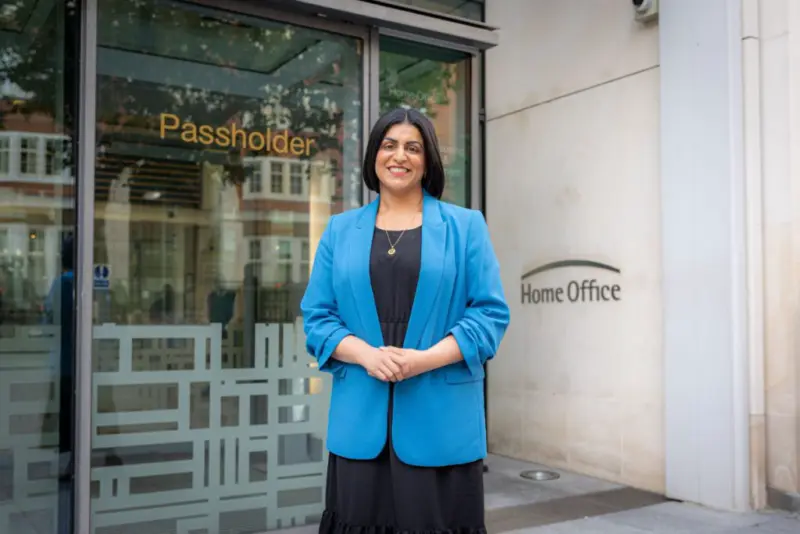
Presented as a pragmatic response to what is described as "visa abuse," the policy reflects a growing political narrative that legal migration pathways are being used to circumvent the asylum system. As British Home Secretary, Shabana Mahmood has argued, Britain's generosity is being exploited, with individuals using student and work visas as a "backdoor" into refugee protection. In doing so, the policy recasts migration - an ordinary and often necessary part of human life - as something to be managed, restricted and treated with suspicion.
The visa brake is not an isolated measure. It forms part of a broader architecture of migration control. In January 2024, the UK added India to its list of "safe countries of origin," presuming it to be a non-refugee-producing country. Colombia's visa-free travel arrangement was revoked in November 2024 following a rise in asylum applications. And as of March 2026, refugee status in the UK is no longer permanent, requiring individuals to re-establish their need for protection every thirty months.
It is in this context that the visa brake raises deeper legal concerns within a rapidly shifting refugee law landscape. The central issue is not whether the UK is directly returning individuals to persecution. It is whether it can design a system in which the obligation to consider their protection claims never arises at all.
Asylum claims reflect ongoing risk
Asylum applications from students in the four targeted countries rose sharply between 2021 and 2025. The Home Office presents these figures as evidence of abuse. They are, in fact, evidence of something far more significant: that Afghanistan, Sudan, Myanmar, and Cameroon have become less safe precisely over the period in question.
Afghanistan fell to the Taliban in August 2021. Sudan descended into a catastrophic civil war. Myanmar's military junta has conducted systematic persecution since its 2021 coup. Cameroon's Anglophone conflict has displaced hundreds of thousands.
The increase in asylum claims reflects these realities. It is proof that the refugee system is functioning as it was intended: people fleeing danger are seeking protection.
Non-refoulement via non-entrée
The principle of non-refoulement, the cornerstone of international refugee law, prohibits states from returning a person to a territory where they face persecution. On that basis, the UK has not expelled anyone under the visa brake. It has simply ensured that they cannot arrive.
The government may argue, therefore, that non-refoulement has not been triggered. While that position is technically available, it undermines the principle in a way that defeats its purpose while remaining formally lawful.
This is the logic of non-entrée: systematic upstream exclusion that produces the same result as refoulement without formally constituting it. A principle designed to ensure people fleeing persecution are not returned to danger is rendered hollow if states can shift the point of exclusion from the border to the visa office. The obligation is not breached but is instead circumvented through administrative design.
From individual protection to group-based exclusion
The 1951 Refugee Convention is fundamentally individualist. It requires a person to establish a well-founded fear of persecution through an individualised process. And yet persecution is rarely purely individual. It is structural and collective, targeting people because of who they are.
The visa brake inverts this logic. It uses group membership and nationality not to strengthen protection but to extinguish it. The individual claim is negated before it is made, not because of anything about the individual, but because of the group to which they belong.
The law is thus individualist when it demands proof of persecution, and collectivist when it seeks to exclude. It applies whichever frame is most useful to the state.
Consider a hypothetical but common scenario: An Afghan national who fled Kabul after the Taliban takeover. She now lives in Pakistan or Iran, without citizenship and with limited legal protection. When she applies for a UK student visa, her application is refused before any individual assessment because of the nationality she holds. The possibility of protection is foreclosed in advance.
International law, domestic control
The visa brake exposes a structural limitation within refugee law. The Refugee Convention creates binding obligations, but it lacks an independent enforcement mechanism above the state. In practice, everything turns on domestic implementation: what the parliament enacts, how the home office applies it and what domestic courts are willing to review.
As a result, a refugee, an international legal subject, remains dependent on the municipal law of the state that may seek to exclude them. Domestic law becomes both the means through which obligations are fulfilled and the mechanism through which they are avoided.
The visa brake illustrates this dynamic. It is introduced through changes to immigration rules, not primary legislation, treaty withdrawal or formal derogation. It operates within domestic administrative law yet produces effects that undermine the purpose of international protection. As scholar Nadine El-Enany argues, British colonialism is an ongoing project sustained through immigration law.
A constitutional failure
The way the visa brake was introduced further exposes this problem. It was implemented through a statement of changes to the immigration rules, a mechanism that takes effect without a parliamentary vote.
This limited oversight points to a constitutional failure. A policy that excludes entire nationalities from lawful routes to the United Kingdom, without individual assessment, effectively determines in advance who may even attempt to seek safety or opportunity. For a measure capable of affecting large numbers of people, the absence of meaningful scrutiny is particularly troubling.
The visa brake is not an aberration. It reflects a broader pattern: states have learned the limits of refugee law and structure systems to exploit them. Exclusion is enforced through administrative rules, bypassing both parliamentary scrutiny and the spirit of international obligations.
One moment from my fieldwork lingers. Standing outside a Home Office accommodation site, a participant in my ethnographic study, Hina Baloch, a Pakistani transgender activist and asylum seeker, recounted the hostility she faces and the constant reminders that she does not belong. When I asked, "What does it take to feel a sense of belonging?" she met my gaze and answered, "A lifetime." That, perhaps, is the clearest indictment of the system we are up against.
As the state warns of individuals using visas as a "backdoor" into protection, it has constructed its own "backdoor": administrative mechanisms that block access to rights without altering the law itself. The visa brake does not withdraw from international obligations. It renders them inaccessible not by changing the law, but by changing the lock.
Jayalakshmi Itla Ragiri is an Associate Lawyer at International Justice Counsel (IJC), a public interest strategic litigation firm. She is a Chevening Scholar and holds an LLM from SOAS, University of London. The views expressed are the author's own and do not necessarily reflect those of the organisation.