




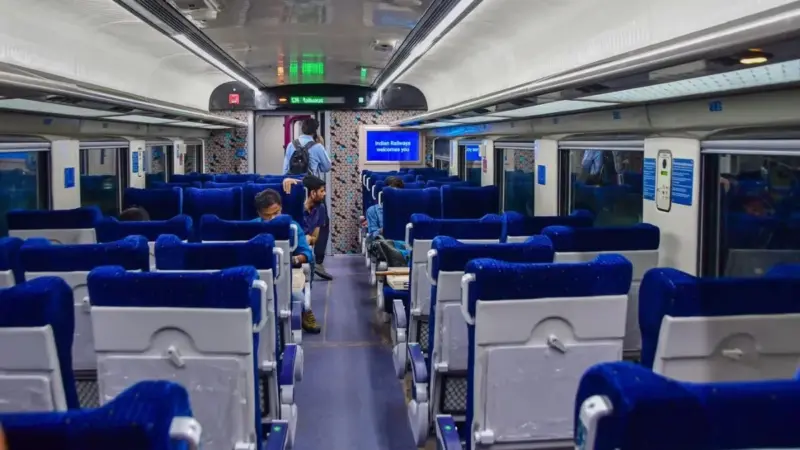

Vande Bharat Sleeper Train: Rail passengers travelling on the high-speed Vande Bharat Express will no longer be able to book Reservation Against Cancellation (RAC) tickets.
Indian Railways has introduced significant changes to its ticketing and coach regulations to improve the overall comfort for passengers.
The Vande Bharat sleeper trains will feature a fully transparent booking system, ensuring equal access for all passengers, without any special privileges. This move underscores the Railways' commitment to providing accessible and straightforward travel options for the public.
Indian Railways has confirmed that RAC seating will be entirely phased out on selected trains, including the Vande Bharat sleeper trains. This means passengers will no longer have to travel with partially confirmed tickets, removing one of the common inconveniences associated with the RAC system.
According to a circular from the Railway Board issued on January 9, the Vande Bharat sleeper trains will have a minimum journey distance of 400 km. Only confirmed tickets will be available for these trains, and there will be no provision for RAC, waitlisted, or partially confirmed reservations. All available berths will be made open for booking as soon as the Advance Reservation Period (ARP) begins. As per the new policy, the minimum fare for Sleeper Class will be Rs 149 for journeys of 200 km.
Vande Bharat Sleeper Train: Check Revised Fare Structure & Quotas
For Second Class, the minimum fare has been set at Rs 36 for a journey of 50 km, with additional charges for reservations and superfast services. Passengers travelling shorter distances, such as 100 km, will still be required to pay the minimum fare for 200 km in Sleeper Class.
In terms of quotas, the Railways has introduced only three categories in Sleeper Class: for women, senior citizens, and disabled passengers. No other quotas will apply. Additionally, lower berths will be prioritised for senior citizens and passengers travelling with children. The allocation of these lower berths will be based on availability, and the system will aim to provide them to men aged 60 and above, as well as women aged 45 and above.