
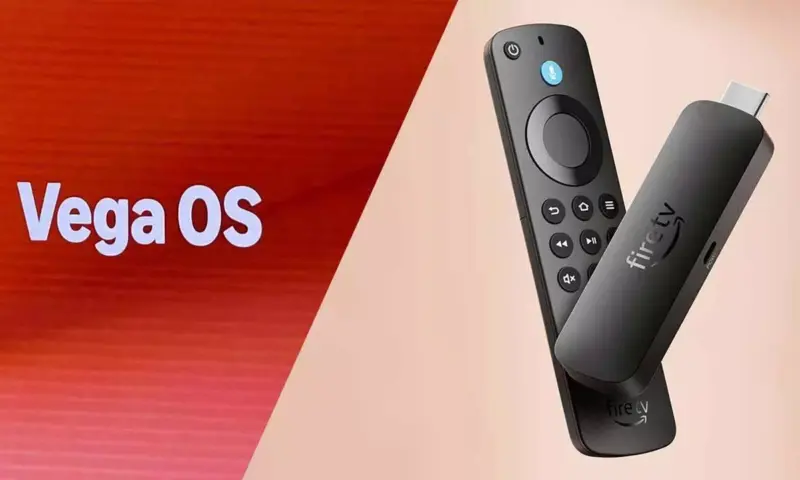

Amazon is taking a decisive step toward reshaping its Fire TV ecosystem by moving away from Android and embracing its in-house Vega OS. The shift comes with the launch of the new Fire TV Stick HD, which now runs on the company's proprietary operating system instead of Google's platform.
This marks the second device to adopt Vega OS, following its earlier debut on the Fire TV Stick Select.
According to a report by Lowpass, Amazon intends to gradually transition all future Fire TV Stick devices to Vega OS, effectively phasing out Android over time. This move reflects the company's broader ambition to gain tighter control over its hardware and software ecosystem, reducing reliance on external platforms like Google.
However, the transition also introduces notable changes for users. One of the most significant differences with the Fire TV Stick HD is the restriction on app sideloading. Reports suggest that some users visiting the product page are greeted with a warning stating that, for enhanced security, the device does not support sideloading or installing apps from unknown sources. As a result, users will be limited to downloading applications exclusively from the Amazon Appstore.
While this may not affect casual users who primarily rely on mainstream streaming apps, it could be a drawback for more advanced users who prefer the flexibility of installing third-party applications. The reduced app ecosystem compared to Android-based devices may also be a concern, at least in the short term.
The Vega OS itself is not entirely new. Amazon officially rolled it out on September 30, 2025, positioning it as a Linux-based alternative designed to power the company's future devices. "Our new Echo devices also run on Vega," said Amazon in a blog post. The operating system made its debut alongside the Fire TV Stick 4K in October that year, signaling the company's long-term commitment to building a unified software platform.
By developing Vega OS from the ground up, Amazon gains full control over updates, performance optimisation, user experience, and app distribution. This level of control also opens new opportunities for monetisation and deeper integration across Amazon's ecosystem, including Fire TV and Echo devices.
For now, Amazon continues to support both Fire OS and Vega OS, but the long-term strategy is clear. Vega OS is expected to become the foundation of the company's connected device ecosystem, offering a more cohesive and tightly integrated experience.
In parallel with this shift, Amazon has also announced changes affecting its older devices. Earlier this month, the company confirmed that it will discontinue key Kindle Store features on older Kindle models. The decision impacts devices released in 2012 or earlier, including the first-generation Kindle launched in 2007. The changes are set to take effect from May 20, 2026.
Together, these developments highlight Amazon's ongoing efforts to modernise its hardware lineup while consolidating control over its software platforms, even if it means limiting certain user freedoms along the way.