




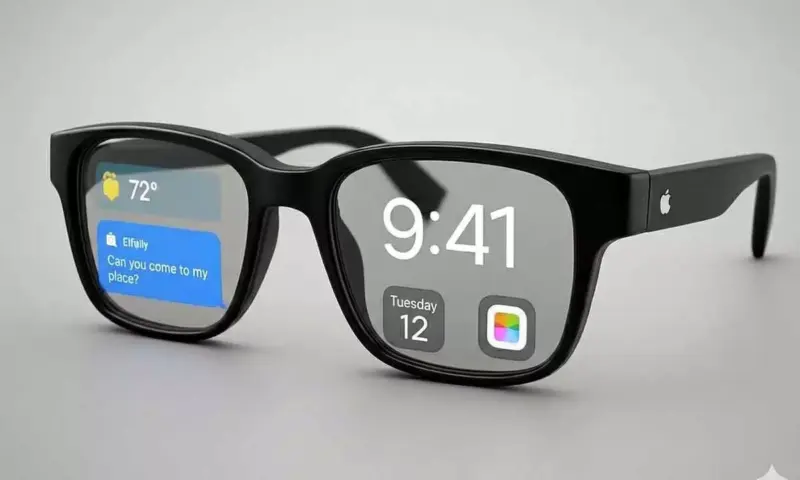

Apple is reportedly changing direction in its wearable technology strategy, with a stronger focus now being placed on AI-powered smart glasses instead of the Vision Pro headset lineup.
According to well-known Apple analyst Ming-Chi Kuo, the company has significantly revised its augmented reality (AR) roadmap under the leadership transition to incoming CEO John Ternus.
In a recent post on X, Kuo stated that Apple's earlier Vision Pro plans are no longer relevant due to major strategic changes made over the past year. He revealed that only two smart glasses projects remain clearly visible in the company's future roadmap.
One of these products is expected to be a display-less AI smart glasses model that could enter mass production in 2027. The second is a more advanced pair of AR glasses equipped with displays, though that product has reportedly been delayed until 2029.
"I think removing the Vision Pro line was the right call, as Apple shifts resources toward smart glasses with greater mass-market potential," Kuo wrote. "Apple's display-equipped AR/XR smart glasses device, powered by optical waveguides, has slipped to 2029. The display-less AI glasses, similar to Ray-Ban Meta, are still expected to ship in 2027."
Kuo's claims appear to align with recent reporting from Bloomberg's Mark Gurman, who has also indicated that Apple is increasingly betting on smart glasses as its next major hardware category. Gurman reported that Apple's AI-powered glasses are currently targeted for launch in late 2027 after facing development delays.
The report further suggests that Apple has scaled back several Vision-related projects. These reportedly include the Vision Air headset and a display-enabled glasses product designed to work alongside Mac devices.
However, there seems to be some disagreement regarding the future of the Vision Pro lineup. While Kuo believes Apple is no longer actively developing a successor to the Vision Pro, Gurman claims a second-generation Vision Pro headset is still being tested internally. He also noted that Apple continues exploring a lighter and more affordable Vision headset, although such a product is unlikely to arrive before 2028 or 2029.
Despite differing opinions on Vision Pro's future, both reports point toward the same broader strategy - Apple sees smart glasses as a far more scalable and commercially viable opportunity than high-priced mixed-reality headsets.
Industry expectations for the category are also growing rapidly. Kuo previously estimated that Apple's Ray-Ban Meta-style smart glasses could ship between 3 million and 5 million units in 2027 alone. This could potentially push the global smart glasses market beyond 10 million annual shipments.
Apple's first-generation AI smart glasses are expected to focus primarily on practical features instead of full augmented reality experiences. Reports suggest the device may include cameras, voice interaction, audio playback, video recording capabilities, and AI-powered environmental awareness.
More advanced AR glasses using optical waveguide technology are expected to arrive later, once the technology becomes more mature and production costs become manageable.
With John Ternus expected to officially take over as Apple CEO in September 2026, the company's wearable technology future increasingly appears to revolve around smart glasses, while the long-term direction of the Vision Pro series remains uncertain.