




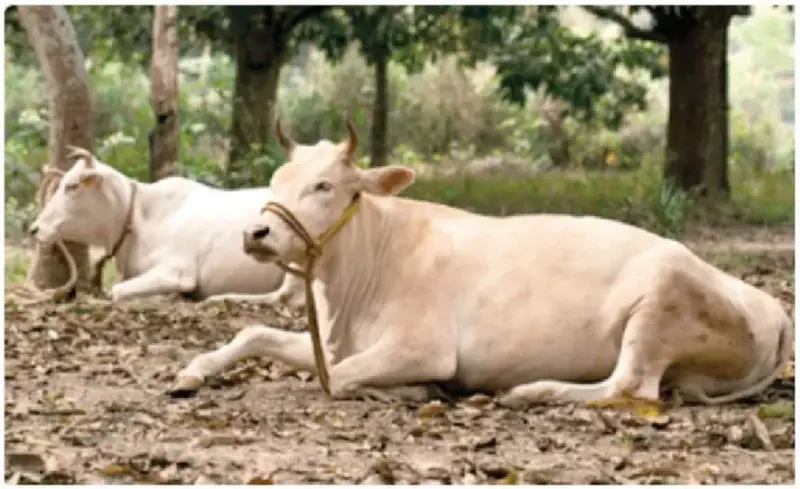

Vijayawada: Animal husbandry department director T Damodar Naidu said strict adherence to summer management guidelines can significantly improve the growth rate and productivity of livestock, while preventing health deterioration caused by heat stress.
Issuing detailed instructions on Thursday to field-level staff and livestock farmers, he warned that hot winds, rising temperatures, and heat waves during summer can adversely affect animal health and may even lead to fatalities if proper precautions are not taken.
He stressed that farmers must carefully follow the advisories issued by veterinary and field staff to ensure better livestock management.
Providing clean, cool drinking water in hygienic troughs early in the morning is essential.
He also suggested setting up community water troughs in areas where animals frequently gather, in coordination with Panchayat Raj and rural water supply departments, with support from voluntary organisations and donors.
Naidu advised that fodder should be cut into small pieces and fed during cooler parts of the day. Proper fodder management improves digestion and enhances immunity, ultimately increasing productivity. He recommended including mineral and salt mixtures in feed, ideally around 30-50 grams per animal.
Livestock should be allowed to graze only during morning and evening hours. After returning to sheds, animals must have access to a cool environment and clean water. Sheds should preferably be constructed in an east-west direction to minimise heat exposure. Regular sprinkling of water on shed roofs can help maintain cooler temperatures, while crossbred cattle sheds must be equipped with sprinklers and fans.
Milk collection should be carried out before sunrise and shortly after, when temperatures are lower, to reduce stress on animals and improve milk yield. To protect livestock from extreme heat, wet gunny bags should be placed around sheds and kept moist throughout the day.
Transportation of animals should be undertaken only during cooler hours, and they must be provided water and feed at least once every six hours. Farmers were also advised to watch for signs of heat stress such as rapid breathing, drooling, reduced appetite, lethargy, and excessive water intake. In such cases, animals should be cooled with water immediately and veterinary assistance should be sought.
Naidu further urged farmers to make use of mobile veterinary health service vehicles during emergencies. He directed field-level staff to actively visit villages, monitor livestock conditions, and educate farmers on summer management practices to ensure animal welfare and improved productivity.