




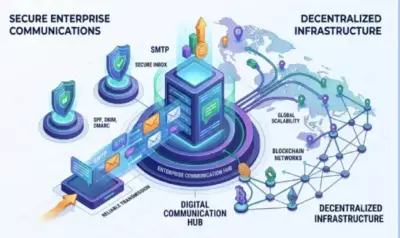

The Decentralized Shift: Modernizing Enterprise Email Systems and Secure Communication Infrastructure
With each passing day, digital enterprises find themselves navigating an increasingly multi-faceted business environment.
Contemporary enterprise-client interactions heavily shape long-term relationship dynamics, as well as an organization's sustained authority and longevity in the marketplace. While social media, instant messaging, and modern collaboration tools constantly vie for user attention, nothing matches the reliable, long-term operational ROI of a dedicated email infrastructure. Applied first-principles thinking shifts the focus entirely toward the core mechanics of online commerce. Instead of relying on restrictive, centralized networks that inherently facilitate communication monopolies, modern enterprises are building their own high-speed, independent delivery networks and utilizing decentralized payment systems to maintain full ownership of their communications.
To operate and expand predictably on a global scale, an enterprise must master the execution of highly effective, high-volume outreach. This operational model highlights the fundamental principles of enterprise mailing frameworks and the foundational systems that support them. Ultimately, it demonstrates how the integration of decentralized finance (DeFi) systems grants enterprises complete, uncompromised control over their core operations.
The Architecture of Enterprise Outreach
Integrating a robust communication system that enables high-volume outreach is the critical first step for most digital-first enterprises. However, building a communication infrastructure that is genuinely secure, scalable, and fully compliant can be a daunting technical challenge. Advanced, proprietary communication environments provide the necessary assurance of deliverability and data compliance within a strictly secure environment.
This model marks a radical shift away from traditional, shared hosting services. On shared infrastructure, a single bad sender can instantly destroy the IP reputation for every single business hosted on that cluster. This inherent loss of control leaves corporate emails highly vulnerable to being blacklisted by major Internet Service Providers (ISPs). Conversely, with a dedicated enterprise mailing system, consumer databases are treated as valuable, dynamic, and active corporate resources. This dedicated layer allows companies to seamlessly implement automated drip campaigns and execute complex data analysis. Because of this strategic isolation, the system is highly likely to achieve its primary objectives, ensuring that each message actively supports an operational function and never gets lost in the digital noise.
Part 2: Technical Architecture and System Security
Team Readiness and Software Integration
Achieving the level of outbound messaging required by modern enterprises demands highly sophisticated deployment software. This software must serve as the central campaign control center-effortlessly fulfilling complex API requests, tracking real-time bounce information, and providing detailed analytics regarding every campaign action. The true test of such software lies not in its graphical interface, but in its underlying ability to connect reliably to external server relays while maintaining the highest global standards of data privacy.
To this end, the infrastructure must also support high-level bidirectional interaction. When an enterprise dispatches thousands of automated messages, it must possess the simultaneous capacity to handle incoming flows and system replies. By pairing a high-performance outbound setup with a secure webmail system that supports deep user collaboration, an enterprise can respond to user queries just as quickly and efficiently as its automated systems distribute outreach.
Decoding the Core Engine: Dedicated SMTP and Deliverability
The absolute foundation of web communication is the Simple Mail Transfer Protocol (SMTP). For standard transactional notifications, SMTP reliably routes messages from the sender to the receiver. However, during automated high-volume campaigns, these messages do not travel directly to the recipient's inbox. Instead, SMTP routes data through specialized relays that authenticate the underlying structure of the message, encrypt critical headers, and negotiate directly with the receiving mail server. Securing a dedicated SMTP infrastructure is a prerequisite for sending high volumes safely. An isolated framework ensures that an organization's outbound IP path maintains a pristine reputation score, keeping it entirely shielded from the negative algorithmic scoring that frequently ruins shared network clusters.
Modern message delivery networks are strictly managed; sharing relays with unverified organizations heavily restricts throughput and artificial daily limits. Dedicated message relays, on the other hand, optimize baseline delivery parameters and provide full resource allocation over the hardware pathways, granting the organization complete control over its daily transmission limits.
Safeguarding System Integrity
Protecting system integrity is an ongoing operational concern. For an independent messaging ecosystem to successfully protect both corporate identity and the end-user, three layered authentication protocols must be properly implemented:
- SPF (Sender Policy Framework): This public DNS record allows a corporate domain to explicitly dictate which specific server IPs are authorized to communicate on its behalf.
- DKIM (DomainKeys Identified Mail): This security layer ensures each outgoing message carries an encrypted digital signature, verifying that the content remains entirely unaltered during transit.
- DMARC (Domain-based Message Authentication, Reporting, and Conformance): This comprehensive policy instructs receiving servers exactly how to handle communications that fail SPF or DKIM checks, nearly eliminating the risk of domain spoofing and corporate phishing attacks.
Once these authentication layers are active and working as designed, the entire communication framework is universally trusted by Internet Service Providers (ISPs) around the world.
Part 3: Financial Decentralization and the Path Forward
The Infrastructure Revolution: Secure Digital Assets on Decentralized Networks
As global commerce becomes increasingly borderless, legacy financial systems are showing distinct operational limitations. Traditional banking wires and credit networks introduce unnecessary friction, such as geographic payment barriers, lengthy verification delays, and cumbersome corporate compliance hurdles. These combined factors directly stall international business expansion. To solve these core bottlenecks, high-tech enterprises are actively choosing decentralized networks and digital currencies to fund their ongoing infrastructure requirements.
For modern IT professionals and digital marketers, utilizing blockchain-based currencies to acquire digital assets has become the benchmark for achieving true business autonomy. By using these decentralized payment methods, companies can instantly purchase, fund, and provision cloud-based servers, dedicated IP relays, and secure enterprise email systems. As an example, forward-thinking teams can utilize BitSMTP to establish high-speed mail relays within the Decentralized Finance (DeFi) space, gaining immediate access to robust communication tools regardless of geographical location.
Drawing from a variety of supportive blockchain networks, this financial independence provides procurement teams with the flexibility to utilize high-speed utility chains, privacy-centric cryptography, or stablecoins to balance their ledgers, all while preserving maximum operational velocity.
Summary and the Path Forward
Uncompromised communication is a non-negotiable prerequisite for the corporate sovereignty of large-scale, global operations. Every single technical decision-from the collaborative webmail setups used by internal customer support desks to the dedicated SMTP engines that push automated transactional data-directly reflects how effectively a firm engages with its target market.
The rising administrative costs and inherent inefficiencies associated with traditional centralized financial pipelines demand modern global scaling solutions. By combining enterprise-grade delivery protocols with the borderless efficiency of digital finance, companies enjoy an unprecedented level of operational flexibility. Partnering with a true independent infrastructure specialist guarantees firms much more than just the basic ability to send messages; it builds a highly resilient digital network explicitly engineered for high-velocity, high-impact global communication.