

As artificial intelligence continues to expand its footprint across industries, the demand for data centres is rising at an unprecedented pace.
These facilities are the backbone of AI, but building and maintaining them on land is becoming increasingly difficult due to energy demands, heat management, and environmental concerns. In response, a Silicon Valley startup is exploring an unconventional solution-taking data centres offshore.
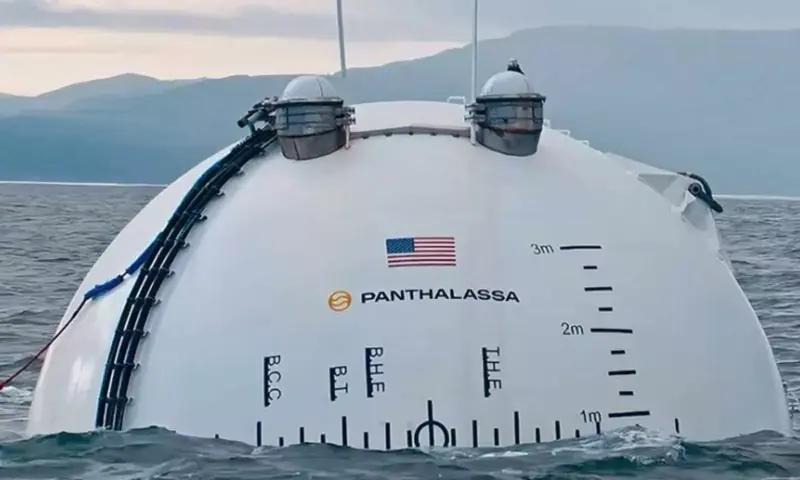
Panthalassa, a US-based company, is developing floating AI data centres that operate directly in the ocean. The idea has attracted significant attention, including a $140 million investment from venture capitalist and PayPal co-founder Peter Thiel. According to reports, this funding values the company at nearly $1 billion, reflecting growing interest in alternative infrastructure for powering AI systems.
At the core of Panthalassa's approach are large floating structures known as "nodes." These units, measuring up to 85 metres in length, are designed to house AI servers within sealed compartments, protecting them from seawater while using the surrounding ocean as a natural cooling system. This addresses one of the most pressing challenges faced by traditional data centres-overheating.
Unlike conventional facilities that rely on grid electricity, these ocean-based nodes generate their own power. The system harnesses wave energy by converting the natural motion of the sea into electricity. As waves cause the structure to rise and fall, water is pushed through internal pipes, spinning turbines that produce energy. This power is then used immediately to run the servers onboard.
One of the key advantages of this method is consistency. Ocean waves, driven by wind and constantly in motion, can provide a more reliable energy source compared to solar or wind power, which are dependent on weather conditions and time of day. By generating and consuming energy in the same location, the system also eliminates the need for costly transmission infrastructure.
Panthalassa is not aiming to bring this energy back to land. Instead, the company envisions self-sustaining offshore data centres capable of operating independently in remote ocean regions. These nodes are expected to handle cloud computing tasks and transmit data via satellite connections. Additionally, the structures are designed to move with ocean currents, reducing reliance on traditional propulsion systems.
The team behind the project includes engineers with experience at leading organisations such as SpaceX, Tesla, and NASA, highlighting the technical ambition behind the initiative.
Despite its promise, the concept comes with challenges. Operating in harsh marine environments raises concerns about durability, maintenance, and ecological impact. Regulatory approvals and large-scale deployment could also pose hurdles.
However, as land-based infrastructure reaches its limits, the push toward alternative solutions is becoming inevitable. While space-based data centres remain a distant possibility, the ocean presents a more practical frontier. Panthalassa's vision suggests that the future of AI infrastructure may not be on land-but floating just offshore.