
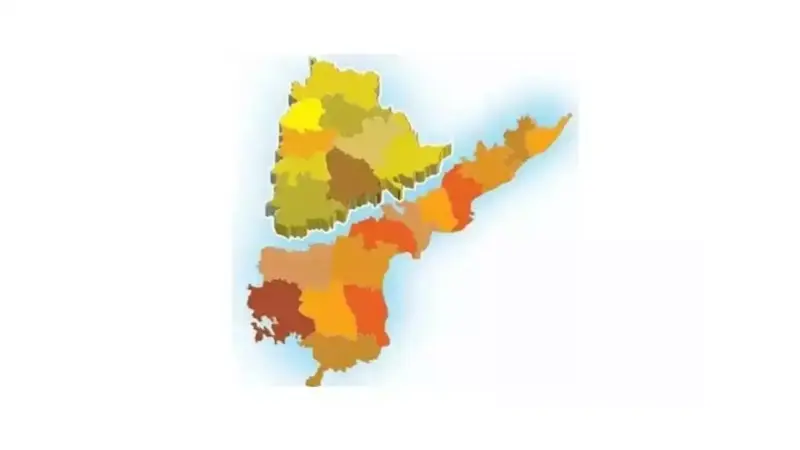

The story of Section 26 of the Andhra Pradesh Reorganisation Act, 2014 is, in many ways, the story of a promise made in law but postponed by the Constitution.
It sits at the intersection of legislative intent, constitutional limitation, and political expectation, and its implications continue to shape the discourse in both Andhra Pradesh and Telangana even in 2026.
Why is Section 27 ignored?
When the reorganisation of the erstwhile united Andhra Pradesh was being debated, the draft Bill contained what was then Section 27. That provision was modest in scope. It merely empowered the Election Commission of India to undertake delimitation, essentially a technical exercise. The Commission was to redraw constituency boundaries, determine reservations for Scheduled Castes (SCs) and Scheduled Tribes (STs), and adjust electoral maps to reflect demographic realities. Crucially, the draft provision did not propose any increase in the strength of the Legislative Assemblies. It was procedural, not transformative.
However, the final law, enacted as Section 26, marked a decisive shift. It did not stop at empowering delimitation; it explicitly provided for a substantial expansion in the size of the Assemblies. Andhra Pradesh was to move from 175 to 225 seats and Telangana from 119 to 153. This was no longer a mere procedural clause-it was a substantive political commitment written into statutory form. The change from draft to final text was neither accidental nor insignificant. It reflected a conscious legislative decision to promise greater representation in both successor states, possibly to address regional imbalances and stabilize the political landscape after bifurcation.
The promise was not absolute:
Yet, this promise was not absolute. Section 26 begins with a crucial qualifier: it is "subject to Article 170 of the Constitution." This phrase, often overlooked in political rhetoric, is the constitutional anchor that ultimately determines whether the promise can be fulfilled. Article 170 of the Constitution of India lays down the framework for the composition of State Legislative Assemblies. It prescribes minimum and maximum limits and, more importantly, ties the allocation of seats to population and delimitation exercises conducted after each Census.
Freezing the democratic process:
Here lies the central tension. While Article 170 envisions periodic readjustment based on demographic changes, the Constitution itself has, through a series of amendments, frozen this process for a defined period. The 42nd Constitutional Amendment Act, 1976, later reinforced by the 84th Constitutional Amendment Act, 2001, and the 87th Constitutional Amendment Act, 2003, effectively suspended the readjustment of seats based on population until after the first Census conducted post-2026. This constitutional freeze was motivated by a broader national concern: avoiding penalizing states that had successfully implemented population control measures.
Not enforceable:
The consequence of this freeze is profound. It means that no alteration in the number of seats in State Assemblies can be made based on population changes until the embargo lifts. In this context, Section 26 of the 2014 Act becomes an "enabling" provision rather than an immediately enforceable one. It expresses a legislative intent, but its operation is contingent upon constitutional permissibility. In simple terms, the law promises expansion, but the Constitution delays its execution.
This has created a peculiar legal situation in both Andhra Pradesh and Telangana. On paper, the Assemblies are meant to be larger. In reality, they continue to function with their pre-reorganisation strengths-175 and 119 respectively. The gap between what the statute says and what the Constitution allows has led to a prolonged state of suspension, where the promise exists but cannot be realized.
The judiciary, while not directly adjudicating on Section 26 in a definitive manner, has consistently upheld the primacy of the constitutional framework in matters of delimitation. The Supreme Court's broader jurisprudence emphasizes that electoral boundaries and seat allocations must strictly adhere to constitutional provisions. Any statutory measure that appears to conflict with a constitutional mandate, particularly one as explicit as the delimitation freeze, cannot operate independently. This reinforces the view that Section 26 cannot override the constitutional embargo.
Constitution (131st Amendment) Bill, 2026:
The political dimension of this issue has become more pronounced in recent years, especially with the introduction and eventual failure of the Constitution (131st Amendment) Bill, 2026.
Legally frustrated:
Its defeat has had a direct bearing on the situation in Andhra Pradesh and Telangana. With the amendment failing to pass, the constitutional freeze remains intact. As a result, the implementation of Section 26 continues to be deferred. The Assemblies remain at their existing strengths, and any expectation of immediate expansion stands legally frustrated.
This has not, however, prevented political narratives from evolving around the issue. In Telangana, for instance, claims about an eventual increase to 153 seats, and sometimes even beyond, have become part of electoral discourse. Similarly, in Andhra Pradesh, the prospect of moving toward 225 seats is often invoked as a future certainty. The result is a widening gap between legal reality and political messaging.
This gap has implications beyond mere numbers. Representation in a democratic system is not just about arithmetic; it is about legitimacy, fairness, and public trust. Citizens are left wondering whether the promise was illusory or whether its delay is justified by higher constitutional considerations. In analytical terms, Section 26 can best be understood as a "deferred political promise." It embodies a commitment made at a particular historical moment-the reorganisation of a state-aimed at addressing anticipated needs of representation. The Constitution, on the other hand, acts as a "gatekeeper."
Waiting for Census-2026:
Looking ahead, the path to implementation is clear, though not immediate. The constitutional freeze is expected to lift after the first Census conducted post-2026. This will open the door for a comprehensive delimitation exercise across the country.
Is an increase in seats possible?
For Telangana, this means that the journey from 119 to 153 seats remains possible, but only through the prescribed constitutional route. For Andhra Pradesh, the move from 175 to 225 seats is similarly contingent.
In conclusion, the evolution of Section 26 from a modest procedural idea in the draft Bill to a substantive promise in the final Act reflects a significant legislative ambition. However, its fate has been shaped by constitutional constraints that prioritize uniformity, fairness, and long-term demographic balance. The failure of the 2026 amendment has further extended this timeline, ensuring that the promise remains, for now, in abeyance.
The situation underscores an important lesson in constitutional governance: laws do not operate in isolation. They derive their force and legitimacy from the constitutional framework within which they exist. When there is a divergence between statutory intent and constitutional permissibility, it is the Constitution that ultimately prevails, not to negate the law, but to regulate its timing and manner of implementation.
(The writer is Advisor, School of Law, Mahindra University, Hyderabad)