
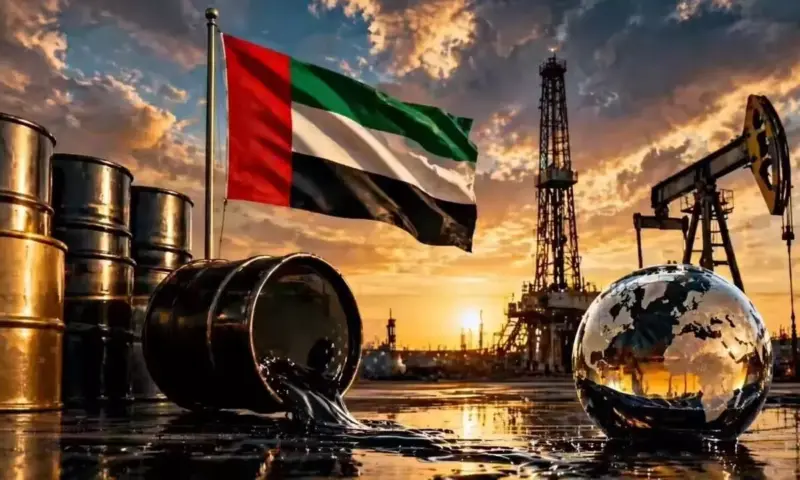

The global energy landscape shifted on its axis today as the United Arab Emirates (UAE) officially announced its departure from the Organization of the Petroleum Exporting Countries (OPEC) and the wider OPEC+ alliance.
Effective May 1, 2026, the move marks one of the most significant ruptures in the history of the oil cartel, signaling the end of an era of Gulf unity and the beginning of a volatile, every-nation-for-itself approach to energy security.
The decision comes at a moment of extreme geopolitical peril. As a devastating war involving Iran continues to destabilize West Asia, the UAE's exit is not merely an economic calculation but a profound geopolitical statement that will reverberate through global markets and diplomatic corridors for decades.
The Economic Catalyst-Sovereignty over Solidarity
For years, the UAE has quietly chafed under the production quotas imposed by the Saudi-led cartel. While OPEC's primary mission since its founding in 1960 has been to stabilize prices through collective production cuts, the UAE's internal strategy has moved in the opposite direction.
The Emirati leadership has invested billions into expanding its spare production capacity, aiming to monetize its vast oil reserves more aggressively before the global "green transition" permanently dampens demand. By walking away from OPEC+, the UAE gains the "flexibility" it has long desired. No longer bound by the restrictive discipline of the cartel, Abu Dhabi can now:
* Expand Output: Boost production to capture higher market share.
* Accelerate Monetization: Sell reserves faster to fund the country's post-oil economic diversification.
* Independent Policy: Set its own energy targets without seeking consensus from rivals or allies.
This is a "sovereign policy decision," according to Emirati officials, taken independently and without the traditional consultation process that has defined the UAE-Saudi relationship for generations.
Geopolitical Fractures: Yemen, Iran, and the Saudi Rift
While the economic incentives are clear, the "why" behind the move is deeply rooted in a deteriorating relationship with Saudi Arabia. Tensions between the two Gulf powerhouses have reached a breaking point over diverging strategies in regional conflicts, most notably the war in Yemen.
Furthermore, the UAE has become increasingly critical of the broader Arab and Gulf response to Iranian aggression during the current war. By exiting the Saudi-led energy bloc, the UAE is signaling a pivot toward a more independent-and perhaps more assertive-foreign and security policy. This "walk out" is a clear message to Riyadh: Abu Dhabi will no longer follow the Saudi lead if it compromises its national interests.
The "Trump Factor" and the Washington Connection
The timing of the exit has also raised eyebrows in Washington. The development is seen as a major strategic victory for U.S. President Donald Trump, who has been a vocal critic of OPEC's price-fixing mechanisms. The Trump administration has long linked U.S. security support in the Gulf to favorable oil production policies that keep global prices low for American consumers.
By breaking the cartel's cohesion, the UAE is aligning itself more closely with the U.S. goal of a "maximum supply" environment, potentially securing a more robust security guarantee from Washington at a time when the Strait of Hormuz-a critical chokepoint for global oil-faces constant threat of disruption.
A Body Blow to OPEC+
The departure of the UAE is a mathematical and psychological disaster for OPEC+. The cartel currently controls roughly 35-45% of global oil supply, but its power relies entirely on "cartel discipline."
The UAE was one of the few members with significant spare capacity-the ability to turn on the taps quickly to influence prices. With its exit:
1. Reduced Influence: Saudi Arabia loses its most capable partner in balancing the market.
2. Internal Disarray: Other members may see the UAE's success as a template, leading to a "domino effect" of exits or quota cheating.
3. Market Volatility: Without a unified bloc to manage supply, oil prices are likely to become far more sensitive to geopolitical shocks and shifts in demand.
The New Energy Reality-!
The UAE's exit from OPEC+ is the clearest sign yet that the old "energy order" is dead. We are entering a period where national energy strategies will consistently take precedence over collective stability.
As the UAE prepares to flood the market with its newly "liberated" barrels, the world must brace for a period of intense price volatility. In a region already set ablaze by war, the fracturing of its most powerful economic alliance adds another layer of uncertainty to a global economy that is already on edge. The "rupture" of 2026 will not just be remembered as an oil story, but as the moment the Gulf's united front finally shattered.