




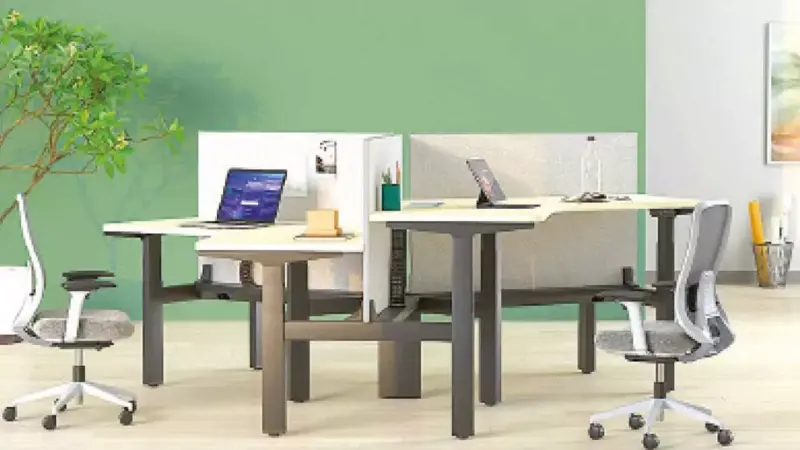

For decades, the corporate world has obsessively optimised for "synergy," "digital transformation," and "open-plan collaboration." Yet, the most fundamental element of the workspace, the physical comfort of the human being, has often been treated as a decorative afterthought.
We have designed offices to look impressive, but we have frequently failed to make them feel supportive.
This oversight is no longer sustainable. In an era of high-stakes productivity, comfort has transitioned from a subjective luxury to a measurable performance variable.
The primary drain on modern productivity isn't always a dramatic burnout; more often, it is a steady leak caused by micro-fatigue. This is the cumulative physical strain resulting from static seating and inadequate lumbar support.
When a chair fails to accommodate the body's natural contours, the brain is forced to divert cognitive energy toward constant postural corrections. Research suggests that employees in poorly designed environments lose between 30 to 60 minutes of deep-focus time daily to "postural fidgeting."
According to the Integrated Benefits Institute, lost productivity related to poor health costs U.S. employers nearly $576 billion annually. Over a fiscal year, this translates to over two weeks of lost productive capacity per employee, a "hidden tax" on the balance sheet that few companies realise they are paying.
What was once dismissed as a "soft" HR concern has hardened into a clinical reality. According to the World Health Organization (WHO), musculoskeletal disorders (MSDs) are the leading contributor to disability globally, affecting approximately 1.71 billion people.
In the Indian context, where we possess one of the world's youngest and most ambitious workforces, the stakes are particularly high. While a younger demographic may be more resilient to poor ergonomics in the short term, the long-term physiological cost is significant. Forward-thinking organisations are now viewing ergonomic seating not as a furniture procurement task, but as a preventative healthcare investment.
The definition of office furniture is shifting as the traditional chair evolves from a static object into a sophisticated, human-centric system that mirrors the body's movement. Through modern engineering, these systems provide dynamic support that automatically recalibrates for everything from focused typing to a contemplative recline. As the Indian market matures, BIFMA certification has become an essential benchmark, guaranteeing structural integrity through 120,000 cycles of use and offering a level of long-term performance that far outlasts non-certified alternatives.
The post-pandemic landscape has created a new competitive frontier. Offices are no longer merely competing with one another; they are competing with the hyper-personalised comfort of the home. During the remote-work era, employees gained a high degree of control over their sensory environments. A study by Stanford University found that remote workers were 13% more productive, partly due to a quieter, more comfortable environment. Returning to a rigid, "standardised" office can feel like a professional regression. To successfully drive the "Return to Office" (RTO) movement, the workplace must offer a sensory and ergonomic upgrade that the home cannot match.
The logic of procurement is evolving from Upfront Expense (CAPEX) to Total Cost of Ownership (TCO). A low-cost chair that requires replacement every three years and contributes to employee absenteeism in the interim is a liability, not a saving.
Investing in high-performance seating that maintains its ergonomic profile for a decade is a hedge against talent churn. Given that the cost of replacing an employee can range from one-half to two times their annual salary, the ROI on a $500 chair that keeps a $50,000 employee healthy and engaged is mathematically undeniable. The most successful workplaces of the coming decade will not necessarily be the ones that look the best in architectural journals; they will be the ones that feel the best to work in. When a workspace is perfectly calibrated to the human form, the furniture essentially "disappears," allowing the mind to focus entirely on innovation.
Comfort is the ultimate silent partner in high performance. It is time we began designing for it with the clinical precision and intellectual seriousness it deserves.
(The writer is a Founder, AFC Furniture Solutions)