
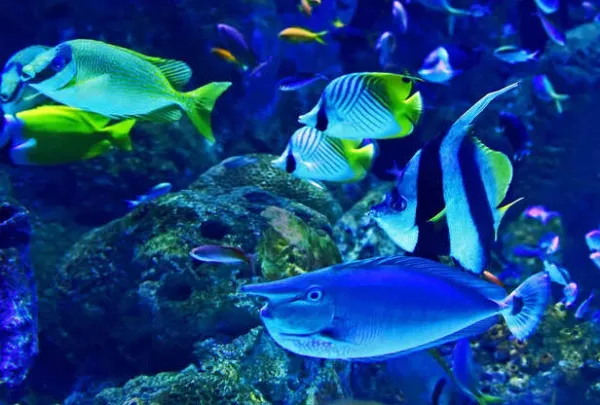

A mixture of coral reef fish swim past at the Cairns Aquarium.
Imagine coming home after a long day, seeking peace in the gentle dance of your aquarium fish only to notice something feels off.As pet parents, we tend to relate more to animals that mirror our own emotional expressions like dogs wagging their tails or cats curling up in our laps. But fish, with their silent presence and delicate beauty, often suffer in silence. This makes it all the more important for us to become fluent in their behavior and emotional cues.
In this article, we'll explore how to recognize when your fish might be stressed or unhappy and what you as their human companion can do to create a healthier, happier underwater world.
1. Sudden Change in Behavior
We often associate stress with mood swings or behavioral shifts in people and the same principle applies to fish. If your once-active fish suddenly starts hovering near the bottom of the tank or hides behind plants all day, something might be wrong.
This behavior is usually the first red flag. Imagine a friend who's usually cheerful and talkative becoming withdrawn overnight. It might not seem like a big deal at first but if it continues, you know it needs attention.
What to do: Check for changes in water parameters, lighting, noise near the tank, or new additions to the aquarium. Even a small shift in temperature or tank mates can throw your fish off balance.
2. Loss of Appetite
You know something's not right when a fish skips its favorite meal. Whether it's flakes, pellets, or frozen treats, fish are generally eager during feeding time. If you are suddenly uninterested, it's a major sign of stress or illness.Think of it this way: humans under emotional or physical strain often lose their appetite. The same goes for your aquatic friend. Skipping meals is their version of saying, "I'm not okay."
What to do: Ensure the water quality is optimal. If feeding behavior doesn't return in a day or two, it could indicate a more serious health issue, and you may need to isolate the fish or consult an aquatic vet.
3. Erratic Or Frantic Swimming
Have you ever watched your fish dart around the tank like it's trying to escape something? Rapid, aimless swimming or crashing into the glass is a clear sign that your fish is either startled, overstimulated, or unwell.This behavior is often compared to a panic attack. Picture yourself being stuck in a room full of loud noises, harsh lights, and strangers. That's how a fish might feel in a stressful tank environment.
What to do: Check for aggressive tank mates, loud sounds near the aquarium, or overstimulation from lights. If your fish is alone and still acting this way, poor water conditions or internal parasites may be the cause.
4. Clamped Fins
What to do: Test ammonia, nitrite, nitrate, and pH levels immediately. Make sure your fish isn't being bullied or injured. Clean the tank if needed and offer a peaceful space for recovery.
5. Color Fading
What to do: Check lighting and water temperature first. Sudden shifts often affect pigmentation. Also, evaluate their social environment. Some fish need companions while others prefer solitude.
6. Gasping for Air at the Surface
If your fish keeps swimming to the top and appears to gulp at the surface, it's not just curious, it might be desperate for oxygen. This is like a person breathing heavily in a stuffy room. Fish depend on dissolved oxygen in water. Poor aeration, overcrowding, or dirty tanks can lead to suffocation-like stress.What to do: Ensure the tank has proper filtration and aeration. Add an air stone if needed. Also, reduce overfeeding, which can cause ammonia spikes that lower oxygen levels.
7. Isolation from Other Fish
If a usually social fish starts isolating itself, it may be trying to avoid conflict or recover from an unseen ailment. In human terms, this is like a friend who stops showing up to group gatherings they might need help.What to do: Observe social dynamics. Is one fish bullying another? Is there a lack of hiding spaces or too many aggressive species in one tank? Rethinking your tank layout might be necessary.
Being a Better Fish Parent
As humans, we're wired to respond to emotions we can see or hear. But fish teach us something deeper they invite us to become attuned to quiet changes, to be more observant, and to care in silence.Creating a calm, safe environment for your fish isn't just about beauty, it's about empathy. Just as you'd check in on a friend or family member when they seem off, your fish deserve the same compassion. By learning their language, you become more than just a pet owner, you become a guardian of their peace.
Final Thoughts
So next time you look into the aquarium, don't just admire the colors or the soothing bubbles. Look deeper. Watch for the signs. Listen to their silence. Your fish may not speak, but their behavior will always tell you a story if you're willing to listen.
Discover expert advice and the latest tips on pet care, training, health, and more. Stay updated with all things pets at Times Pets!