




Medianews4u caught up with Nirvaan Birla, Managing Director, Birla Open Minds on the growing role of emerging sports like padel and pickleball in school education.
Padel and pickleball are both fun sports and easy to play, making them relevant to the present generation. At Birla Open Minds, we are not going to replace traditional sports because our aim is to diversify the sporting environment and give every child the chance to find a sport to connect with.
 Q. Kids have packed timetables already - where does padel actually fit in? The objective is to avoid burdening an already full enrolment.
Sports should form a basic element in a child's development and not compete against school studies. The implementation of padel can be done through the lessons of physical culture, extracurricular activities, leisure and coaching programs. It is engaging and a relatively simple game for beginners that can give them enjoyment without a long training period before getting any success. Q. How does playing pickleball or padel build skills beyond fitness? One of the key benefits of sport is the fact that involvement in sports goes beyond developing one's body.
Padel and pickleball are all about fast reaction, communication and cooperation. Being mainly played in pairs, these games teach players how to communicate and how to accept responsibility for their own decisions. Q. Many schools can't afford one court - is this model realistic for everyone? It is a critical aspect.
Development of infrastructure needs to be practical. We do not think that each school must set up a complete facility at once. The model can be introduced stepwise depending on the infrastructure of the school, strength and needs of the students. For this purpose, schools may look at shared facilities, spaces with several functions, controlled access to neighbouring courts or gradual development of infrastructure.
Q. What made Birla Open Minds bet on padel and pickleball so early? Education focuses on future development. Padel and Pickleball are becoming popular throughout the world, and we believe students in India should be introduced to new sports early in their lives and that is why we have partnered with Mr. Bakul Rajput, President of Padel Tennis Federation, so that we can establish advanced facilities for padel and pickleball at our 200 + schools over a period of time.
It is not just about adding another sport but making a comprehensive ecosystem of education for the students by enabling them to have new experiences and skills through the learning process. Q. What goals have been set and is the long term much important than the short or medium term? Our way of thinking in developing the ecosystem is long-term. In the short term, our focus is primarily on awareness and motivation and ensuring that students have access to good facilities and coaches.
In the medium term, we want to enhance participation from our schools and find students who show an ardent interest and potential. Ultimately, we want to promote the grassroots development of sports culture, building schools to be a viable avenue for creating future talent. Long-term impacts are what we are after rather than simply counting numbers. If we can secure continuous participation and create a generation of sporting students, this will be a much better result.
 Q. When you build courts inside a school, what changes for students? Changes in infrastructure contribute to accessibility. When the sport is integrated into the school setting, it is included in a child's daily regimen and becomes something he does very often at school. Thus, children can try out activities, have fun with friends, and explore their interests without the obstacles involved in joining in.
A playing court can serve not only to provide a sport activity but also be a community place where children learn competition, teamwork and discipline. Q. Parents still rank academics above everything - how do you get them to back this too? For us, education and athletics are no longer at odds with one another. The discourse has to change from "sports versus education" to "sports being part of education." The children of the future have to be confident and disciplined, resilient and able to work in teams, which is exactly what sports do.
It is our duty to prove to parents that practising sports regularly can help their children to develop academically. When parents notice their children becoming more disciplined and confident, it is very easy to support sports activities. Q. How are you marketing padel to kids who've never even heard of it? Experience comes before marketing.
Children are curious, so if they see a new sport and get to try it in an interesting environment, the sport can take care of itself. We can present padel and pickleball with the help of school demos, intro sessions, school days, training events and experience events. Once the students try the sport out, it will spread around thanks to their word of mouth. Q. What kind of advertising clicks with parents who aren't sports-first and for whom academia is more important? Communication cannot be solely focussed on the victories in competitions or sports accomplishments.
For parents stressing the importance of learning, the most important thing is to highlight the importance of a holistic approach. It is important to stress the role of sports in developing the skills of concentration, decision-making, teamwork, confidence and discipline. The core idea is about promoting the idea of combining education and sports in life. Q. Grassroots talent sounds great, but does it survive when marketing takes over? Grassroots development should be based on the essentials and not on viability.
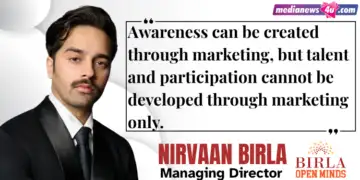
In marketing, awareness can be created, but talent and participation cannot be developed through marketing only. The idea of the ecosystem comes into play: you need to have good facilities, qualified coaches, regular competitions, school involvement, and a way forward for those who want to be more professional. If all this is already there, marketing can serve the purpose of adding visibility to the already established idea. Q. Most buzz still lives on Instagram.
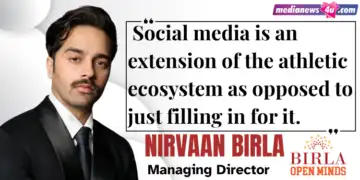
Are you leaning on influencers and student creators? Digital platforms play a key role since they are places that young audiences go for content consumption and finding new interests. Influencers and student creators can help make a new sport relatable and inspirational. We want students to be the ones to tell the story. When children share their story about learning and playing a new sport, they become authentic advocates. Social media is an extension of the athletic ecosystem as opposed to just filling in for it.
 Q. If you had to convince every principal in India, what would be your one-line pitch for padel in schools? "Do not limit your education for students to just academics, since the students should also undergo training that helps them learn nice life skills such as how to work in a team."