

India's metros are carrying more people than ever. But keeping those trains running — especially underground — demands a rethink of how we power them.
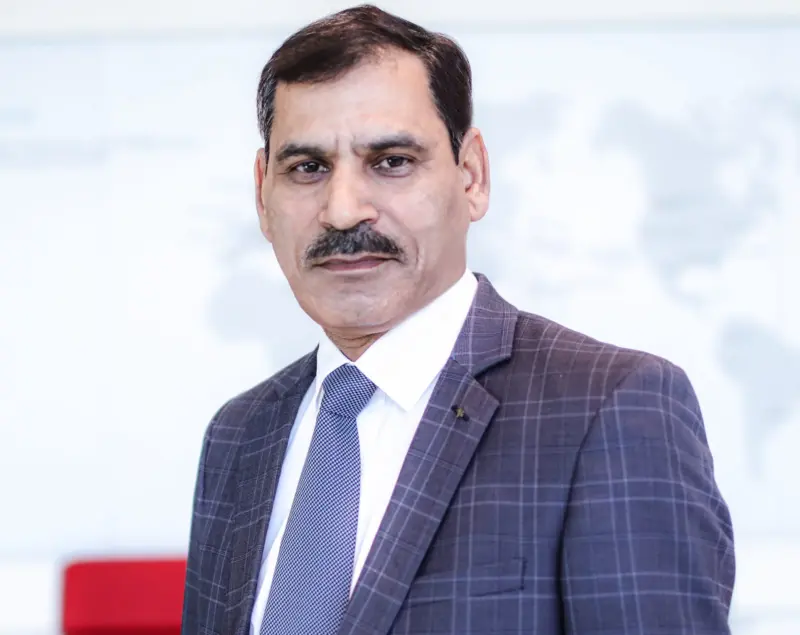
By Rajesh Kaushal, Energy Infrastructure & Industrial Solutions (EIS) Business Group Head, India & SAARC, Delta Electronics India
A Nation on the Move
India's metro rail network has quietly become the circulatory system of its cities. From 248 km across five cities in 2014 to over 1,143 km across 26 cities as of early 2026, it is now the third-largest metro network in the world.
The government has followed this momentum with money. The annual metro budget has jumped from ₹5,798 crore in 2013–14 to ₹34,807 crore in 2025–26, with 38 new projects across 1,051 km sanctioned at ₹3.44 lakh crore. India is building aggressively. But building fast and building resilient are two different things.
The Hidden Problem: Powering What Lies Beneath
Here is what most commuters never think about: metro systems are among the most energy-hungry infrastructure assets in existence. Trains, ventilation, escalators, lifts, air conditioning, signaling — all of it runs simultaneously, all day. Traction demand spikes sharply during rush hours while station systems draw a constant baseline round the clock
For elevated metros, a power failure is an inconvenience — trains stop, technicians restore the feed, passengers wait. For an underground metro, it is a different category of problem entirely. When the lights go out in a tunnel, passengers cannot see exits. Ventilation fails. Emergency lighting runs on limited backup. Evacuation mid-tunnel is genuinely dangerous. A 20-minute outage on Pune Metro's Vanaz–Ruby Hall route disrupted thousands of commuters; underground, the same scenario is several times more severe.
The traditional fix — diesel generator sets — takes 30 to 90 seconds to start and function. In a dark tunnel with anxious passengers, 90 seconds is a long time. DG sets also emit fumes that can be very dangerous in enclosed spaces. Furthermore, it requires constant maintenance, and sit idle 99.9% of the time generating only costs. India's metro operators have known for a while that this is not a sustainable answer for the continuous operations.
Kolkata Shows the Way
Metro Railway Kolkata answered that question this year when it deployed a 6.4 MWh / 4 MW Battery Energy Storage System (BESS) at the Central Sub-station of the Blue Line — making it India's first underground metro to deploy a large-scale BESS. The system was delivered by Delta Electronics India as an integrated storage solution provider.
The system is built on Lithium Iron Phosphate (LFP) batteries — thermally stable, long-cycling, and critically, resistant to the fire risks that older lithium-ion chemistries carry. In a tunnel where fire suppression is difficult and evacuation is slow, that is not a technical preference. It is a safety requirement.
The BESS does three things. In a grid failure, it responds in milliseconds — not 90 seconds — supplying enough traction power to move trains safely to the nearest station. On every ordinary day, it handles peak power management, absorbing energy during low-demand periods and releasing it during rush hours, cutting the peak-tariff penalties the metro pays the grid. And it continuously improves power factor, drawing cleaner, more efficient power and reducing wastage charges. This system earns its keep daily — not just when something goes wrong. That is a fundamentally more sustainable and viable solutions than a diesel generator, irrespective of its highest emission standard.
Why BESS Is a Different Kind of Solution
Most passengers have never heard of regenerative braking, but it matters enormously to metro energy economics. When a train brakes between stations, its motors reverse and push electricity back into the traction network, potentially powering another accelerating train on the same line. When no train happens to need that power at that exact moment, the energy is wasted as heat.
A wayside BESS captures that braking energy, holds it, and releases it to the next train. Studies of metro systems in the US and Japan found 10 to 18% daily energy savings from this function alone. Across a network consuming hundreds of millions of units annually, that is crores of rupees every year.
The cost of doing this has also fallen sharply. Turnkey BESS costs in India dropped roughly 40% in 2024 alone. Tender prices fell from ₹10.8 lakh per MW per month in 2022 to ₹2.19 lakh in late 2024 — nearly 80% in two years.
Can Every Metro Do This?
The Kolkata deployment is not an isolated case—it can act as a model for future implementations. Underground lines are the priority — the safety case is strongest in tunnels — but every traction sub-station across India's 26 metro systems stands to benefit from co-located storage.
Mumbai Metro Line 3, the city's first fully underground metro, projects 15.6 lakh daily passengers. For a system of that scale running beneath India's most dense urban environment, BESS is not a choice, but necessity. Chennai Metro's underground sections already cut radial travel times from 90 to 30 minutes— reliability that evaporates the moment a grid outage strands trains mid-tunnel. Delhi Metro Phase IV has gone further than most, inviting bids to develop a solar-plus-BESS captive plant supplying 500 MUs annually, targeting a jump in renewable energy share from 33% to over 60%.
The real opportunity lies in combining solar with BESS. Solar generates low-cost power during the day, while BESS stores this energy and supplies it during the evening peak, when grid power is expensive and solar output is low. Delhi Metro already meets around 60% of its energy needs through solar. Adding storage completes the cycle. Studies on solar-plus-BESS in rail systems show that, in optimised setups, grid dependency can be reduced by up to 53%.
The policy environment also supports this shift. India’s Central Electricity Authority estimates that 236.2 GWh of BESS capacity will be required by 2031–32 (IEEFA, 2025). The government has committed ₹54 billion in viability gap funding for 30 GWh of storage, and 45 GWh of BESS capacity was tendered in 2025 alone.
The Underground Standard
India's cities are under a pressure that will only grow. Around 35% of population is urban in India and rising to an estimated 43.2% by 2035. Delhi adds 1,500 vehicles to its roads every hour. A single metro line carries the equivalent of twelve lanes of car traffic. Metro connectivity in Delhi has already cut road congestion by 22% since 2014.
But all of that value is contingent on the metro actually working. A system that goes dark in a tunnel is not just an inconvenience — it is a betrayal of the promise that convinced millions of people to give up their vehicle and opt for the less emitting means of public transport. BESS is not a fancy infrastructure. But it is exactly the kind of investment that separates metro systems people trust from metro systems people merely tolerate.
India is at an inflection point in its urban story. The rails are going down, the tunnels are being bored, and the passengers are already there. What the next decade demands is that the energy powering all of this becomes as modern, as resilient, and as forward-looking as the trains themselves. A metro network that runs on intelligent storage, recovers its own braking energy, and powers its evening rush from yesterday's sunshine is not a distant aspiration — it is an engineered outcome that India's own cities are beginning to deliver. When the history of India's urban transformation is written, the battery banks quietly humming beneath our streets will deserve a line or two. They are what keeps the lights on, the trains moving, and the promise of a cleaner, better-connected India firmly on track.