
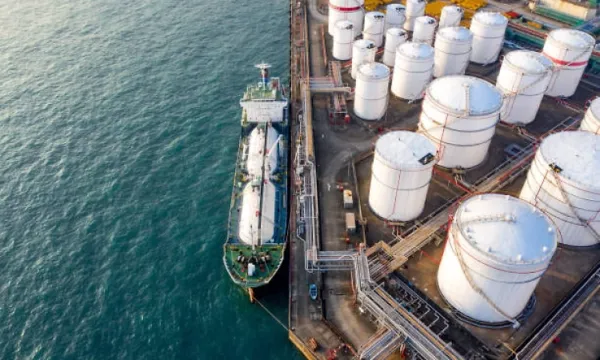

New Delhi: Countries that depend heavily on imported oil maintain large emergency reserves to protect themselves during crises such as conflicts or supply disruptions.
These reserves act as a safety buffer and help governments stabilise energy markets if global fuel supplies are interrupted.
Amid rising tensions in the Middle East and concerns over possible disruption in the Strait of Hormuz, the International Energy Agency (IEA) has called for coordinated action among major economies.
During an online meeting with the finance ministers of the G7 countries, the IEA urged member nations to be ready to release emergency oil stocks if required. At the same time, continued military tensions involving Israel, United States and Iran have raised concerns about crude oil and LPG supply disruptions.
Why emergency oil reserves are important
According to IEA rules, member countries that import more oil than they export must maintain emergency reserves equal to at least 90 days of their net oil imports. These reserves are typically stored in government facilities, commercial storage tanks and industrial stockpiles.
United States holds the world's largest oil reserve
The United States has the world's largest strategic oil reserves. According to the US Energy Information Administration, the country currently holds about 415.4 million barrels of crude oil in its strategic reserves. In addition, private companies store around 439.3 million barrels in commercial stockpiles.
China's reserves can meet several months of demand
Reports indicate that China has one of the largest combined strategic and commercial crude oil reserves. Analysts estimate that by January the country held around 600 million barrels of crude oil in onshore storage.
This quantity is estimated to meet the country's oil demand for three to four months, providing a cushion against prolonged disruptions in global supply.
Japan maintains large reserves for energy security
Japan, which relies heavily on imported energy, has developed extensive oil storage systems. Government reserves are estimated at around 260 million barrels of crude oil. Including total petroleum equivalents, Japan's overall reserves are estimated at about 470 million barrels.
Government stockpiles alone are sufficient to meet about 146 days of imports. Private companies also maintain fuel stocks of around 180 million barrels, including roughly 90 million barrels of crude oil.
Germany and France maintain strategic stockpiles
Germany maintains about 110 million barrels of crude oil and around 67 million barrels of refined petroleum products in its emergency reserves. Authorities say these reserves can be released quickly if required to stabilise markets.
By the end of 2024, France had approximately 120 million barrels of crude oil and petroleum products in storage. Around 97 million barrels are managed by SAGESS, a government-mandated storage organisation.
The reserves include roughly 30 percent crude oil, 50 percent gasoil, nine percent petrol and about 7.8 percent jet fuel, along with smaller quantities of heating oil. Oil companies operating in France also maintain additional stocks of about 39 million barrels.
Italy and United Kingdom follow different reserve systems
Italy requires companies by law to maintain oil reserves to ensure national energy security. The country keeps around 76 million barrels of oil reserves, sufficient to cover about 90 days of net imports.
In the United Kingdom, the reserve system relies largely on private industry rather than large government stockpiles. The country holds around 38 million barrels of crude oil and about 30 million barrels of refined petroleum products.
Canada does not maintain strategic reserves
Unlike most major economies, Canada does not maintain a strategic petroleum reserve because it is a major oil exporter. Canada is the world's fourth-largest crude oil producer and produces more than five million barrels per day. Much of its production is exported to the United States.
Oil also stored at sea
Apart from land-based reserves, large volumes of crude oil are also stored in tanker ships at sea, a method known as floating storage.
According to data from analytics firm Kpler, about 80 million barrels of crude oil are currently stored on tankers worldwide. Nearly two-thirds of this floating storage is located in Asian waters.
A large portion of the oil stored at sea belongs to Iran, Venezuela and Russia, which face economic sanctions from Western countries.
Strait of Hormuz tensions affect supply
The ongoing crisis in the Strait of Hormuz has added pressure on global oil supply chains. Reports indicate that transport through this major maritime route has slowed significantly.
Around 15 million barrels of crude oil and another 4.5 million barrels of refined fuel produced daily in the Gulf region are currently unable to move to global markets due to disruptions in shipping.
Because of limited storage capacity, some producers have begun storing oil in land tanks and tanker ships. Reports also indicate that Iraq has already reduced about a quarter of its 4.3 million barrels per day production.
India's oil reserves
Amid growing concerns about energy supply during the ongoing tensions between Israel and Iran, questions have also been raised about India's oil reserves.
India currently holds about 250 million barrels of crude oil and petroleum products, which is estimated to meet the country's overall demand for about two months. This quantity is roughly equivalent to about 4,000 crore litres of fuel.
Strategic petroleum reserves are stored at facilities in Mangaluru, Padur and Visakhapatnam. Additional fuel is also stored in tanks, pipelines and tanker ships.
The central government has also rejected reports claiming that India has oil reserves sufficient for only 25 days.