
Mangaluru: The India Meteorological Department (IMD) has issued a yellow alert for parts of coastal Karnataka, warning of hot and humid conditions in Udupi, Dakshina Kannada and Uttara Kannada districts on Wednesday and Thursday.
According to the IMD forecast, temperatures in many areas are likely to remain above normal during the summer season. The department has urged people in the affected districts to take precautionary measures to avoid heat-related illnesses.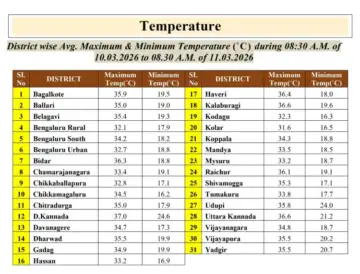
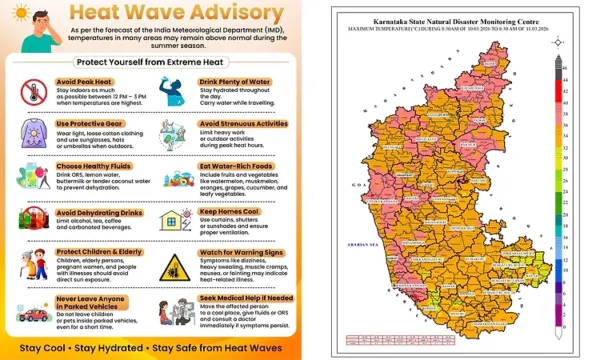
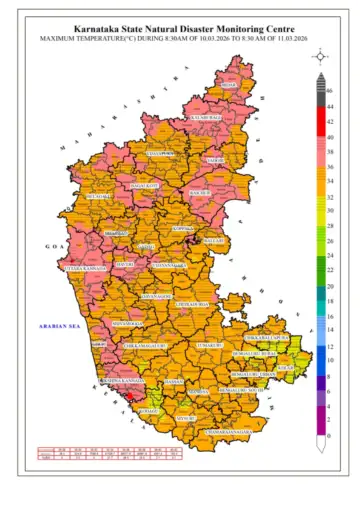
According to district-wise temperature data recorded between 08:30 AM on March 10 and 08:30 AM on March 11, 2026, several parts of Karnataka experienced relatively high maximum temperatures. The highest maximum temperature was reported in Dakshina Kannada at 37.0°C, followed by Kalaburagi and Uttara Kannada at 36.6°C each, and Haveri at 36.4°C. Districts such as Bagalkote, Belagavi, Shivamogga and Dharwad also recorded temperatures above 35°C. Coastal district Udupi recorded a maximum temperature of 35.8°C with a comparatively high minimum temperature of 24.0°C, while Dakshina Kannada recorded the highest minimum temperature at 24.6°C. In contrast, cooler minimum temperatures were observed in hill and interior districts such as Chikkamagaluru at 16.2°C, Kodagu at 16.3°C and Kolar at 16.5°C. The temperature variations reflect warmer conditions across coastal and northern districts, while some southern and hilly regions recorded relatively lower minimum temperatures.
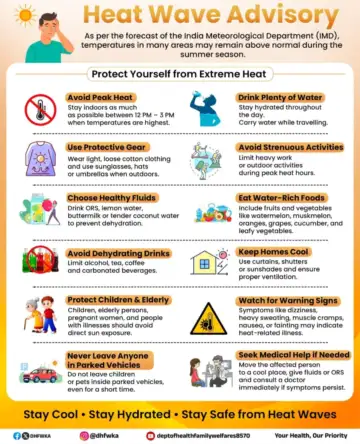
Protect yourself from extreme heat
- Avoid peak heat: Stay indoors as much as possible between 12 PM and 3 PM when temperatures are highest.
- Use protective gear: Wear light, loose cotton clothing and use sunglasses, hats or umbrellas when going outdoors.
- Choose healthy fluids: Drink ORS, lemon water, buttermilk or tender coconut water to prevent dehydration.
- Avoid dehydrating drinks: Limit alcohol, tea, coffee and carbonated beverages.
- Protect children and the elderly: Children, elderly persons, pregnant women and people with illnesses should avoid direct exposure to the sun.
- Never leave anyone in parked vehicles: Do not leave children or pets inside parked vehicles even for a short time.
- Drink plenty of water: Stay hydrated throughout the day and carry water while travelling.
- Avoid strenuous activities: Limit heavy work or outdoor activities during peak heat hours.
- Eat water-rich foods: Include fruits and vegetables such as watermelon, muskmelon, oranges, grapes, cucumber and leafy vegetables in your diet.
- Keep homes cool: Use curtains, shutters or sunshades and ensure proper ventilation.
- Watch for warning signs: Symptoms such as dizziness, heavy sweating, muscle cramps, nausea or fainting may indicate heat-related illness.
- Seek medical help if needed: Move the affected person to a cool place, give fluids or ORS and consult a doctor immediately if symptoms persist.